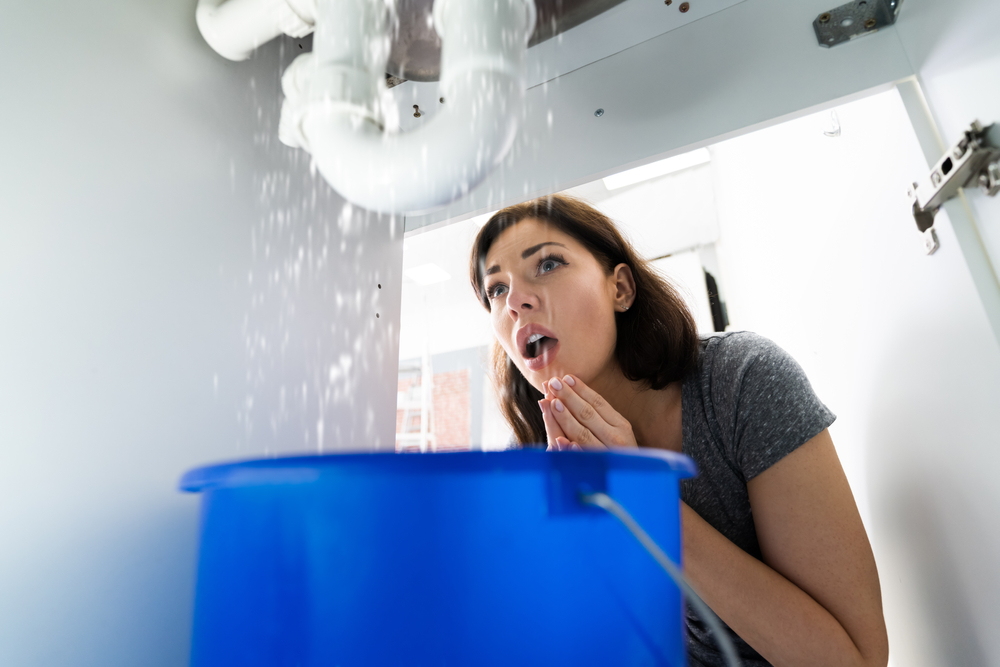
A plumbing problem is an emergency when it involves uncontrolled water, sewage entering the home, an immediate electrical or health hazard, loss of essential plumbing, or damage that will become worse if the repair waits.
Turn off the nearest fixture valve or the home’s main water supply when clean water is actively escaping. Stop using all plumbing fixtures if sewage is backing up through a basement drain, shower or toilet. Keep away from standing water near outlets, appliances or the electrical panel.
A contained leak, one unusable toilet in a home with another working bathroom, or a slow drain that is still flowing may qualify for same-day emergency plumbing or scheduled service. Problems involving a condominium’s common pipes, a rental property, a City watermain or the municipal sewer should also be reported to the responsible building representative or Toronto 311.
A dripping faucet and a burst supply pipe both waste water. Their potential for immediate damage is very different.
Ask these questions before deciding how quickly you need help:
- Can the water be stopped safely?
- Is wastewater entering the home?
- Is water approaching electricity?
- Is the damage actively spreading?
- Does the home still have a working toilet and water supply?
- Could waiting make the damage substantially worse?
- Does the affected pipe belong to the homeowner, building or City?
Plumbing Emergency Triage Guide
| Situation | Action level | First response |
|---|---|---|
| Burst pipe or uncontrolled supply leak | Immediate emergency | Shut off the water and request emergency dispatch |
| Sewage entering the home | Immediate emergency | Stop all water use and isolate the affected area |
| Water near outlets, appliances or an electrical panel | Immediate safety hazard | Stay out of the water and arrange safe power disconnection |
| Overflowing toilet that will not stop | Immediate if not contained | Close the toilet supply valve and stop flushing |
| Failed sump pump during active water entry | Immediate emergency | Protect the area without entering electrically unsafe water |
| No working toilet in the home | Same-day or immediate | Stop using the blocked fixture and arrange service |
| No hot water | Usually same-day | Check for leaking, gas odour, smoke or electrical hazards |
| Contained pipe or fixture leak | Same-day repair | Close the nearest shutoff valve |
| One slow drain | Usually scheduled repair | Limit use and watch nearby fixtures |
| Dripping faucet or running toilet | Scheduled appointment | Close the fixture valve if needed |
| Watermain break or several affected properties | Possible municipal emergency | Contact Toronto 311 |
| Condo common stack, riser or shared pipe | Building response may be required | Notify property management immediately |
Problems That Need Immediate Shutoff and Emergency Dispatch
A Burst Pipe or Uncontrolled Water Leak
A burst supply pipe can continue releasing water until the supply is isolated. The break may be visible, or water may appear through a ceiling, wall, floor or light fixture.
Warning signs include:
- Water spraying or running from a pipe
- A ceiling stain that is growing quickly
- Water dripping through a ceiling
- Sudden pooling beneath cabinets or behind an appliance
- Running-water sounds while every fixture is off
- A rapid loss of water pressure
- Water appearing as a frozen pipe begins to thaw
What to Do First
- Close the nearest fixture or branch shutoff valve.
- Close the home’s main water valve if the local valve does not stop the leak.
- Stay away from water near electrical equipment.
- Move belongings only when the area is safe to enter.
- Request emergency plumbing service.
Toronto identifies the main water shutoff as part of the private plumbing system. It is usually located on the basement foundation wall where the drinking-water pipe enters the home, just before the water meter.
Do not force a seized or heavily corroded valve. If the main valve does not stop the water, Toronto 311 can arrange a shutoff at the property line.
Saving Plumbing provides burst-pipe repair in Toronto when a private water pipe has failed.
Sewage Is Backing Up Into the Home
Wastewater coming through a floor drain, toilet, shower or bathtub requires prompt attention. The first priorities are stopping additional flow and keeping people away from the contaminated area.
Signs include:
- Sewage rising through a basement floor drain
- A toilet overflowing with wastewater from the drainage system
- Water appearing in a shower when another fixture is used
- Several drains backing up together
- Strong sewage odours with visible wastewater
- Wastewater entering during heavy rainfall
Stop using toilets, sinks, showers, dishwashers and washing machines. Additional water may return through the lowest connected fixture.
Keep children and pets away. Avoid contact with sewage-contaminated water. A plumber can assess the private building drain and sewer service line.
Toronto also asks residents to report blocked sewer connections and basement flooding to 311. Toronto Water can investigate whether the municipal sewer or City-owned portion of the connection is involved.
Water Is Near Electricity
Water near electricity changes a plumbing failure into an immediate safety hazard.
Dangerous situations include:
- Water rising near an electrical panel
- Standing water around plugged-in appliances
- Leakage through a ceiling light
- Floodwater near outlets or extension cords
- Water around a furnace, water heater or sump-pump connection
Do not step into standing water to reach the electrical panel. Do not touch wet plugs, switches, appliances or electrical equipment.
The City of Toronto advises residents to contact Toronto Hydro for safe power disconnection when floodwater has risen above outlets or is near the electrical panel. A licensed electrical contractor may need to assess equipment that has been exposed to water.
Plumbing repairs should begin after the area has been made electrically safe.
An Overflowing Toilet Will Not Stop
A toilet overflow can often be contained without turning off water to the entire property.
If it is safe, remove the tank lid and press the flapper closed to stop more water from entering the bowl. Close the toilet’s supply valve, which is usually located on the wall or floor behind the toilet.
Stop flushing. Repeated flushing adds water to a blocked bowl.
Emergency dispatch may be justified when:
- The toilet shutoff valve does not work.
- Water continues entering the bowl.
- Wastewater is spreading across the floor.
- Other fixtures are backing up.
- It is the only toilet in the home.
- An occupant has accessibility or medical needs that require a working toilet.
If the overflow has stopped and another bathroom is available, the repair can usually be handled as same-day service.
A Sump Pump Has Failed During Active Water Entry
A failed sump pump becomes urgent when groundwater is actively entering the sump pit or basement.
Emergency help may be needed when:
- The water level in the pit is rising quickly.
- Water has reached the basement floor.
- Heavy rain is continuing.
- The pump runs but does not discharge water.
- The discharge line is frozen or blocked.
- The battery or backup pump has also failed.
- Water is approaching electrical equipment.
Check power only from a dry and safe location. Avoid using extension cords or improvised electrical connections around water.
A dry sump pit with a silent pump during normal weather is generally a maintenance issue. A rapidly filling pit during a storm requires immediate attention.
Problems That Usually Need Same-Day Repair
A Leak Stops When a Shutoff Valve Is Closed
A leaking faucet supply, toilet connector, appliance hose or exposed pipe may be controllable with a local valve. Containment reduces the immediate risk, but wet cabinets, flooring and wall cavities still need attention.
Same-day repair is reasonable when:
- The valve has stopped the active leak.
- Flooring or cabinets are wet.
- The affected fixture is important to the household.
- The valve itself appears damaged.
- The leak may resume when the water is restored.
- Water has entered a wall or ceiling cavity.
Leave the valve closed until the repair is completed. Tape, towels and containers may collect residual water, but they do not repair a pressurized pipe.
The Home Has No Usable Toilet
A blocked or broken toilet becomes more urgent when it is the only toilet in the home.
Same-day service may also be appropriate when:
- An occupant has limited mobility.
- Young children live in the home.
- A rental unit has no other working toilet.
- The toilet is leaking from its base.
- The toilet rocks or shifts.
- Repeated clogs suggest an object or branch-line obstruction.
A minor tank problem may be controlled by closing the supply valve and using another bathroom. A leak at the toilet base may involve a failed seal or wastewater and should be assessed promptly.
Several Drains Are Slowing or Gurgling
One slow sink usually points to a localized problem. Several fixtures changing together can indicate a shared branch-line or main sewer-line restriction.
Arrange same-day assessment when:
- A toilet gurgles as a shower drains.
- Water rises in one fixture when another fixture is used.
- Multiple drains slow down during the same period.
- A basement drain begins bubbling.
- A recurring sewer-line clog has returned.
Reduce water use while waiting. A washing machine, dishwasher or full bathtub can discharge enough water to overwhelm a partially blocked drain.
There Is No Hot Water
Loss of hot water is commonly a same-day service issue. The urgency changes when the water heater is leaking or creating a safety hazard.
Request immediate assistance if you notice:
- Water actively escaping from the tank or connected piping
- A strong gas odour
- Smoke, scorching or sparking
- Water near electrical connections
- A relief valve discharging continuously
- Bulging, severe corrosion or unusual movement in the tank
If you smell gas, leave the property and contact emergency services or the gas utility from a safe location. Do not operate switches, appliances or ignition sources.
A water heater that simply has stopped producing hot water can usually be assessed the same day, provided there is no leak, gas smell or electrical danger.
A Pipe Is Frozen but Has Not Started Leaking
A frozen pipe needs timely attention because a crack may become visible as the ice thaws.
Turn off the water supply when:
- The pipe looks split, swollen or distorted.
- Water has started leaking.
- A concealed section may have cracked.
- The frozen line is behind a finished wall.
- The pipe has previously suffered freeze damage.
Do not use a torch, open flame or uncontrolled high heat to thaw plumbing.
Toronto recommends knowing where the main water valve is located in case a frozen pipe bursts. Pipes near exterior walls, crawl spaces, garages and other unheated areas are especially vulnerable.
Saving Plumbing provides frozen-pipe repair in Toronto for lines that have frozen or suffered damage during thawing.
Repairs That Can Usually Wait for a Scheduled Appointment
A plumbing problem can wait when it is stable, contained and unlikely to cause property damage or a health hazard before the appointment.
Examples include:
- A dripping faucet
- A slow drain affecting only one fixture
- A running toilet that stops when its supply valve is closed
- Low pressure at one faucet
- A loose faucet handle
- A minor fixture leak caught by a container
- A non-working garbage disposal with no leak
- An unusable toilet when another bathroom is available
- Noisy pipes without movement or leakage
- A cosmetic fixture repair or planned replacement
Continue monitoring the condition. A small leak becomes urgent when the rate increases, the water reaches vulnerable materials or the flow cannot be isolated.
A Single Slow Drain Is Usually a Scheduled Repair
One slow sink, shower or bathtub rarely requires emergency dispatch when it remains usable and nearby fixtures are working normally.
Avoid adding different chemical cleaners while waiting for service. Tell the plumber if a drain-opening chemical has already been used.
Move the appointment forward if:
- The drain stops completely.
- Wastewater begins returning.
- Another fixture starts reacting.
- The problem spreads to a basement drain.
- The clog returns shortly after being cleared.
- Sewage odours persist.
These changes suggest that the problem may extend beyond the individual fixture.
Who Is Responsible for the Plumbing Emergency?
Calling the correct party can prevent delays and duplicated work.
Private Homeowner Responsibility
Toronto divides water and sewer service pipes at the property line.
The homeowner is generally responsible for:
- Plumbing inside the home
- The main water shutoff valve inside the property
- The private water-service section from the property line into the home
- The private sewer-service section from the property line into the home
- Private fixtures, appliances and drainage connections
A plumber normally handles leaks, blockages, burst pipes and repairs located on the private side.
City of Toronto Responsibility
The City generally owns:
- The watermain under the street
- The City-side water service up to the property line
- The municipal sewer under the street
- The City-side sewer connection up to the property line
Contact Toronto 311 when:
- A watermain appears to be leaking in the street.
- Several neighbouring properties have lost water.
- A basement backup may involve the municipal sewer.
- The home’s main water valve cannot stop an emergency leak.
- Water is surfacing near the property line or roadway.
- Several nearby homes experience basement flooding during the same storm.
Toronto Water determines whether the problem is on private or City infrastructure. The location should be confirmed before major service-line repair or excavation begins.
Rental Properties
Tenants should report plumbing failures to the landlord, superintendent or property manager as soon as possible.
The report should explain:
- What is leaking, blocked or overflowing
- When the problem started
- Whether the water has been shut off
- Whether sewage is present
- Whether water is near electricity
- Which fixtures or rooms are affected
Call emergency services directly when there is an immediate threat to life or safety. Do not remain in an unsafe area while waiting for a building representative to respond.
Condominium Plumbing
Condominium responsibility depends on the declaration, unit boundaries and location of the failed component.
A unit owner may be responsible for fixtures, appliance hoses and pipes serving only the unit. The condominium corporation may be responsible for common risers, drainage stacks and shared infrastructure.
Notify property management immediately when:
- More than one unit may be affected.
- Water is entering from another unit.
- A common drain stack appears blocked.
- A shutoff outside the unit is required.
- Water has entered a corridor or common area.
- The leak may involve a common mechanical system.
A plumber may still be needed inside the unit, but building management may first need to isolate a riser or inspect neighbouring units.
Water Damage Changes the Priority
The plumbing repair stops the source. Drying and restoration address the water that has already escaped.
Take photos and video after immediate safety steps have been completed. Keep invoices and receipts for emergency work, drying and damaged materials.
Contact the property insurer promptly when water has entered:
- Finished walls or ceilings
- Hardwood or laminate flooring
- Insulation
- Built-in cabinets
- Electrical equipment
- Several rooms
- A finished basement
- Personal belongings
Coverage depends on the policy, cause of the damage, endorsements and maintenance history. A plumbing company cannot determine whether a specific loss is insured.
What to Do Before the Emergency Plumber Arrives
For a Clean-Water Supply Leak
- Close the nearest fixture shutoff.
- Close the main water valve if the local valve does not stop the leak.
- Keep away from wet electrical equipment.
- Place a container under residual dripping when safe.
- Photograph the affected area.
- Move belongings from the path of water when it is safe.
For a Sewer Backup
- Stop using all sinks, toilets and water-using appliances.
- Keep people and pets away from the affected area.
- Avoid contact with contaminated water.
- Do not touch electrical equipment in or near the water.
- Report basement flooding or a blocked sewer connection to Toronto 311.
- Call a plumber to assess the private drainage system.
- Contact the insurer if property has been damaged.
Information to Give the Dispatcher
- Where the water first appeared
- Whether it is clean water or wastewater
- Whether the main valve has been closed
- Which fixtures are affected
- Whether electricity is nearby
- Whether the problem began during heavy rain
- Whether the property is a house, rental or condominium
- Whether vulnerable occupants need immediate plumbing access
Clear information helps the dispatcher understand the risk and prepare the plumber for the likely cause.
When to Call Saving Plumbing
Saving Plumbing provides 24-hour emergency plumbing in Toronto for burst pipes, uncontrolled private plumbing leaks, sewer backups and other urgent problems.
Call 416-271-6745 when:
- Water cannot be safely contained.
- A private water pipe has burst.
- Sewage is entering the property.
- Several drains are backing up.
- The home has no usable toilet or essential plumbing.
- A contained leak needs same-day repair.
- You need help identifying a possible private-side failure.
Call 911 for an immediate threat to life, fire or serious safety emergency. Contact Toronto 311 when City water or sewer infrastructure may be involved.
Frequently Asked Questions
Is a leaking pipe always a plumbing emergency?
A leak becomes an emergency when the water is uncontrolled, cannot be isolated or is reaching electrical equipment and vulnerable building materials. A small leak that stops at a working fixture valve usually qualifies for same-day service.
Is a clogged toilet an emergency?
It depends on whether the overflow can be stopped and whether another toilet is available. An overflowing toilet that cannot be isolated needs immediate help. A blocked toilet in a home with another working bathroom may be handled the same day.
Should I turn off the main water during a plumbing emergency?
Turn off the main water when a supply leak cannot be stopped with a fixture or branch valve. The main water valve will not stop groundwater, rainwater or wastewater backing up through a drain.
Can I continue using water during a sewer backup?
Stop using toilets, sinks, showers, dishwashers and washing machines. Additional wastewater may return through the lowest connected drain.
Who should I call for a basement sewer backup in Toronto?
Report the backup to Toronto 311 so Toronto Water can investigate possible municipal involvement. A plumber may also be needed to inspect and clear the privately owned building drain or sewer-service section.
Is no hot water a plumbing emergency?
Loss of hot water is commonly a same-day repair. It becomes an immediate emergency when the water heater is leaking, sparking, smoking, producing a gas odour or exposing electrical connections to water.
Who is responsible for a pipe leak in a Toronto condominium?
Responsibility depends on the location of the failed pipe and the condominium’s governing documents. Notify property management immediately so the water can be isolated and responsibility can be determined.
Trusted Sources and Further Reading
- City of Toronto: Pipe Leak or Burst
- City of Toronto: Blocked or Backed-Up Basement Drain
- City of Toronto: Basement Flooding and Safety Actions
- City of Toronto: Request Water Turn On or Off
- City of Toronto: Prevent or Thaw Frozen Pipes
- City of Toronto: No Water or Low Water Pressure
You Might Also Like To Read
- When Should You Replace Your Water Heater in Toronto?
- How to Tell If a Pipe Has Burst: Signs & What to Do
- Low Water Pressure in Your House? Toronto Causes & Fixes
- Toilet Keep Running? Causes, Fixes & Next Steps
- House Smells Like Sewer Gas? Causes, Signs, Checks & Fixes
- How to Shut Off the Main Water Supply in Your Toronto Home
