
Not every basement needs a sump pump. Learn when one helps, what it cannot fix, Toronto’s 2026 subsidy amounts, and when to consider a backwater valve instead.
You are more likely to benefit from a sump pump if groundwater or foundation drainage is collecting beneath or around your basement and needs a controlled way out.
A sump pump is especially worth investigating when water appears after heavy rain or snowmelt, the property already has a sump pit or weeping-tile drainage, or the basement contains finished living space that would be expensive to restore after a flood.
A sump pump will not solve every basement-water problem.
It does not stop sewage from reversing through a sewer line. It cannot repair a foundation crack. It will not correct a window well overflowing during rain.
The first question for a homeowner therefore is not simply, “Should I install a sump pump?”
It is:
Where is the water coming from?
What Problem Does a Sump Pump Actually Solve?
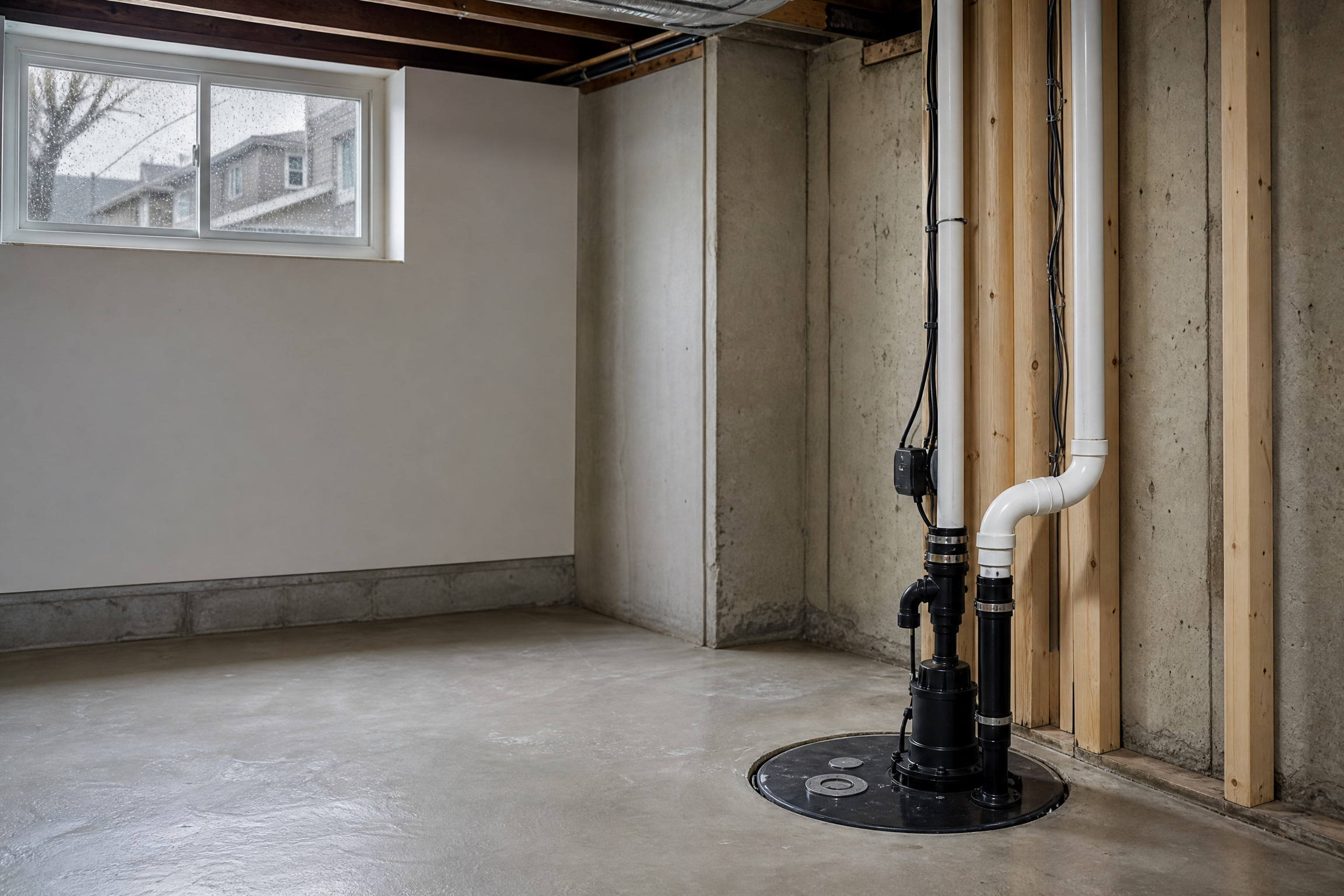
A sump pump removes water that collects in a sump basin, usually at the lowest part of a basement.
Foundation drainage such as weeping tile can direct groundwater toward the basin. When the water reaches a certain level, the pump activates and sends it through a discharge pipe away from the home.
The City of Toronto describes sump pumps in essentially the same way: they pump water collected by the weeping-tile system to an area outside the home.
This distinction matters because basement flooding can follow several different paths.
Groundwater around the foundation may need a sump system.
Wastewater coming backward through the sewer needs a different form of protection.
Rainwater entering through a window well or poor grading may require exterior drainage work.
A plumbing assessment should identify the water path before equipment is selected.
Do You Need a Sump Pump If Your Basement Has Never Flooded?
A basement does not have to flood first before sump-pump protection becomes worth considering.
The City of Toronto states that every home is at some risk of basement flooding, including properties that have never experienced a previous flood. Heavy rainfall and melting snow or ice are among the conditions that can expose drainage problems.
For a Scarborough homeowner, I would look at the drainage system and consequences of a failure rather than relying only on past flood history.
A sump-pump assessment becomes more useful when:
- the basement becomes damp following significant rainfall
- water marks appear near the floor-to-wall joint
- the property already has a sump pit
- foundation drainage feeds toward a pit or interior drainage system
- water has appeared during spring thaw
- the basement is being renovated or finished
- valuable belongings or mechanical equipment are stored below grade
- neighbouring properties have experienced similar drainage problems
Previous flooding is strong evidence of vulnerability. Lack of previous flooding does not confirm that the property has no risk.
How Can I Tell If My Basement Water Is Something a Sump Pump Can Fix?
Look at when and where the water appears.
Water appears along the basement perimeter after rain
Groundwater or foundation drainage deserves investigation.
If a weeping-tile or interior drainage system is collecting that water, a sump pump may form part of the solution.
Water comes up through a basement floor drain
This pattern can point toward a sewer-service or building-drain problem.
A sump pump is not designed to stop sewage from flowing backward through the sanitary drainage system.
Toronto advises homeowners experiencing a sewer-service blockage or basement sewer backup to contact 311 so Toronto Water can investigate whether municipal infrastructure is involved.
Water enters around a window
Check the window well, grading and exterior drainage.
Installing a pump elsewhere in the basement will not correct rainwater entering directly through an overloaded window well.
Water comes through a visible foundation crack
The crack and exterior water conditions need to be assessed.
A sump system may help manage groundwater pressure in some installations, but the visible defect still deserves diagnosis.
Water appears after a plumbing fixture is used
Start with the home’s plumbing.
A leaking supply pipe, drain, fixture or appliance requires a different repair from groundwater management.
Sump Pump or Backwater Valve: Which Does a Scarborough Home Need?
These devices protect against different types of water.
| Flooding concern | Equipment commonly associated with it |
|---|---|
| Groundwater collected by foundation drainage | Sump pump |
| Water accumulating in a sump pit | Sump pump |
| Power outage stopping the primary pump | Battery backup sump system |
| Sewage reversing through the sewer connection | Backwater valve |
| Water through a foundation crack | Waterproofing or foundation repair |
| Surface water running toward the house | Grading, downspouts or exterior drainage |
| Window well filling during storms | Window-well drainage or exterior correction |
A sump pump moves collected groundwater away from the foundation.
A backwater valve closes the sewer line when wastewater attempts to flow backward toward the home.
Toronto treats these as separate basement-flooding protection measures under its subsidy program.
Some properties may benefit from both because groundwater and sewer surcharge are separate risks.
Installing one device should not be presented as a replacement for diagnosing the other water pathway.
Does My Existing Sump Pit Mean I Need a Sump Pump?
An existing pit is important evidence about how the home was designed or modified.
Look inside only when it is safe to do so.
You may find foundation drainage entering the basin through pipes around its sides. During or after significant rainfall, the water level may rise as the drainage system directs groundwater toward it.
If a pit is connected to foundation drainage but no working pump is present, the system deserves assessment.
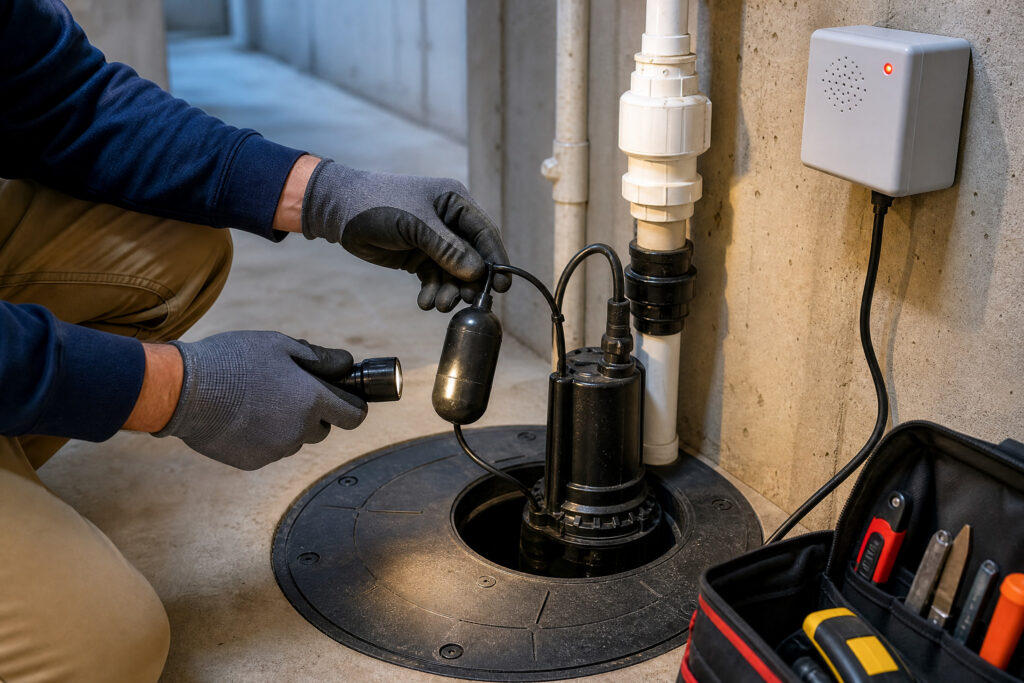
An existing pump should also be tested periodically rather than assumed to be functional because it is plugged in.
The float must be able to move. The discharge line must remain open. The check valve and alarm should work properly.
A pump sitting in an empty pit all summer may not reveal a problem until the first major storm.
Do I Need a Battery Backup for My Sump Pump?
Backup power becomes important when your basement depends heavily on the primary pump staying operational.
Severe rain and electrical outages can happen during the same storm.
A normal electric sump pump cannot operate during a power failure unless the home has another source of electricity.
Toronto’s current Basement Flooding Protection Subsidy Program specifically includes battery backup power for sump pumps. The City offers eligible homeowners up to 80% of the invoiced battery-backup cost, to a maximum subsidy of $300.
A backup deserves stronger consideration when:
- the basement has flooded previously
- the sump pit fills quickly during storms
- finished living space is below grade
- the home is regularly left unattended
- the pump is the main defence against groundwater
- power interruptions have occurred during storms
The backup itself also needs testing.
A battery that has reached the end of its service life provides little protection simply because the backup equipment is physically present.
How Much Is Toronto’s Sump Pump Subsidy in 2026?
Toronto significantly expanded its Basement Flooding Protection Subsidy Program in 2026.
For eligible work completed on or after November 12, 2025, the current program provides:
| Eligible work | Maximum subsidy |
|---|---|
| Home plumbing assessment | Up to $500 |
| Sump pump installation or replacement | Up to $2,250 |
| Sump pump battery backup | Up to $300 |
| Backwater valve | Up to $1,600 per device |
| Second eligible backwater valve | Up to another $1,600 |
| Foundation-drain severance and capping | Up to $400 |
The total maximum available under the expanded program is $6,650 per eligible property. In most categories, Toronto covers up to 80% of the eligible invoiced cost, subject to the program limits and requirements.
Scarborough properties are within the City of Toronto, so eligible Scarborough homeowners can apply under the same program.
The new home plumbing assessment subsidy is particularly useful when you are unsure which flood-protection measure the property needs.
Toronto offers up to $500 toward an eligible assessment completed by a licensed plumber. The homeowner is not required to proceed with all of the plumber’s recommendations simply to qualify for the assessment subsidy.
Where Should a Sump Pump Discharge in Toronto?
The discharge route matters almost as much as the pump.
Pumping water immediately beside the foundation can allow some of that water to migrate back toward the basement and enter the drainage system again.
Toronto says a sump pump should discharge onto a permeable surface such as lawn, garden or gravel at least two metres away from the foundation wall.
The discharge arrangement should also account for freezing conditions.
A poorly routed exterior line can freeze or become obstructed, leaving the pump running against a restriction when it is needed.
Before installation, the plumber should consider:
- where the discharge pipe exits
- how far water travels from the foundation
- whether the receiving area can absorb the water
- pipe slope
- freezing exposure
- check-valve placement
- service access
A larger pump does not compensate for a badly designed discharge route.
Do You Need a Building Permit for a Sump Pump in Toronto?
The City of Toronto states that a building permit is not required simply to install a sump pump.
Other basement-flooding work can have different requirements.
For example, Toronto requires a permit for an eligible backwater-valve installation under the subsidy program.
Subsidy eligibility also has its own requirements.
Toronto requires eligible work to be performed by an appropriately licensed contractor. Homeowners must provide detailed paid invoices, and sump-pump applicants must submit photographs of the installed pump and exterior discharge pipe.
This is why homeowners planning to use the subsidy should review the City’s requirements before the work begins, rather than trying to reconstruct the documentation afterward.
Should I Install a Sump Pump Before Finishing My Basement?
Flood protection deserves consideration before drywall, flooring and built-in finishes make the plumbing harder to access.
A finished basement increases the financial consequences of water entering the space.
Before starting a Scarborough basement renovation, I would want to know:
- whether the home has functioning foundation drainage
- whether a sump pit already exists
- whether the pit receives water during storms
- where the pump would discharge
- how the system operates during a power outage
- whether sewer-backup protection is also appropriate
This does not mean every basement renovation requires a new sump pump.
It means the drainage question is easier and usually less disruptive to investigate before the room is finished.
How Often Should a Sump Pump Be Checked?
A sump pump should be checked before you are relying on it during a major storm.
Toronto advises homeowners to maintain and regularly inspect sump pumps according to the manufacturer’s instructions.
A practical inspection includes the float, power supply, pit condition, discharge line, check valve, alarm and backup system.
Watch for:
- a pump that does not start
- repeated short cycling
- continuous running
- unusual grinding or rattling
- a float that cannot move freely
- water returning into the pit after shutdown
- alarm activation
- visible damage to the discharge line
A pump that repeatedly runs without lowering the water deserves prompt inspection.
Finally: Do you need a sump pump?
You may not need a sump pump simply because you own a basement. You should take the question seriously if your home has a flooding history, recurring wet-weather dampness, poor exterior drainage, below-grade living space, older drainage connections or a vulnerable existing system. The correct answer depends on the water pathway and the protection you want—not on a one-size-fits-all product recommendation.
For a property-specific assessment or help with sump pump repair and installation in Scarborough, Toronto and the GTA, contact Saving Plumbing at (416) 271-6745 or email info@savingplumbing.ca. licensed and insured plumbers can help identify the issue, explain the repair or installation scope, and recommend the next practical step.
Sump Pump FAQs
Does Every Scarborough Home Need a Sump Pump?
No.
Some homes have drainage arrangements that manage groundwater without a sump system. Other properties depend on a sump pump because foundation drainage directs water into a pit.
The decision should be based on the home’s drainage layout, previous water history and current conditions.
Can a Sump Pump Prevent a Sewer Backup?
A sump pump is designed primarily to remove groundwater collected through foundation drainage.
It does not perform the same job as a backwater valve.
If wastewater is reversing through the sewer connection, the sewer system and backwater protection need to be investigated.
Can a Sump Pump Stop Water Coming Through a Foundation Wall?
It can help manage groundwater collected by an appropriate drainage system, but it does not repair a leaking crack or failed waterproofing.
The water pathway should be identified before relying on a sump pump as the solution.
Is the Toronto Sump Pump Subsidy Available in Scarborough?
Yes.
Scarborough is part of the City of Toronto. Eligible Scarborough properties can apply to Toronto’s Basement Flooding Protection Subsidy Program.
Under the current 2026 program, eligible sump-pump work can receive up to $2,250, with another $300 available for eligible battery backup work, subject to the City’s conditions.
Does a Sump Pump Need a Battery Backup?
A backup is especially valuable when the basement relies on the primary sump pump for flood protection.
Battery backup keeps a separate pumping system available during electrical outages, depending on the equipment installed and the condition of the battery.
Toronto specifically subsidizes eligible battery-backup installations under the current basement-flooding program.
