

Quick Answer
A pipe may have burst if you hear water running while every fixture is off, experience a sudden pressure drop, find spreading moisture on a wall or ceiling, or see water pooling from an unknown source. A concealed break may also cause the water meter to register flow while no water is being used.
Close the nearest fixture valve if the source is obvious. Shut off the home’s main water supply when water continues escaping or the damaged section cannot be identified. Keep away from wet outlets, appliances, light fixtures and the electrical panel.
The pattern of the leak matters. A pressurized supply pipe usually releases water continuously until its supply is shut off. A drainpipe tends to leak only when a connected sink, toilet, shower or appliance is used. This distinction helps narrow the source before walls or ceilings are opened.
Is It a Burst Pipe or Another Type of Water Leak?
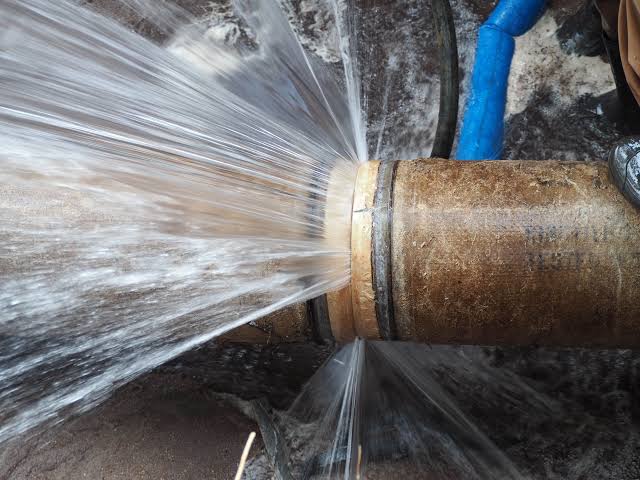
Water on a ceiling or floor does not identify the source by itself. Plumbing supply lines, drainpipes, appliance hoses, waterproofing failures and roof leaks can all leave similar stains.
Start with the timing.
| What you observe | Possible source | Useful next step |
|---|---|---|
| Water continues while every fixture is off | Pressurized supply pipe, fixture connector or appliance supply | Close the nearest valve or main water supply |
| Water appears only when a sink, shower or toilet is used | Drainpipe, trap, fixture seal or connection | Stop using that fixture |
| Water appears when the dishwasher or washing machine runs | Appliance supply, drain hose or connected branch drain | Stop the appliance and close its supply valves |
| Moisture appears during rain or snowmelt | Roof, foundation, grading, window or exterior drainage issue | Inspect the building envelope and exterior drainage |
| A cold-water pipe sweats during humid weather | Condensation | Dry the pipe and observe whether moisture returns on its surface |
| The meter registers flow while all water use is stopped | Possible hidden supply-side leak | Confirm fixtures and appliances are off, then arrange leak detection |
Water can travel along joists, pipes and drywall before becoming visible. The wettest spot is not always directly beneath the break.
Warning Signs of a Burst Water Pipe
Water Is Spraying, Pouring or Pooling
A visible rupture leaves little doubt. Water may spray from a split pipe, pour from a fitting or collect rapidly beneath a ceiling or cabinet.
Shut off the water before trying to inspect the damaged section closely. A small opening in a pressurized line can release water faster than towels and containers can manage.
You Hear Water When Nothing Is Running
A concealed pipe failure may sound like hissing, dripping, spraying or continuous running behind a wall. The sound may become easier to hear late at night when the house is quiet.
Check that toilets, humidifiers, water softeners, ice makers and other water-using equipment are not operating. If the sound continues, close the main valve and listen again.
A sound that stops after the main water is closed supports the possibility of a supply-side leak. It does not identify the exact location.
Water Pressure Drops Suddenly
A large opening in a supply pipe can reduce pressure at several fixtures. One faucet may produce a weak stream while another stops flowing normally.
Low pressure at a single tap is more likely to involve that faucet, its aerator or the local supply valve. A sudden pressure change across the home deserves faster attention.
Pressure loss can also result from municipal work, a watermain break, a closed valve or a frozen service pipe. Check whether neighbouring properties have the same problem before assuming the failure is inside your home.
A Wall, Ceiling or Floor Is Becoming Wet
A spreading stain suggests active moisture behind the finished surface. Paint may blister. Drywall can soften or sag. Flooring may swell, darken or lift at the seams.
These signs justify shutting off the water when the source cannot be identified. Waiting for water to break through the surface allows it to move into insulation, framing and nearby rooms.
Stay clear of a bulging ceiling. Wet drywall and pooled water above it can fall without warning.
The Water Meter Shows Unexplained Flow
A water meter can help determine whether water is leaving the pressurized plumbing system.
Turn off faucets and confirm that toilets, appliances, irrigation equipment and water-treatment systems are not using water. Record the meter reading or photograph its flow indicator. Check it again after a short period without using water.
Movement may indicate a hidden leak. It does not prove that a pipe has fully burst. A running toilet, appliance supply leak or underground service-line leak can produce the same result.
Your Water Bill Rises Without a Change in Use
A concealed leak may release water without creating an immediately visible flood. A higher bill can be an early clue when household routines have remained stable.
Compare actual meter readings rather than relying only on the invoice total. Seasonal use, estimated readings and billing-period length can also change the amount owed.
You Notice Dampness, Staining or Deterioration Near a Pipe Route
A smaller split or failed joint can wet building materials slowly. Look for:
- Discolouration on drywall or trim
- Peeling paint
- Swollen baseboards
- Soft flooring
- Rust around metal fittings
- Damp insulation
- Mineral residue below an old leak
Old staining may remain after a previous repair. Touch, moisture readings and changes over time are more useful than colour alone.
Water Appears as a Frozen Pipe Thaws
A frozen pipe may remain quiet while ice blocks the opening. Leakage can begin when the ice melts and water pressure returns to the damaged section.
Loss of flow during extreme cold followed by water appearing during warming strongly suggests freeze damage. Close the water supply before thawing a pipe that appears split, swollen or distorted.
Where Burst Pipes Commonly Remain Hidden
Any pressurized water line can fail. The highest-risk locations are often concealed, unheated or difficult to inspect.
Check these areas when it is safe:
- Under sinks and vanities
- Behind washing machines and dishwashers
- Near water heaters and mechanical equipment
- Along basement ceilings
- Inside exterior walls
- Above suspended ceilings
- In garages and crawl spaces
- Near outdoor hose connections
- Below kitchens and bathrooms
- Where pipes pass through framing
A plumber may use moisture measurements, pressure testing, thermal imaging or acoustic equipment to narrow the search. The selected method depends on the pipe material, location and amount of escaping water.
Saving Plumbing provides professional leak detection in Toronto when water is escaping from a concealed or uncertain location.
What Causes Pipes to Burst?
Freezing
Freezing is one of the most familiar causes in Toronto homes. Pipes near exterior walls, garages, crawl spaces and unheated rooms face greater exposure during prolonged cold.
A pipe does not always split where the ice is visible. Expanding ice can trap water and raise pressure between the frozen section and a closed valve. The damage may occur at a weaker point farther along the line.
Toronto advises residents to avoid using open flames to thaw frozen plumbing. A torch creates a fire risk and can damage the pipe or nearby materials.
A line with no flow during cold weather may still be intact. It should be treated carefully until normal flow returns and the full length has been checked for leakage.
Corrosion and Pipe Deterioration
Metal pipes can lose wall thickness as they age. Corrosion may begin internally, develop around threaded connections or concentrate where dissimilar metals meet.
Visible rust does not reveal the full condition inside a pipe. A line that has produced several pinhole leaks may have wider deterioration beyond the last repaired section.
Repeated leaks in the same material can justify comparing another spot repair with partial or complete home repiping.
Excessive Pressure and Pressure Surges
Water pressure places continuous force on supply pipes, valves and connections. Excessive pressure can shorten the life of already weakened components. Sudden changes in flow can also create pressure surges commonly heard as water hammer.
Banging pipes do not prove that a burst is about to occur. They can reveal loose support, fast-closing valves or an uncontrolled pressure condition worth assessing.
A plumber can measure static and flowing pressure. That evidence is more useful than estimating pressure from how strong a shower feels.
Movement, Poor Support or Installation Stress
Pipes expand, contract and move slightly as water temperature and flow change. Proper supports and allowances for movement help prevent stress from concentrating at joints.
A poorly supported pipe can rub against framing or pull on a fitting. Building movement, renovation work and settlement can also disturb concealed plumbing.
A failure near a fitting may involve installation stress, material deterioration or both. Replacing the broken connector without checking nearby support can leave the same condition in place.
Accidental Damage
Screws, nails and drill bits can puncture concealed water lines during renovations or mounting work. The opening may leak immediately. In some cases, the fastener temporarily plugs the hole and leakage begins after it is removed or shifts.
Stop drilling if unexpected moisture appears. Shut off the water before removing a fastener that may have entered a pipe.
Failed Fittings and Appliance Connections
Not every sudden plumbing flood comes from a split length of pipe. Flexible connectors, shutoff valves, crimped fittings and appliance hoses can fail and release pressurized water.
The immediate response is the same: isolate the nearest supply valve, then close the main water if the local valve does not control the flow.
Damage to a Buried Water-Service Pipe
The pipe between the property line and the home can be affected by corrosion, soil movement, excavation or deterioration. Possible signs include:
- Unexplained water use at the meter
- Low pressure throughout the house
- Persistent wet ground along the service route
- Water surfacing near the foundation
- A sudden change in soil conditions without rainfall
Toronto divides water-service ownership at the property line. The City owns the section running from the watermain to the property line. The property owner is generally responsible for the section from the property line into the home.
The location of the failure should be established before repair or excavation begins.
What to Do Immediately When a Pipe Bursts
1. Shut Off the Water
Close the valve serving the affected fixture or appliance if the source is visible and the valve is safe to reach.
Use the home’s main water shutoff when:
- The broken pipe is concealed.
- The local valve does not work.
- Water continues after the local valve is closed.
- Several areas are affected.
- You cannot identify which line has failed.
The main valve is commonly located in the basement where the drinking-water service enters the home, close to the water meter.
Do not force a seized or badly corroded valve. Toronto residents can call 311 when an emergency shutoff is required at the property line because the private valve cannot stop the water.
2. Keep Away From Electrical Hazards
Do not enter standing water when outlets, extension cords, appliances or electrical equipment may be energized.
Do not reach through water to operate the electrical panel. Toronto Hydro advises residents not to enter a flooded basement unless they are certain the power has been disconnected.
If a flooded basement still has power, call Toronto Hydro at 416-542-8000 to request disconnection. Flooded appliances, outlets, switches and breaker panels should be checked by a qualified electrician before reuse.
3. Stop Water-Using Equipment
Turn off washing machines, dishwashers, ice makers, humidifiers and other equipment connected to the affected supply.
Once the main valve is closed and the area is safe, opening a lower-level cold-water faucet can relieve remaining pressure. Water may continue draining from pipes for a short time after the supply has been isolated.
4. Protect People Before Property
Keep children and pets away from the wet area. Avoid standing beneath a saturated or bulging ceiling.
Move furniture and belongings only when the area is safe. Water near electricity, sagging ceilings and slippery floors take priority over property removal.
5. Call a Plumber
A burst pipe requires more than stopping the water. The damaged section must be located, exposed where necessary, repaired and tested before full service is restored.
Saving Plumbing provides burst-pipe repair in Toronto for exposed and concealed supply-pipe failures. For urgent help, call 416-271-6745.
6. Document the Damage
Take photos and video after immediate safety steps have been completed. Record:
- The first place water appeared
- Visible pipe damage
- Affected walls, ceilings and flooring
- Damaged belongings
- The water-meter reading
- The time the water was shut off
Keep invoices and receipts for plumbing, emergency drying and damaged property. Contact the insurer promptly when the loss is substantial.
7. Begin Safe Water Removal and Drying
Remove standing clean water when electricity has been made safe. Use towels, a wet vacuum rated for the task or professional water-extraction equipment.
Open interior doors and provide ventilation when weather and security permit. Wet drywall, insulation and flooring may require controlled removal and drying.
Repairing the pipe stops new water from entering. It does not dry moisture already trapped inside the building.
What Not to Do After a Pipe Bursts
- Do not enter water near energized electrical equipment.
- Do not stand beneath a sagging ceiling.
- Do not rely on tape as a permanent pipe repair.
- Do not reopen the main valve before the damaged line has been repaired or isolated.
- Do not use an open flame to thaw frozen plumbing.
- Do not remove a nail or screw that may be temporarily plugging a pipe before shutting off the water.
- Do not conceal wet walls or flooring before the materials have been assessed and dried.
Does a Burst Pipe Always Produce a Large Flood?
No. “Burst pipe” is often used for any pipe that has split or opened unexpectedly. The amount of water depends on the size and location of the opening, supply pressure, pipe diameter and how long the failure remains undetected.
A pinhole leak may wet a wall slowly. A separated fitting can release water rapidly. A frozen pipe can remain blocked by ice and begin leaking only as it thaws.
Small volume does not make a concealed leak harmless. Moisture trapped behind drywall or beneath flooring can damage materials before water becomes visible in the room.
Can You Find the Burst Without Opening the Wall?
Sometimes. The plumber may narrow the location using fixture isolation, meter observations, pressure testing, moisture measurements, acoustic equipment or thermal imaging.
These methods reduce unnecessary opening. They cannot always identify the precise crack through several layers of wet material. A limited access opening may still be required to confirm the pipe condition and complete the repair.
When Does One Burst Pipe Suggest a Larger Plumbing Problem?
A single failure caused by accidental damage may need only a localized repair. A history of pinhole leaks, corrosion or failed joints can indicate broader deterioration.
Ask for a wider assessment when:
- Several pipes have leaked within a short period.
- The same pipe material is failing in different rooms.
- Nearby fittings show corrosion.
- Previous repairs are clustered along one line.
- Pressure is outside the expected range.
- The pipe has poor support or visible abrasion.
- Water quality or flow has changed with the leaks.
The purpose of the assessment is to compare the risk and disruption of repeated spot repairs with a planned partial or full replacement.
How to Reduce the Risk of Another Burst Pipe
Prevention should respond to the cause found during the repair.
- Insulate pipes exposed to cold areas.
- Seal drafts near exterior-wall plumbing.
- Maintain heat during freezing weather.
- Disconnect and winterize exterior hoses and seasonal lines.
- Secure loose pipes and correct harmful movement.
- Measure water pressure when pressure damage is suspected.
- Replace deteriorated connectors and shutoff valves.
- Assess wider repiping when the same material repeatedly fails.
- Know where the main water valve is and keep access clear.
Residents leaving home during the heating season should review their insurance policy. Requirements for maintaining heat, shutting off water and arranging property checks vary by insurer and policy.
Frequently Asked Questions
How can I tell if a pipe burst behind a wall?
Listen for running or spraying water while fixtures are off. Look for spreading stains, soft drywall, swelling trim or unexplained meter movement. Close the main water valve if moisture is actively increasing. Leak-detection equipment may be needed to narrow the location.
Will turning off the main water stop a burst pipe?
Closing the main valve stops new pressurized water from entering the private plumbing system. Water already inside the lines can continue draining briefly. The valve will not stop rainwater, groundwater or a drain backup.
Can a pipe burst without making a sound?
Yes. A small split or pinhole may leak quietly inside a wall, ceiling or floor. Moisture changes and unexplained water use may appear before the leak can be heard.
Can a frozen pipe burst after it thaws?
The pipe may split while frozen, but the ice can temporarily block the opening. Leakage becomes visible as the ice melts and pressure returns. Inspect the line during thawing and keep the main shutoff accessible.
Does low water pressure mean a pipe has burst?
Low pressure throughout the home can result from a large leak, frozen service, valve problem, watermain break or municipal work. Low pressure at one faucet is more likely to be local. Pressure loss needs to be interpreted with other signs.
Should I call 311 or a plumber for a burst pipe in Toronto?
Call a plumber for pipes inside the home and failures on the privately owned side of the water service. Call Toronto 311 when the main valve cannot stop an emergency leak, water is surfacing near the street, several properties are affected or the failure may be on City infrastructure.
Can I repair a burst pipe with tape?
Tape may slow a small leak after the supply has been shut off. It is not a permanent repair for a pressurized water pipe. The damaged section or fitting needs an appropriate plumbing repair before normal pressure is restored.
Need Burst-Pipe Repair in Toronto?
Shut off the water first when it is safe to reach the valve. Keep clear of wet electrical equipment and call Saving Plumbing at 416-271-6745.
Saving Plumbing provides burst-pipe diagnosis and repair in Toronto for exposed pipes, concealed leaks, failed fittings and freeze-related damage.
Trusted Sources and Further Reading
- City of Toronto: Pipe Leak or Burst
- City of Toronto: Prevent or Thaw Frozen Pipes
- City of Toronto: Managing Water Around the House
- City of Toronto: No Water or Low Water Pressure
- Toronto Hydro: Flood and Electrical Safety
- Insurance Bureau of Canada: Frozen and Burst Pipe Coverage
- Insurance Bureau of Canada: Filing a Home Insurance Claim
