
Does your house smell like sewer gas after rain, laundry, flushing or running water? Compare likely causes, safe checks and signs you need a plumber in Toronto.
TL;DR: Why does my house smell like sewer gas?
A house usually smells like sewer gas when an opening develops between the indoor air and the drainage system. The escape point may be a dry P-trap, damaged toilet seal, blocked plumbing vent, dirty drain, loose cleanout cap or cracked sewer pipe.
When the smell appears also matters. An odour after flushing often points toward the toilet seal, venting or a partial blockage. A smell during laundry may come from the washing-machine standpipe, its trap or a restricted shared drain. Rain can expose sewer-line and basement-drain problems. Heating and air conditioning can spread an existing odour through the house.
Start by finding where the smell is strongest. A sudden, intense smell in an enclosed area requires more caution. Leave the area if anyone develops dizziness, nausea, headache, breathing difficulty or eye irritation.
Call a plumber promptly when:
- Several fixtures smell or drain slowly
- A toilet bubbles when another fixture drains
- Water rises from a basement floor drain
- The smell returns after a trap is refilled
- A toilet rocks or leaks around its base
- The odour is strong throughout the house
Saving Plumbing provides 24/7 drain cleaning, drain repair, sewer camera inspection, leaking-pipe repair, and emergency plumbing service across Toronto and the GTA.

Sewer gas smell in home
Sewer gas is commonly described as smelling like rotten eggs, sulphur, wastewater or decomposing organic material. Hydrogen sulphide is one substance associated with that odour. Health Canada describes hydrogen sulphide as a colourless gas with a characteristic rotten-egg smell.
Some plumbing odours have a different source. Biofilm inside a shower drain can smell sour or musty. Stagnant water in an appliance drain can smell like sewage. A natural-gas leak may also be described as rotten eggs because utility gas is odorized.
Leave the building and contact the gas utility or emergency services if the source could be a fuel-gas appliance, furnace or gas line.
Your sense of smell cannot measure exposure. NIOSH warns that the ability to smell hydrogen sulphide can fade rapidly, so a fading odour does not prove the air is safe.
The useful question is not only “Does my house smell like sewage?” but also where is the smell strongest, when does it appear, and what else is the plumbing doing?
Why Does the Sewer Smell Appear Only at Certain Times?
An intermittent sewer smell is valuable diagnostic information. Water movement, drainage pressure, rainfall, indoor airflow and temperature changes can expose a weak trap seal or damaged connection.
| When the smell appears | Likely places to investigate | Other clues |
|---|---|---|
| Sewer smell During or after rain | Basement floor drain, sewer lateral, backwater valve, plumbing vent | Gurgling, slow drains or water near a floor drain |
| Sewer smell When the AC or heat starts | Dry floor drain, HVAC condensate trap, hidden pipe opening near a return duct | Odour spreads quickly between rooms |
| Sewer smell During laundry | Washer standpipe, laundry trap, shared branch drain or main line | Gurgling, overflowing standpipe or slow utility sink |
| Sewer smell After flushing | Toilet seal, flange, nearby dry drain, vent or downstream clog | Rocking toilet, weak flush or smell at the base |
| Sewer smell After a shower | Shower biofilm, trap seal, venting or branch-drain buildup | Slow drainage or odour concentrated at the drain |
| Sewer smell Whenever water runs | Dirty drain, siphoned trap, blocked vent or shared-line restriction | Bubbling from another fixture |
| Sewer smell At night | Heating cycle, cooler air, reduced ventilation or an infrequently used drain | Smell follows HVAC operation or temperature changes |
| Sewer smell During cold weather | Evaporated floor-drain trap, restricted vent or heating-related air movement | Basement odour or gurgling during fixture use |
Common causes of a sewer smell in a Toronto or GTA home
The same symptom can come from a simple maintenance issue or a hidden drainage defect. The location and pattern usually provide the first clue.
| Where the odour is strongest | Likely causes | Signs that point to a larger problem |
| Basement floor drain or laundry room | Dry P-trap, dirty drain, open cleanout, or failed primer | Odour returns after adding water, dampness, gurgling, or multiple affected fixtures |
| One sink or shower | Drain buildup, blocked branch drain, dry trap, or venting issue | The fixture drains slowly or smells again after cleaning |
| Around the base of a toilet | Failed wax or rubber seal, loose toilet, or damaged flange | Toilet rocks, water appears at the base, or odour persists after flushing |
| Several fixtures at once | Main-line blockage, sewer-line damage, or blocked roof vent | Slow drainage throughout the home, bubbling toilets, or sewage backup |
| Hot-water taps throughout the home | Sulphur-producing bacteria in the water heater | Odour appears only when hot water runs and is absent from cold water |
| A wall, ceiling, or crawl-space area | Hidden leaking pipe, unsealed connection, or vent defect | Staining, damp materials, mould-like odour, or no obvious fixture source |
A Dry P-Trap
A P-trap is the curved section of pipe beneath a sink, shower, tub or floor drain. It retains water after the fixture drains. This water forms a seal between the room and the drainage system.
Trap water can evaporate in:
- Basement floor drains
- Guest bathrooms
- Laundry sinks
- Garage drains
- Unused showers
- Vacant homes
Slowly add water to a rarely used drain when the smell is mild and there are no signs of backup. The odour should fade once the water seal is restored.
A smell that returns within hours or days may indicate:
- A leaking trap
- A failed trap primer
- Improper venting
- Trap siphoning
- A crack in the drain connection
Repeatedly adding water will not correct those defects.
Buildup Inside a Drain
Hair, grease, soap, food residue and body oils can collect on the drain wall. Bacteria feed on this organic material and produce a foul smell that may resemble sewer gas.
Drain buildup is more likely when:
- One fixture smells
- The odour is strongest at the drain opening
- Water drains slowly
- The smell becomes stronger when hot water runs
- Cleaning the visible strainer provides only temporary relief
Remove accessible hair and debris. Clean the drain cover and overflow opening where applicable. Avoid mixing chemical drain products. Some combinations release hazardous fumes, and chemicals left in the pipe can expose anyone who later opens the drain.A main-drain problem becomes more likely when:
- Several fixtures drain slowly
- A toilet bubbles when the washer empties
- The basement floor drain gurgles
- Different rooms smell at different times
- Drain problems keep returning
- Water appears at the lowest drain
Reduce water use if these symptoms appear together. Continued flushing, showering or laundry can turn a partial restriction into a sewage backup.
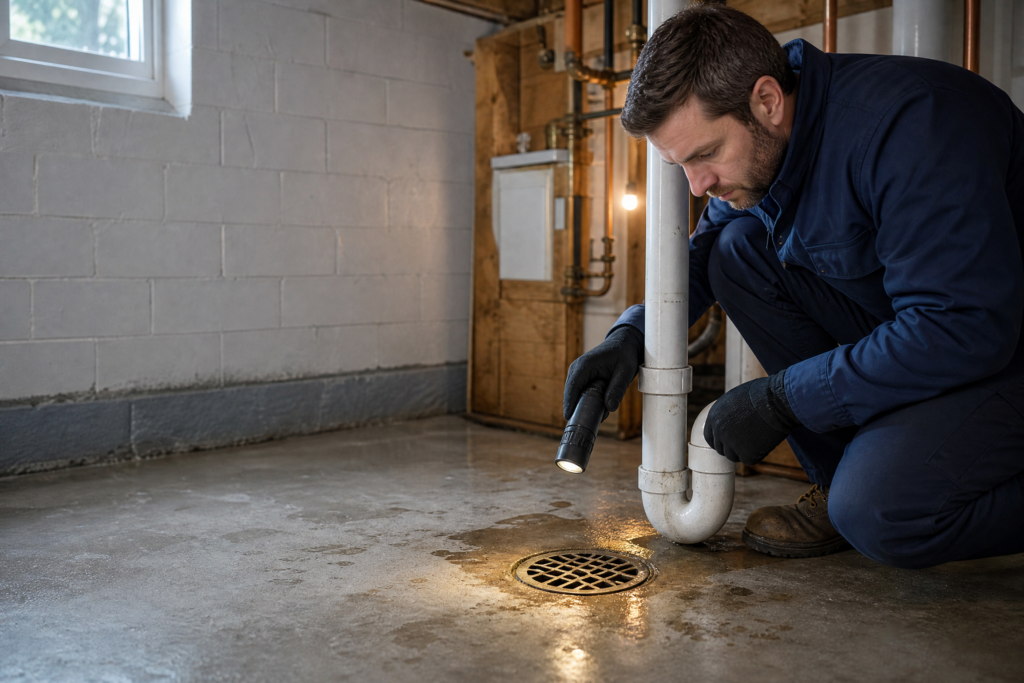
Image caption: A floor drain and P-trap are common places to investigate when a basement develops a sewer odour.
Buildup inside a sink, shower, or floor drain
Organic residue can cling to the inside of a drain and begin to smell. Kitchen grease, food particles, hair, body oils, soap scum, and mineral deposits may form a layer that bacteria feed on. In this situation, the odour is often strongest right at one drain and may be accompanied by slow drainage.
Remove visible debris from the strainer and clean the drain cover. Avoid mixing chemical drain cleaners or using them repeatedly, particularly if a plumber may need to open the line later. If the drain remains slow, a professional drain cleaning can remove buildup farther down the branch line than household cleaning can reach.
A damaged toilet seal or flange
A toilet should form a sealed connection with the drain through its base. If the seal fails, sewer odour can escape even when the toilet flushes normally. A toilet that rocks, shows moisture at its base, or smells strongest around the floor should be inspected rather than simply cleaned again.
Replacing the seal without correcting an uneven flange or loose toilet can leave the problem unresolved. A plumber can check the toilet connection, inspect for water damage, and confirm that the fixture is properly secured.
A Cracked or Disconnected Drain or Vent Pipe
A damaged pipe inside a wall, ceiling or floor cavity can release odour without leaving an obvious puddle. Drainpipes carry air as well as wastewater, so a small opening may leak gas while remaining visually dry.
Clues include:
- Odour near one wall or ceiling
- Smell inside a cabinet
- A persistent odour with full traps
- Damp or stained building materials
- Recent renovation near plumbing
- Odour spreading when the HVAC system runs
Accessible piping may be inspected visually. Hidden failures may require pressure, smoke or camera-based diagnostic methods, depending on the location.
A blocked, damaged, or root-invaded sewer line
If multiple drains smell or drain slowly, the problem may be in the main building drain or sewer lateral rather than one fixture. Older GTA properties can also experience tree-root intrusion, deteriorated pipe joints, offset sections, or collapsed pipe. Warning signs include a toilet that bubbles when another fixture runs, wastewater rising through a basement floor drain, and repeated blockages in different rooms.
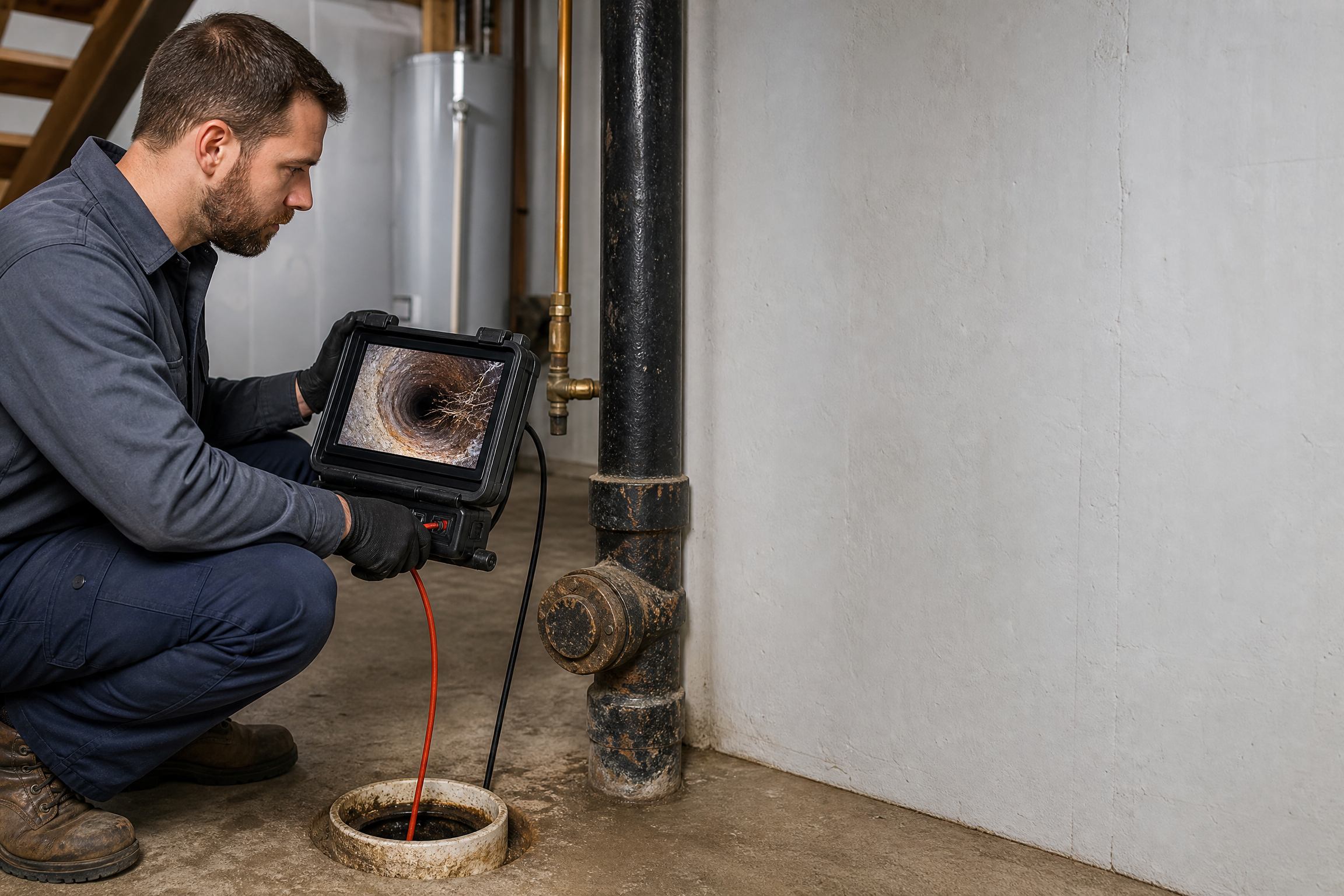
This is not a good situation for repeated plunging or chemical products. Stop using water as much as possible and arrange an inspection. Saving Plumbing’s sewer-related services include drain repair, video camera inspection, sewer tree-root removal, power scrub jetting, and emergency plumbing support.
A Loose or Missing Cleanout Cap
A sewer cleanout provides access to the building drain or sewer lateral. Its cap must remain sealed when the opening is not in use.
A loose, cracked or missing cap can release sewer gas into a basement or utility room. The smell may be strongest close to the floor or along an exterior wall.
Do not remove a cleanout cap when a blockage or backup is suspected. Wastewater may be under pressure behind it.
Why Does My House Smell Like Sewer When the AC Comes On?
The air conditioner may be moving an odour that began elsewhere. A dry floor drain, damaged drainpipe or loose plumbing connection near a return-air opening can release sewer gas. The HVAC system then distributes that air between rooms.
The condensate system can produce a similar smell. Standing water, sludge or bacterial growth inside a drain pan or condensate line may create a strong odour when the blower starts.
Use the pattern to narrow the source:
- Smell from every supply vent: inspect the HVAC system and the area around return ducts.
- Smell strongest near one bathroom or floor drain: inspect the plumbing trap and drain.
- Smell begins before the blower starts: the source is likely already in the room.
- Smell appears only during cooling: inspect the condensate drain and pan.
- Smell resembles burning, fuel gas or chemicals: switch off the system and seek immediate professional help.
A plumber can inspect drain traps and nearby waste or vent connections. An HVAC technician should assess the evaporator coil, drain pan, condensate line and ductwork when the smell originates inside the air handler.
Why Does My House Smell Like Sewer When the Heat Comes On?
Heating changes indoor air movement. Return ducts can draw air from basements, utility rooms and wall cavities where a plumbing odour is escaping.
Cold-weather heating can also dry out rarely used floor drains more quickly. Once the trap water evaporates, the drain loses the water seal that blocks sewer gas.
Check basement floor drains, guest bathrooms and laundry sinks that receive little use. Add water only when the smell is mild, the drain is accessible and no sewage backup is present. A fast return of the smell can indicate a leaking trap, failed trap primer or pressure problem.
Why Does My House Smell Like Sewer When Doing Laundry?
A washing machine discharges a large volume of water within a short period. That flow can reveal a partially blocked branch drain, undersized or poorly vented standpipe, dry trap or main-line restriction.
Inspect the laundry area for:
- Odour from the washing-machine standpipe
- Water or residue around the standpipe
- Gurgling from a nearby sink or floor drain
- A utility sink that drains slowly
- A washer hose inserted too deeply into the standpipe
- Sludge around the washer’s door gasket or drain filter
An odour inside the washer may come from detergent residue, lint or stagnant water. A smell that rises from the standpipe while the machine drains is more likely connected to the plumbing system.
If the standpipe overflows or nearby fixtures gurgle, stop the cycle. Professional drain cleaning in Toronto may be required to locate and clear the restriction.
Why Does My House Smell Like Sewer After Flushing the Toilet?
Flushing moves water and air through the toilet drain. A failed wax ring or rubber seal can release odour around the base as pressure changes. A blocked vent or partial drain obstruction can also push foul air toward the bathroom.
Check whether:
- The toilet rocks when gently pressed
- The smell is strongest at floor level
- Water appears around the base
- The bowl bubbles
- The flush is weak or slow
- Another drain gurgles after flushing
A failed seal can leak gas before visible water appears. Resetting the fixture may also require flange repair when the toilet is loose or uneven. Saving Plumbing’s toilet repair service in Toronto covers toilet seals, flange problems, recurring clogs and drainage faults.
Avoid caulking around a loose toilet as a substitute for repairing the connection. The toilet must sit securely against a sound flange and drain seal.
Why Does My House Smell Like Sewer After I Shower?
A shower can release odour from residue inside the drain. Hair, soap, body oils and organic matter form biofilm along the drain wall. Warm water and moving air make that odour easier to notice.
A venting or trap problem becomes more likely when the shower:
- Drains slowly
- Gurgles
- Produces an odour from another fixture
- Smells again soon after the drain is cleaned
- Causes the toilet bowl water to move
If the smell comes only from the shower opening, remove accessible hair and clean the strainer. Persistent slow drainage may require branch-drain cleaning.
Why Does My House Smell Like Sewer When Running Water?
Running water should carry waste away while the P-trap maintains a protective water seal. An odour that appears during water use may mean that water is disturbing buildup, displacing air behind a blockage or siphoning a poorly vented trap.
Watch nearby fixtures while the water runs. Bubbling in a toilet or gurgling from another drain suggests that the fixtures share a restricted or poorly vented line.
Several affected fixtures justify a broader drainage assessment. A single smelly drain with normal flow usually points toward local residue or that fixture’s trap.
Why Does My House Smell Like Sewer at Night or When It Gets Cold?
Nighttime odours can follow heating cycles, closed windows and cooler air movement. A dry basement drain or hidden vent leak may become more noticeable when the furnace draws air through the house.
Cold weather can also contribute to:
- Faster trap evaporation in heated rooms
- Reduced airflow through an obstructed plumbing vent
- Odours being drawn from basements and wall cavities
- Greater use of lower-level laundry and utility areas
Record when the smell starts and whether the furnace, humidifier, bathroom fan or range hood was running. This detail can help separate a plumbing opening from an HVAC circulation problem.
A house can smell like sewer without a visible leak. Sewer gas escapes through failed air seals, so water may never appear. Dry traps, loose cleanout caps, failed toilet seals and damaged vent joints can release odour while surrounding surfaces remain dry.
How to check the source safely
A careful first check can help you describe the problem to a plumber. It should not involve entering a confined space, dismantling a sewer line, climbing onto the roof, or exposing yourself to sewage.
1.Notice the pattern. Record whether the odour is strongest at one drain, one toilet, the basement, or throughout the home. Note whether it appears after a shower, laundry cycle, toilet flush, rainfall, or a period away.
2.Check for related symptoms. Look for slow drainage, gurgling, bubbling, water at a toilet base, dampness, or visible backup. Several symptoms together raise the urgency.
3.Refill an unused trap only when appropriate. If the odour is mild, isolated, and there are no health symptoms or signs of backup, add water to an unused floor drain or run an infrequently used fixture briefly. If the smell continues, do not keep masking it with air freshener.
4.Stop if conditions worsen. Do not open a cleanout, use a flame, operate electrical equipment near standing wastewater, or enter a strong-smelling basement or enclosed area to investigate.
5.Call for diagnosis when the source is not obvious. A plumber may use drain cleaning, a sewer camera, vent testing, leak detection, or a repair at the fixture, branch line, or sewer connection depending on the evidence.
When Is a Sewer Gas Smell an Emergency?
Leave the affected area when the smell is intense, sudden or concentrated in a basement, crawl space or other enclosed location.
Seek emergency help if anyone experiences:
- Dizziness
- Headache
- Nausea
- Breathing difficulty
- Drowsiness
- Confusion
- Eye or throat irritation
Avoid flames, smoking and unnecessary electrical switching in the affected area.
Urgent plumbing service is also warranted when the odour occurs with:
- Visible sewage
- Wastewater rising from a floor drain
- An overflowing toilet
- Several blocked fixtures
- Rapidly spreading contaminated water
- A failed sewage ejector system
If sewage has backed up into a Toronto basement, stop using toilets, sinks, showers, dishwashers and washing machines. Additional wastewater can worsen the backup. Contact Toronto 311 when the problem may involve the City-side sewer connection.
How a Toronto plumber finds and fixes the problem
The repair should match the source rather than the smell alone. A typical diagnostic visit may include checking traps and fixture seals, assessing drainage flow, inspecting accessible piping, and reviewing whether the odour changes when fixtures operate.
| Finding | Typical professional response |
| Dry or defective trap | Re-prime, repair, or replace the trap or primer |
| Dirty or obstructed branch drain | Drain cleaning or snaking; power scrub jetting for severe buildup |
| Toilet seal or flange defect | Reset and seal the toilet, repair the flange, and check surrounding damage |
| Blocked or damaged vent | Clear, repair, or replace the affected vent section |
| Root intrusion or damaged sewer line | Camera inspection followed by root removal, drain repair, or pipe work |
| Backup risk in a basement | Clear the obstruction and assess whether backwater-valve protection is appropriate |
A sewer camera inspection can be particularly valuable when the odour keeps returning, the home has mature trees, or different fixtures show symptoms at different times. The camera helps locate roots, cracks, offsets, sediment, and other conditions without immediately excavating. The inspection result gives the homeowner a clearer basis for deciding between cleaning, repair, replacement, or preventative work.
A professional assessment may include:
- Trap inspection: Confirming that floor drains and fixtures contain water and hold their seals.
- Fixture testing: Checking toilets, sinks, showers and laundry connections for movement, leakage or poor drainage.
- Drain-flow testing: Observing how fixtures interact when water enters a shared branch or main drain.
- Vent assessment: Looking for pressure symptoms, damaged connections or blocked venting.
- Camera inspection: Examining an accessible drain or sewer line for roots, cracks, offsets and standing water.
- Smoke testing: Introducing controlled, non-toxic test smoke to locate openings in drain or vent piping when appropriate.
- Targeted repair: Correcting the seal, trap, vent, drain, flange or sewer defect identified during diagnosis
How to Stop Sewer Smells From Returning
Run water in guest bathrooms and other rarely used fixtures.
Refill basement and garage floor drains periodically.
Keep strainers over kitchen, shower and laundry drains.
Remove hair and visible residue before it enters the branch line.
Respond to recurring gurgling or slow drainage.
Keep toilets stable and properly secured.
Avoid pouring grease, oil or food waste into drains.
Do not flush wipes, paper towels, dental floss or hygiene products.
Have repeated sewer blockages investigated rather than repeatedly cleared without diagnosis.
Include floor drains and sewer cleanouts in basement renovation plans.
If you own an older GTA home, have had repeated blockages, or live on a tree-lined property, ask a plumber whether a sewer camera inspection is worthwhile. Homes with a history of basement backups may also benefit from discussing a backwater valve, which is designed to help reduce the risk of wastewater flowing back toward the house when municipal or private sewer systems are overwhelmed.
Call Saving Plumbing for sewer odour and drain service in the GTA
A sewer smell is a symptom, not a diagnosis. It may be a dry basement-trap issue, but it can also be an early warning of a blocked vent, failed toilet seal, damaged pipe, or sewer-line problem. If the odour is persistent, widespread, or paired with slow drainage or backup, prompt diagnosis can prevent a more disruptive emergency.
Saving Plumbing offers 24/7 plumbing service in Toronto, Scarborough, North York, Etobicoke, Mississauga, Vaughan, Markham, Pickering, Oshawa, Richmond Hill, Whitby, and surrounding GTA communities. For drain cleaning, drain repair, camera inspection, sewer tree-root removal, leaking-pipe repair, or emergency plumbing help, call (416) 271-6745 or request a free estimate online.
Frequently asked questions
Why does my house smell like sewer gas?
A house may smell like sewer gas because of a dry P-trap, dirty drain, damaged toilet seal, blocked plumbing vent, leaking pipe, or blocked or damaged sewer line. The location of the odour and signs such as gurgling, slow drainage, or backup help identify the likely cause.
Can sewer gas come through air vents?
The plumbing system and HVAC ductwork are separate. Air ducts can collect and distribute odour escaping from a nearby dry drain, cracked pipe or loose sewer connection. A condensate drain can also produce an odour that resembles sewage.
Should I use bleach or drain cleaner for a sewer smell?
Do not mix bleach with drain cleaners or other household chemicals. A chemical product cannot repair a failed seal, dry trap, damaged vent or cracked sewer pipe. Remove accessible residue and arrange diagnosis when the source remains unclear.
Is a sewer gas smell dangerous?
A persistent sewer gas smell should not be ignored. Sewer gas can contain hydrogen sulphide and other gases that may irritate the eyes and airways or cause headache, dizziness, nausea, and more serious effects at high concentrations. Leave a strong-smelling enclosed area and call emergency services if anyone has symptoms or a high-concentration exposure is suspected.
Why do several drains in my house smell at the same time?
Several smelly drains may indicate a blocked or damaged main sewer line, a blocked plumbing vent, or a broader drainage problem rather than separate dirty drains. Stop using excess water and arrange prompt plumbing service, especially if toilets bubble, fixtures drain slowly, or wastewater rises from a floor drain.
When should I call a plumber for a sewer smell?
Call a plumber when the smell is persistent, returns after refilling an unused trap, comes from multiple fixtures, or occurs with slow drainage, gurgling, toilet movement, visible leakage, or sewage backup. Saving Plumbing provides 24/7 drain, sewer, leak, and emergency plumbing service across Toronto and the GTA
Can a clogged drain make the whole house smell like sewer?
A local clog usually affects one area. A main-drain restriction or venting problem can affect several fixtures. HVAC airflow may then distribute the odour to other rooms.
Will pouring water into a floor drain stop the smell?
It can stop the smell when evaporation has emptied the P-trap. The odour should remain away after the trap is refilled. A fast return means the trap may be leaking, siphoning or missing a functioning primer.
References
[1] Saving Plumbing — Toronto’s top rated plumbing services
[2] ATSDR/CDC ToxFAQs: Hydrogen Sulfide
[3] Wisconsin Department of Health Services: Sewer Gas
[4] DrainWorks: Why Does It Smell Like Sewer In My House?
[5] Oatey: Why Does My House Smell Like Sewer Gas?
[6] SERVPRO: What Causes a Sewage Smell in Your House?
[7] Canadian Plumbing: Sewer Odor Inspection Services in Toronto
