
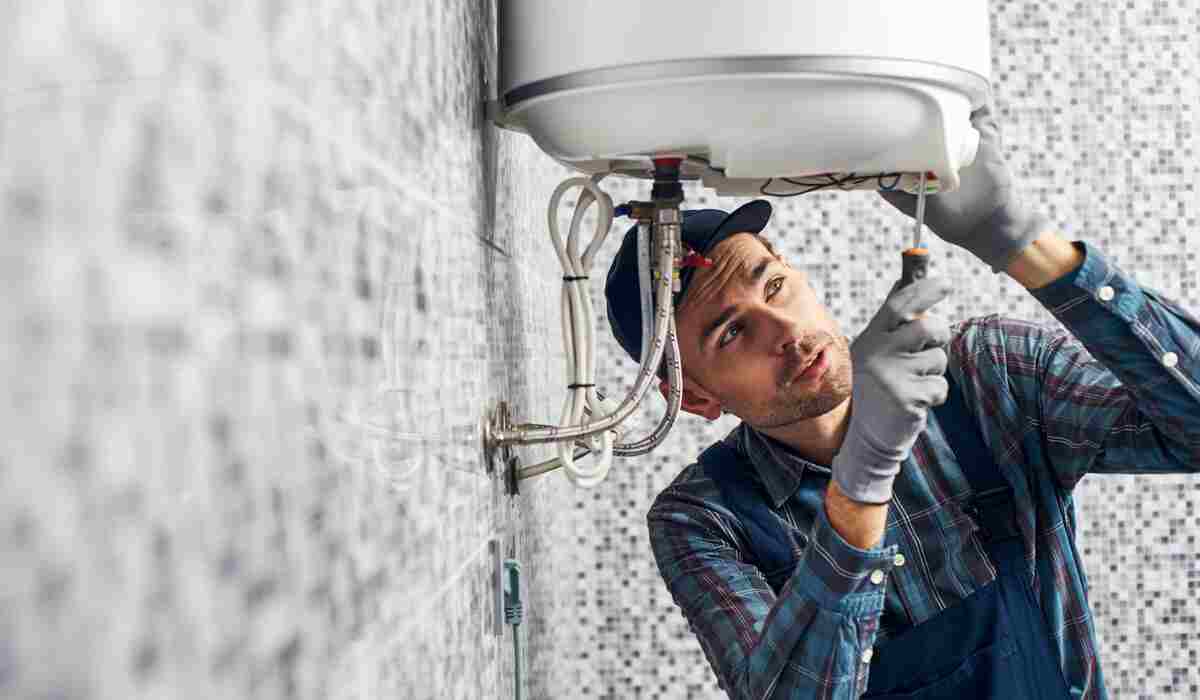
These Signs Indicate That Your Water Heater Must be Replaced
A water heater usually needs replacement when its internal tank is leaking, corrosion has weakened the tank body, repairs keep recurring, or the equipment can no longer provide hot water safely and reliably. A failed heating element, thermostat, valve or burner component may still be repairable.
The symptom alone rarely settles the decision. Water around the heater could come from a loose supply connection, a leaking valve, condensation or a ruptured tank. Rust-coloured water might originate inside the heater, though old household piping can produce a similar result. The source, equipment condition and repair history need to be considered together.
Leave the area and call Enbridge Gas from a safe location if you smell rotten eggs or suspect a natural-gas leak. A leaking tank, wet electrical components, smoke, sparking or a carbon-monoxide alarm also requires immediate attention.
Does the water heater need repair or replacement?
Use this table as an initial guide. A physical inspection is still needed before equipment is condemned.
| Symptom | Repair may be possible when | Replacement becomes more likely when |
|---|---|---|
| Water around the heater | A valve, fitting or supply connection is leaking | Water is escaping through the tank body or bottom seam |
| No hot water | A thermostat, heating element, igniter or control has failed | The tank is leaking, badly corroded or has repeated major failures |
| Water is not hot enough | The temperature setting, element or burner needs service | Capacity is no longer suitable and the unit has other serious defects |
| Rust-coloured hot water | Household piping or a serviceable internal component is responsible | Corrosion is coming from the tank itself |
| Rumbling or popping | Sediment can be safely removed and the tank remains sound | The tank is damaged, leaking or performing poorly after service |
| High energy use | Maintenance or a failed control restores normal operation | The unit remains inefficient and is near the end of useful service |
| Repeated breakdowns | One isolated component has failed | Repair costs and downtime continue to accumulate |
| Gas or combustion concern | A qualified contractor finds a repairable component fault | The heat exchanger, tank or other major assembly is unsafe or failed |
Age provides context, though it should not be used as a replacement deadline by itself. Installation quality, water conditions, maintenance, tank material, operating temperature and household demand all influence service life.
Water leaking from the tank body usually means replacement
The location of a leak matters more than the size of the puddle. A small tank-body leak can expand as corrosion and water pressure act on the weakened metal.
Water may escape from:
- The hot- or cold-water connection
- A shutoff valve
- The drain valve
- The temperature and pressure relief valve
- A nearby pipe
- Condensation around the appliance or vent
- The internal storage tank
Connections and valves can sometimes be repaired. A leaking internal tank generally cannot be patched safely as a lasting repair. The water heater normally needs to be isolated and replaced.
What to do when water is collecting around the heater
Keep people away from the area if water is reaching electrical wiring, controls or nearby outlets. Avoid standing in water to reach the appliance.
If it is safe and you know how:
- Stop using hot water.
- Close the water supply serving the heater.
- Shut down the appliance according to its manufacturer’s emergency instructions.
- Move stored belongings away from the water.
- Arrange a prompt inspection.
Do not plug a tank leak with sealant or tighten corroded fittings aggressively. Disturbing weakened metal can make the leak worse.
Saving Plumbing provides water-heater repair in Toronto when the source may be a replaceable valve, fitting or operating component. When the tank itself has failed, water-heater replacement in Toronto is usually the appropriate service.
Corrosion needs to be traced before the heater is condemned
Visible rust does not always mean the tank has failed. Surface corrosion may develop on a fitting after a slow connection leak. Discoloured water can also come from old galvanized or corroded household piping.
The location and pattern provide better evidence.
Signs that may point toward internal tank corrosion
- Rust-coloured water appears only at hot-water taps.
- Corrosion is visible around the tank seam.
- Water is seeping through the metal tank body.
- Rust repeatedly appears after the hot-water system has been flushed.
- The heater has a history of internal corrosion or anode problems.
- Several tank components show deterioration at the same time.
If both hot and cold water are discoloured, the cause may be elsewhere in the plumbing system or water supply. Test more than one fixture before assuming the water heater is responsible.
Surface rust and tank failure are different conditions
A corroded connector, dielectric union or valve may be replaceable if the tank beneath it remains sound. Rust at a bottom seam or water emerging through the tank jacket is more concerning because the visible moisture may originate from the internal vessel.
An inspection should determine:
- Where the water first appears
- Whether the tank jacket is wet
- Whether a valve or fitting is dripping onto the tank
- Whether corrosion has weakened a threaded connection
- Whether the discolouration affects hot water, cold water or both
- Whether the equipment remains safe to operate
Replacement should be based on the failed component and the condition of the complete appliance. Rust alone is not enough evidence when its source has not been identified.
Less hot water does not always mean the tank has failed
A household may notice that showers turn cold sooner, recovery takes longer or hot water runs out when several fixtures are used. These symptoms show that the system is no longer meeting demand. They do not identify the failed component.
Possible causes include:
- Sediment reducing usable tank capacity
- A failed electric heating element
- A defective thermostat
- Burner or ignition trouble
- A damaged dip tube
- A mixing-valve fault
- An incorrect temperature setting
- Increased household demand
- An undersized water heater
- Scale inside a tankless heat exchanger
- A plumbing crossover between hot and cold lines
An electric water heater with two elements may continue producing some hot water after one element fails. The household gets a smaller volume or slower recovery. Replacing the failed element may restore normal service if the tank remains sound.
A gas heater may recover slowly when the burner, control, venting or combustion air supply needs attention. Gas-related work should be handled by an appropriately qualified contractor.
Check whether household demand has changed
A water heater that performed well for years may feel undersized after:
- More people move into the home.
- A large bathtub is installed.
- Shower duration increases.
- Several showers occur back to back.
- Laundry and dishwashing run during peak bathing periods.
- An efficient showerhead is replaced with a higher-flow model.
Replacement may be reasonable when the heater is too small for normal demand, though a larger tank is only one option. Fixture flow rates, usage timing and recovery rate should also be reviewed.
Fluctuating water temperature points to several possible faults
Water that swings from hot to cool can come from the heater, a mixing valve or an individual fixture.
Check the pattern:
- One shower changes temperature: The shower cartridge or pressure-balancing valve may be responsible.
- Every hot-water fixture is affected: The heater or a central mixing valve becomes more likely.
- Temperature drops only during simultaneous use: The system may have reached its capacity or flow limit.
- A tankless heater turns hot and cold at low flow: The fixture may be operating below the unit’s minimum activation rate.
- Water is excessively hot: A thermostat, sensor or mixing-control problem needs prompt attention.
The heater should not be replaced until the technician determines whether the temperature problem is inside the appliance. Replacing a functioning tank will not correct a failed shower cartridge.
Scalding water needs prompt investigation
Water that is suddenly much hotter than usual can cause burns. Stop adjusting controls randomly and keep children and vulnerable occupants away from the affected fixtures.
A thermostat or control fault can allow water to overheat. A failed mixing valve may also deliver water above the intended fixture temperature. The heater and distribution controls should be inspected.
Rumbling and popping usually call for diagnosis
Tank-style heaters may produce popping, crackling or rumbling sounds when sediment collects near the bottom. Water trapped beneath the deposits can boil locally and create noise as it moves through the sediment.
The right response depends on the tank’s condition.
Maintenance may help when:
- The manufacturer permits flushing.
- The drain valve remains operable.
- The tank is not leaking.
- Corrosion is limited.
- The appliance otherwise performs normally.
- The service can be completed safely.
Replacement becomes more likely when the noisy heater also has:
- A tank-body leak
- Heavy corrosion
- Poor recovery after service
- Repeated overheating
- A damaged internal lining
- A long repair history
- Components that are no longer available
An older tank that has never been flushed should be assessed before the drain valve is opened. Sediment can obstruct the valve, and a deteriorated valve may not reseal after service.
Repeated repairs can make replacement more practical
One repair does not make a water heater unreliable. A replaceable thermostat, heating element, igniter or valve may provide years of further service when the rest of the unit remains sound.
The calculation changes when faults begin to overlap.
Review:
- The cost of the proposed repair
- Previous repairs to the same unit
- Remaining warranty coverage
- Tank or heat-exchanger condition
- Availability of replacement parts
- Energy performance
- Downtime for the household
- Installation changes required for a new unit
- Whether the current capacity still suits the home
A low-cost component repair on a sound heater is different from replacing several major components on a corroded unit. Ask for the failed part to be identified and for the tank condition to be explained before authorizing replacement.
Rising utility bills need context
A higher gas or electricity bill does not prove that the water heater is failing. Rates, weather, household size and usage habits can all affect consumption.
The heater may contribute when:
- Sediment slows heat transfer.
- A hot-water leak keeps the unit cycling.
- The burner runs longer than before.
- An electric element remains energized abnormally.
- Insulation has deteriorated.
- Hot water is being lost through a recirculation problem.
- Controls are maintaining an unnecessarily high temperature.
- The unit is inefficient compared with a suitable replacement.
Compare several billing periods and account for changes in occupancy or utility rates. A technician can then inspect the equipment, test its operation and look for hot-water loss elsewhere in the plumbing system.
Natural Resources Canada provides a guide to residential water heaters covering storage tanks, tankless systems and heat-pump water heaters. Efficiency ratings help compare new equipment, though installation conditions and household demand still determine real performance.
Equipment age should trigger planning, not automatic replacement
There is no single replacement age that applies to every water heater. Two units installed in the same year can reach very different conditions due to water quality, maintenance, usage, installation and operating temperature.
Use age as one part of the assessment.
An older heater may remain serviceable when:
- The tank is dry and structurally sound.
- Hot-water delivery remains consistent.
- Combustion or electrical components operate safely.
- Service parts are available.
- Repairs have been limited.
- Energy use remains reasonable.
Advance replacement planning becomes sensible when age is combined with corrosion, reduced capacity, frequent repairs or signs of tank deterioration. Planning ahead also gives the homeowner time to compare equipment and installation requirements.
The manufacturing date is often encoded in the serial number or printed on the rating plate. Record the manufacturer, model number, serial number, fuel type and tank capacity before requesting advice.
Treat gas odours and carbon-monoxide alarms as emergencies
Natural gas and carbon monoxide require different responses.
Natural gas is given a sulphur-like or rotten-egg odour to help people detect a leak. Carbon monoxide has no colour, smell or taste.
If you smell gas:
- Leave the building immediately.
- Do not operate switches, phones or appliances inside.
- Do not attempt to locate or repair the leak.
- Call Enbridge Gas at 1-866-763-5427 or call 911 from a safe location.
Enbridge Gas provides current instructions on what to do if you smell natural gas.
If a carbon-monoxide alarm sounds:
- Move everyone outside to fresh air.
- Call 911 or the fire department.
- Do not re-enter until emergency personnel say it is safe.
- Have the fuel-burning equipment inspected before it returns to service.
A carbon-monoxide alarm detects carbon monoxide. It does not detect a natural-gas leak.
Water-heater warning signs that need qualified inspection
- Soot around the burner or vent
- Scorching or discolouration near the draft hood
- A loose, damaged or disconnected vent
- Exhaust spilling into the room
- Repeated pilot or ignition failure
- Unusual burner flame
- Moisture or corrosion around venting
- A carbon-monoxide alarm
- Headaches or dizziness that improve after leaving the property
Symptoms such as headache, nausea, weakness, dizziness, confusion or chest pain can be associated with carbon-monoxide exposure. Move to fresh air and seek emergency help when exposure is suspected.
Enbridge Gas recommends annual inspection and maintenance of fuel-burning appliances by a TSSA-registered contractor. Its carbon-monoxide safety guidance also advises maintaining working alarms near sleeping areas and on each level of the home.
Repair or replace: use the failed component as the starting point
A repair decision should answer four questions:
- What exactly failed?
- Is the tank or heat exchanger still sound?
- Will the repair restore safe and reliable service?
- Does the cost make sense given the unit’s condition and history?
Repair is often reasonable when
- A thermostat or electric element has failed.
- An igniter or serviceable control needs replacement.
- A supply fitting or accessible valve is leaking.
- A drain valve can be replaced safely.
- The tank remains dry and free from serious corrosion.
- The required part is available.
- The heater otherwise meets household demand.
- The problem is isolated and has not kept returning.
Replacement is more likely when
- The internal tank is leaking.
- Corrosion has weakened the tank body.
- A major non-serviceable assembly has failed.
- Repairs have become frequent.
- Essential replacement parts are unavailable.
- The unit cannot meet normal demand after service.
- The appliance has a serious recurring safety defect.
- Repair cost is disproportionate to the condition of the equipment.
A technician should be able to show where the leak originates, identify the defective component and explain why the proposed work is a repair or replacement.
For equipment that can be restored safely, Saving Plumbing offers water-heater repair in Toronto. When the tank or another non-repairable assembly has failed, the replacement should be sized around the home’s actual hot-water use and installation conditions.
Confirm who owns the water heater before approving replacement
Many Ontario homes have rented water heaters. The homeowner may pay a monthly charge through a utility or equipment provider while another company owns the appliance.
Check a recent gas bill, purchase documents or the label attached to the unit. Determine whether the heater is:
- Owned outright
- Financed
- Rented
- Covered by a service agreement
- Included under condominium or building management
A rental provider may require that its own technician inspect, repair or replace the equipment. Removing a rented heater without following the contract can trigger return requirements, buyout charges or other fees.
Ask for the following information in writing:
- Current monthly rental charge
- Remaining contract term
- Buyout amount
- Removal and return procedure
- Included repair coverage
- Replacement model and efficiency
- Installation charges
- Cancellation conditions
The replacement decision should account for equipment condition and the existing contract.
What to compare when replacement is justified
Avoid choosing a new water heater from tank capacity alone. The installation should match the household’s peak demand and the property’s mechanical conditions.
Record these details before comparing systems:
- Current fuel source
- Existing tank capacity
- Number of occupants
- Number of bathrooms
- Highest simultaneous hot-water demand
- Available electrical service
- Gas-line capacity
- Venting route
- Drainage for condensate
- Mechanical-room dimensions
- Doorway and staircase access
- Available service clearance
Toronto’s winter inlet water is colder than summer inlet water. A tankless unit must produce the required temperature rise while maintaining enough flow for simultaneous fixtures. A unit sized from an idealized flow rating may underperform during colder months.
Storage-tank replacement
A conventional storage tank is often the simplest replacement where the fuel source, venting and hot-water demand remain similar.
Check:
- First-hour rating
- Recovery rate
- Energy efficiency
- Venting type
- Tank dimensions
- Drain-pan requirements
- Warranty coverage
- Access for future service
Tankless water heater
A tankless heater removes storage-related heat loss and can free up floor space. It still needs to be sized for temperature rise and simultaneous flow.
A conversion may require:
- A larger gas line
- A dedicated electrical circuit
- New venting
- Condensate drainage
- Water-treatment considerations
- Periodic descaling
- Changes to the existing piping
“Endless hot water” describes operating duration when the unit can keep up with demand. It does not mean unlimited flow to every fixture at once.
Heat-pump water heater
A heat-pump model can significantly reduce electricity consumption compared with a standard electric resistance tank. It requires a suitable installation area, condensate drainage and enough surrounding air or approved ducting.
Natural Resources Canada lists ENERGY STAR-certified water-heater categories available in Canada. Product efficiency should be considered alongside installation feasibility, fuel costs and household demand.
Frequently asked questions
What is the clearest sign that a water heater needs replacement?
Water leaking through the internal tank or tank body is one of the clearest replacement signs. A loose fitting, relief valve or drain valve may still be repairable, so the source should be confirmed before the unit is condemned.
Should I replace my water heater because it is old?
Age should prompt an inspection and replacement plan. It does not prove that the heater has failed.
An older unit may continue operating safely when the tank remains sound, performance is consistent and replacement parts are available. Age becomes more important when combined with corrosion, leakage, repeated repairs or declining capacity.
Can a leaking water heater be repaired?
A leaking connection, accessible valve or external component may be repairable. An internal storage tank that has corroded and begun leaking usually requires replacement.
Water can travel along pipes and the tank jacket before reaching the floor. The first visible drip may not identify the source.
Why does my hot water run out faster than before?
Possible causes include sediment accumulation, a failed heating element, burner trouble, a damaged dip tube, a thermostat fault or increased household demand.
A diagnosis should determine whether the heater has lost capacity or whether a replaceable component is limiting performance.
Does rusty hot water mean the tank is failing?
Rust-coloured hot water can indicate internal tank corrosion, though household piping may create similar discolouration. Compare hot and cold water at several fixtures.
Discolouration limited to hot water places greater suspicion on the water heater. An inspection is still needed to identify the affected material or component.
Should a noisy water heater be replaced?
Popping and rumbling often indicate sediment inside a storage tank. Maintenance may help when the tank is structurally sound and the manufacturer permits the procedure.
Noise accompanied by leakage, severe corrosion, poor recovery or recurring overheating makes replacement more likely.
Is no hot water an emergency?
Loss of hot water normally requires prompt or same-day service. It becomes an immediate emergency when the heater is leaking heavily, smoking, sparking, exposing electrical parts to water, producing a gas odour or associated with a carbon-monoxide alarm.
Saving Plumbing’s guide to plumbing emergencies in Toronto explains when to shut off equipment and seek urgent help.
Can I replace a gas water heater myself?
Gas supply, venting, combustion air and carbon-monoxide risks require qualified work. Improper installation can create fire, explosion and exhaust hazards.
Fuel-burning equipment should be installed, tested and serviced by appropriately qualified professionals.
What size water heater does my home need?
Sizing depends on peak hot-water demand, fixture flow rates, recovery rate, incoming water temperature and the number of fixtures used together.
Bedroom or bathroom count can help estimate demand. It should not be the only sizing method.
Is a tankless heater always better than a storage tank?
Each system has different installation and operating requirements. A tankless unit may reduce standby losses and save space. A storage tank may be simpler to install and better suited to certain demand patterns.
Compare total installation cost, available utilities, peak flow, maintenance and expected energy use.
Arrange an inspection before the failure spreads
Water around the heater, recurring shutdowns, rust at the tank seam or a sudden loss of capacity deserves an inspection. Early diagnosis may preserve a repairable unit or allow replacement before the tank releases water into the basement or utility room.
Saving Plumbing provides water-heater diagnosis, repair and replacement across Toronto and supported GTA communities. Call 416-271-6745 or request a plumbing estimate to have the problem assessed.
You Might Also Like To Read
- Why Is My Water Heater Leaking From the Bottom?
- How to Tell If a Pipe Has Burst: Signs & What to Do
- Why Is My Basement Floor Drain Backing Up in Scarborough?
- How Often Should You Get a Sewer Camera Inspection in Toronto?
- Shower Dripping After Turned Off Scarborough – Causes & Fixes
- How Long Does A Clogged Drain Cleaning Takes?
