
Low water pressure in your Toronto home? Find the likely cause by fixture, hot or cold supply, safe checks to try, and when to call plumber in Toronto.
TL;DR
Low water pressure usually begins at one of four points: the fixture, a valve, the home’s supply piping or the municipal water service. The fastest way to narrow it down is to note where the flow is weak.
A single weak faucet often has a clogged aerator, cartridge or local shutoff valve. Weak hot water throughout the house points toward the water heater, its valve or the hot-water piping. Low flow at every fixture can involve the main valve, a hidden leak, a restricted service pipe, a pressure-reducing valve or work on the City water system.
Start with safe observations. Compare several fixtures. Test hot and cold water separately. Ask a neighbour whether their pressure changed. Toronto residents can also check the City’s No Water Map.
Treat a sudden whole-home pressure loss as time-sensitive when you also notice water stains, running-water sounds, a spinning meter, frozen-pipe symptoms or active leakage. A gradual change at one fixture can usually wait for a scheduled repair.
If pressure dropped suddenly, a leak is suspected, or several fixtures are affected, contact Saving Plumbing for professional diagnosis and repair across the GTA.
Water Pressure and Water Flow Are Different

Water pressure is the force moving water through the system. Flow is the volume reaching the fixture over time. Homeowners experience both as a weak shower or slow faucet, yet the repair depends on which one is limited.
A clogged showerhead reduces flow at that shower while the incoming pressure may remain normal. Corroded piping can also produce an acceptable static gauge reading and weak flow once two fixtures run together.
This distinction matters because increasing pressure will never clear a blocked aerator or restore the inside diameter of a corroded pipe. Diagnosis begins with the pattern, followed by measurements where needed.
Find the Likely Cause by Following the Pattern
Test a kitchen faucet, bathroom faucet, shower and laundry sink. Try the hot and cold sides separately. Then repeat one test while another fixture is running.
| What you notice | Likely area to investigate | Best first step |
|---|---|---|
| One faucet is weak | Aerator, cartridge, supply hose or fixture shutoff | Clean the aerator and compare hot with cold |
| One shower is weak | Showerhead, cartridge, pressure-balancing valve or local branch | Clean the showerhead and note whether both temperatures are affected |
| All hot-water fixtures are weak | Water heater valve, mixing valve, heater connection or hot-water piping | Check other hot fixtures and arrange water-heater diagnosis |
| All cold-water fixtures are weak | Cold-water branch, filter, treatment equipment or local valve | Check which cold fixtures share the problem |
| One room or floor is affected | Branch-line valve or restriction | Compare fixtures served by the same area |
| The whole house is weak | Main valve, service pipe, leak, PRV or municipal supply | Check neighbours, City notices and visible plumbing |
| Flow drops when two fixtures run | Restricted or undersized supply, filter, PRV or demand issue | Record which combination causes the drop |
| Pressure changed suddenly | Leak, moved valve, frozen pipe, regulator failure or City work | Look for damage and treat the change promptly |
Common Causes of Low Water Pressure in Toronto Homes
A clogged aerator, showerhead or faucet cartridge
Sediment can collect in the small openings at a faucet or showerhead. This often happens after a water shutoff, watermain work, fixture replacement or repairs to the home’s pipes.
When one fixture is weak, remove its aerator only if it turns easily. Rinse the screen, reinstall it and test the water. A showerhead can be checked in the same way.
Flow that stays weak may point to debris inside the cartridge, a kinked supply hose, a worn stop valve or a restriction in the local branch. Saving Plumbing’s faucet repair service in Toronto can trace the fault beyond the fixture opening.
A partially closed or damaged shutoff valve
The main shutoff controls water entering the home. In Toronto houses, it is commonly found in the basement near the water meter. Renovation work or a past plumbing repair may leave it partly closed.
Older gate valves can fail internally. The handle may turn while the gate stays in the waterway. A fixture stop under a sink can develop a similar restriction.
Operate only a valve you can identify. Leave a seized, corroded or leaking valve in place for a plumber to assess. Extra force can turn a pressure complaint into an active leak.
A failing pressure-reducing valve
Some properties have a pressure-reducing valve, often called a PRV, on the incoming supply. It keeps higher municipal pressure at a suitable level for the building’s plumbing.
A worn or obstructed PRV can reduce flow across the home. Unstable pressure, weak flow at several fixtures or a marked difference between static and in-use readings can point toward the regulator.
A plumber can measure pressure before and after the valve and confirm whether it needs service or replacement. Random adjustment can expose fixtures, appliance valves and pipe joints to excessive pressure.
Corroded, scaled or undersized pipes
Galvanized steel can narrow from the inside as it ages. Older valves, service pipes and fittings can also accumulate corrosion or debris. The restriction may reveal itself as a gradual decline or a sharp loss of flow when another fixture opens.
The location of the restriction determines the remedy. One branch may need replacement while the rest of the system remains serviceable. Widespread corrosion, recurring leaks and weak flow across several areas may support a broader repiping assessment.
Pipe material alone should never decide the scope. A plumber should first compare flow near the meter with flow at distant fixtures and inspect accessible valves and branches.
A hidden plumbing leak
A substantial leak can divert water and reduce pressure. Look for fresh stains, damp drywall, wet flooring, musty odours, hissing inside a wall or an unexplained increase in water use.
You can perform a basic meter check:
- Turn off faucets and water-using appliances.
- Wait for toilets, ice makers and softeners to finish cycling.
- Record the meter reading or leak-indicator position.
- Avoid using water for several minutes, then check it again.
Movement suggests water is still passing through the system. Toilets and automatic equipment can create misleading readings, so this check provides a clue rather than a final diagnosis. Professional leak detection in Toronto can narrow down a concealed source before large finished areas are opened.
Low hot-water pressure
When cold flow is normal and every hot fixture is weak, the restriction is likely on the hot-water side. Possible locations include the cold inlet to the water heater, the hot outlet, a shutoff valve, a mixing valve or older hot-water piping.
If only one faucet has weak hot flow, the problem is more likely within that fixture, its hot-side stop, supply hose or cartridge.
Water temperature and pressure are separate symptoms. A heater can produce hot water while a valve or connection limits flow. Water around the tank, severe corrosion or unusual discharge from the relief line calls for prompt service.
A whole-home filter or water-treatment restriction
Whole-home filters, iron filters and water softeners sit in the incoming water path. A loaded filter, valve fault or treatment system stuck in the wrong cycle can reduce flow at every fixture.
Check the service date and display for equipment you already understand. Use the manufacturer’s normal bypass procedure only when it is clearly labelled and safe. A sudden change after filter replacement or treatment-system service is useful information for the technician.
Frozen pipes or a frozen service
Toronto cold snaps can restrict or stop water in exposed supply lines, exterior-wall plumbing and service pipes. One frozen branch may affect a single room. A frozen service can affect the entire home.
The City advises residents to use gentle heat such as warm air, a hair dryer or warm towels when thawing an accessible pipe. Its frozen-pipe guidance warns against open flames and fuel-burning heaters.
Keep the main shutoff accessible while a pipe thaws. A split may remain sealed by ice and begin leaking when flow returns.
Municipal work or a building-wide problem
Construction, watermain breaks and hydrant work can reduce pressure across several properties. Ask an immediate neighbour whether they have the same issue and check the No Water Map before assuming the fault is inside your home.
Condo and apartment residents should contact property management. Booster pumps, risers, shared valves and planned building maintenance can affect one stack, floor or suite. The superintendent can confirm whether other units share the symptom.
Should You Call Toronto 311 or a Plumber?
The dividing line is the likely location of the problem. Toronto owns the water service from the street watermain to the property line. The property owner is responsible for the portion from the property line into the building and for the plumbing inside it.
The City’s current low-water-pressure procedure gives homeowners a useful sequence:
- One affected tap or section usually indicates private plumbing.
- Several affected properties suggest City work or a watermain issue.
- A sudden pressure drop can be reported online or through 311. Toronto Water states that staff will attend within 24 hours.
- Chronic low pressure can be assessed through a booked water-service appointment.
For an eligible residential chronic-pressure assessment, City staff first confirm that the shutoff valves are open and that the plumbing is suitable for testing. The City states that it will not perform this test on lead or galvanized-steel plumbing. Its test measures flow at the water service. A result below 7 litres per minute is treated as below the City’s acceptable limit and can make the City-owned service a priority for replacement.
A plumber is the appropriate first call when one fixture or section is affected, a private valve has failed, a leak is suspected, the home contains lead or galvanized plumbing, or the City has identified a private-side fault.
Toronto’s process applies inside Toronto. Mississauga, Markham, Vaughan, Pickering and other GTA municipalities have their own service-request procedures and ownership rules.
Safe Checks You Can Complete Before Booking Service
Keep the first inspection simple and non-invasive.
- Map the problem. Test several fixtures and write down where flow is weak.
- Separate hot from cold. This can isolate a fixture, water-heater or branch issue.
- Compare static and busy conditions. Run a second fixture and note any sharp drop.
- Check the neighbourhood. Ask a neighbour and review City service information.
- Rinse an accessible aerator. Stop if the part is seized or likely to be damaged.
- Look for visible leakage. Check under sinks, near the water heater and along exposed piping.
- Confirm recent changes. Note renovations, shutoffs, filter service, freezing weather and City construction.
Leave the water meter seal, pressure regulator, concealed piping and unfamiliar valves alone. These components need the right test points and repair method.
How to Test Water Pressure With a Gauge
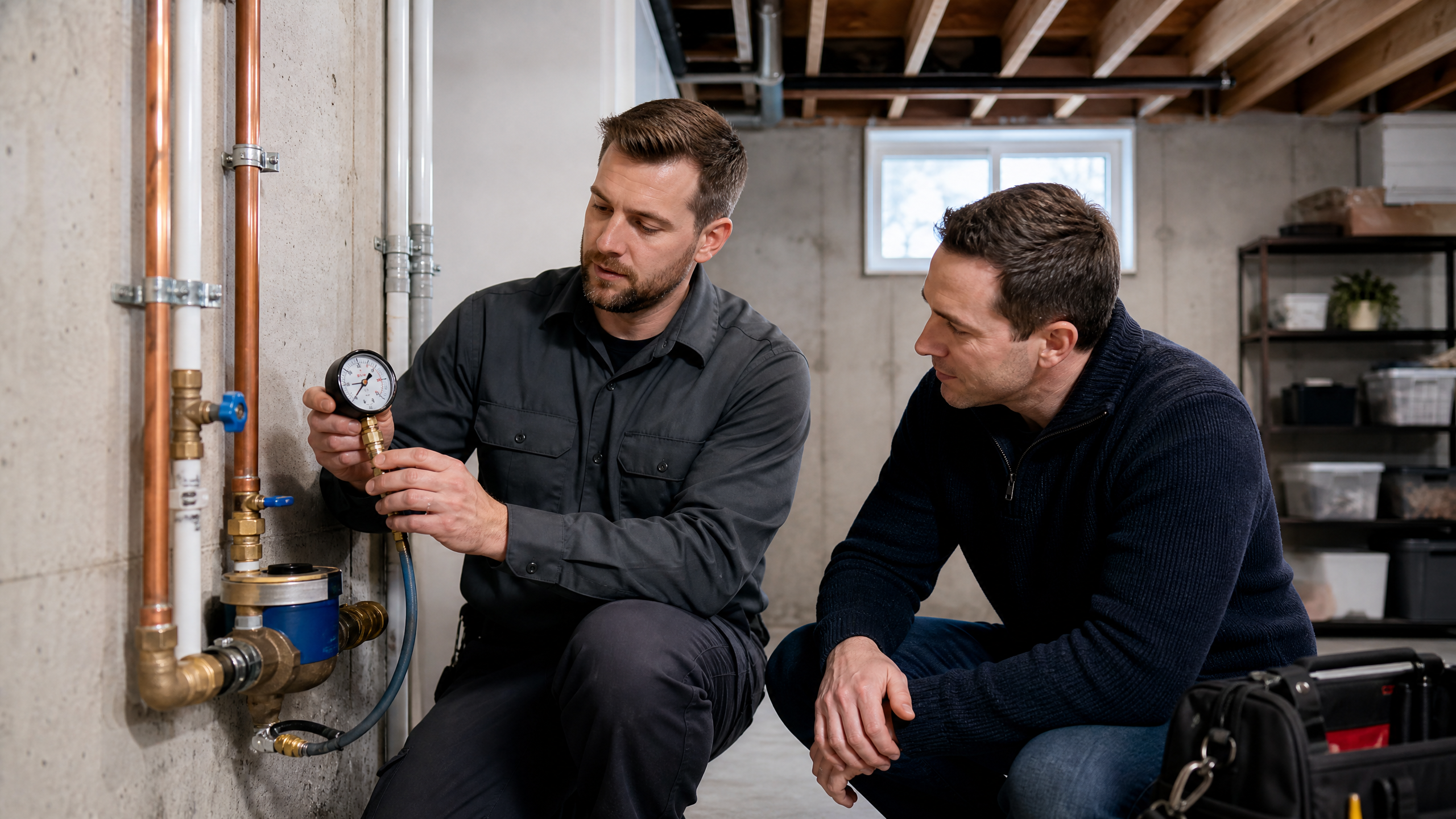
A hose-bib pressure gauge can provide a preliminary static reading. Attach it to a suitable exterior hose tap or laundry connection, make sure water is not running elsewhere, then open the test valve fully.
Record two conditions:
- Static pressure: the reading with all fixtures off.
- Dynamic pressure: the reading while another fixture is running.
A large drop under demand can reveal a flow restriction even when the static number looks adequate. Test location, elevation, gauge accuracy and the building’s plumbing design all affect the result.
Avoid using one number as permission to adjust a PRV. A plumber may compare readings on both sides of the regulator, measure flow near the meter and test distant fixtures before recommending a change.
When Low Water Pressure Needs Urgent Attention
Arrange urgent help when weak pressure appears with:
- active water leakage or spreading stains;
- a burst-pipe sound or visible split;
- water near wiring, receptacles or an electrical panel;
- frozen-pipe symptoms followed by thawing;
- a meter that continues moving with all known fixtures off;
- sudden loss of most water throughout the home;
- water surfacing near the foundation, driveway or street.
Close the nearest safe shutoff when a private supply pipe is leaking. Use the main valve when a branch or fixture valve cannot contain it. Stay away from wet electrical equipment.
A slowly weakening shower with no leak can usually be scheduled. A sudden whole-house change deserves same-day investigation because the potential causes include a service leak, frozen pipe, valve failure or municipal disruption. Saving Plumbing provides 24-hour emergency plumbing in Toronto when water cannot be contained safely.
How a Plumber Diagnoses and Fixes Low Water Pressure
The first visit should identify the restriction before a major repair is proposed. Depending on the symptom pattern, a plumber may:
- compare pressure and flow near the meter and at distant fixtures;
- test the main shutoff and pressure-reducing valve;
- isolate the hot-water system;
- inspect fixture cartridges, stops and supply hoses;
- check filters, softeners and mixing valves;
- assess exposed pipe material and diameter;
- test for a concealed leak;
- determine whether the private water service needs repair or replacement.
The repair may be as small as cleaning an aerator or replacing a cartridge. A failed valve, obstructed water-heater connection or localized pipe restriction calls for a targeted repair. Service-pipe problems and widespread corrosion require a larger scope.
Ask the plumber to show where the pressure or flow loss occurs. This evidence makes it easier to understand why a fixture repair, valve replacement, leak repair or repiping work has been recommended.
Get Your Water Pressure Properly Diagnosed
Low water pressure is a symptom with several possible sources. Replacing parts without locating the restriction can leave the original problem untouched.
Saving Plumbing serves homeowners and businesses across Toronto and the GTA. When booking, explain which fixtures are affected, whether hot or cold water is weaker, when the change began and whether nearby properties have the same issue.
Call 416-271-6745 or request a plumbing assessment. For active leaks and sudden pressure loss with property damage, emergency support is available 24/7.
Frequently Asked Questions
Why is my water pressure suddenly low throughout the house?
A sudden whole-home drop can follow municipal work, a moved or failed main valve, a pressure-reducing valve fault, a frozen service or a substantial private leak. Ask a neighbour, check Toronto’s No Water Map and inspect for leakage. Prompt diagnosis is warranted when the cause remains unclear.
Why is my water pressure low in one faucet?
The likely causes are a clogged aerator, blocked cartridge, kinked supply hose, partially closed fixture stop or debris in the local branch. Compare the hot and cold sides. If both are weak, start with the aerator. If one side is weak, focus on that supply path.
Why does the shower lose pressure when another tap runs?
Simultaneous demand exposes restrictions that a static test can miss. An undersized or corroded pipe, loaded filter, failing PRV or limited service line can let one fixture run acceptably and struggle when a second fixture opens.
Is 40 psi too low for a house?
A static reading near 40 psi can be usable in a smaller home and still feel weak upstairs or when several fixtures run. The change under demand often reveals more than the static number. Toronto Water assesses chronic complaints through its own flow test, while a plumber can compare pressure and flow at several points inside the home.
Can a water heater cause low water pressure?
Yes, when low flow affects hot water across several fixtures. The restriction may involve the heater’s inlet or outlet, a shutoff valve, mixing valve or connected hot-water piping. Weak flow at one hot faucet usually points closer to that fixture.
Will a booster pump fix low water pressure?
A booster pump helps only after testing confirms that the incoming supply is consistently too low for the building’s needs. It will not repair a leak, open a failed valve or clear corroded piping. Diagnosis should establish the available supply and condition of the private plumbing first.
Does low water pressure mean the pipes need replacement?
Sometimes. Pipe replacement becomes more likely when several fixtures have gradually weakened, galvanized piping is present, water is discoloured or leaks keep recurring. A fixture blockage, valve issue, filter restriction or municipal disruption can produce similar symptoms with a much smaller repair.
References
[1] City of Toronto, No Water or Low Water Pressure
[2] Roto-Rooter, How to Fix Low Water Pressure in Your House
[3] Reliance Home Comfort, Causes of Low Water Pressure in Your House & How to Fix It
[4] PlumbWize, 5 Reasons For Low Water Pressure at Home
[5] ANTA Plumbing, Low Water Pressure in Toronto? Causes, Diagnosis & Fixes
