

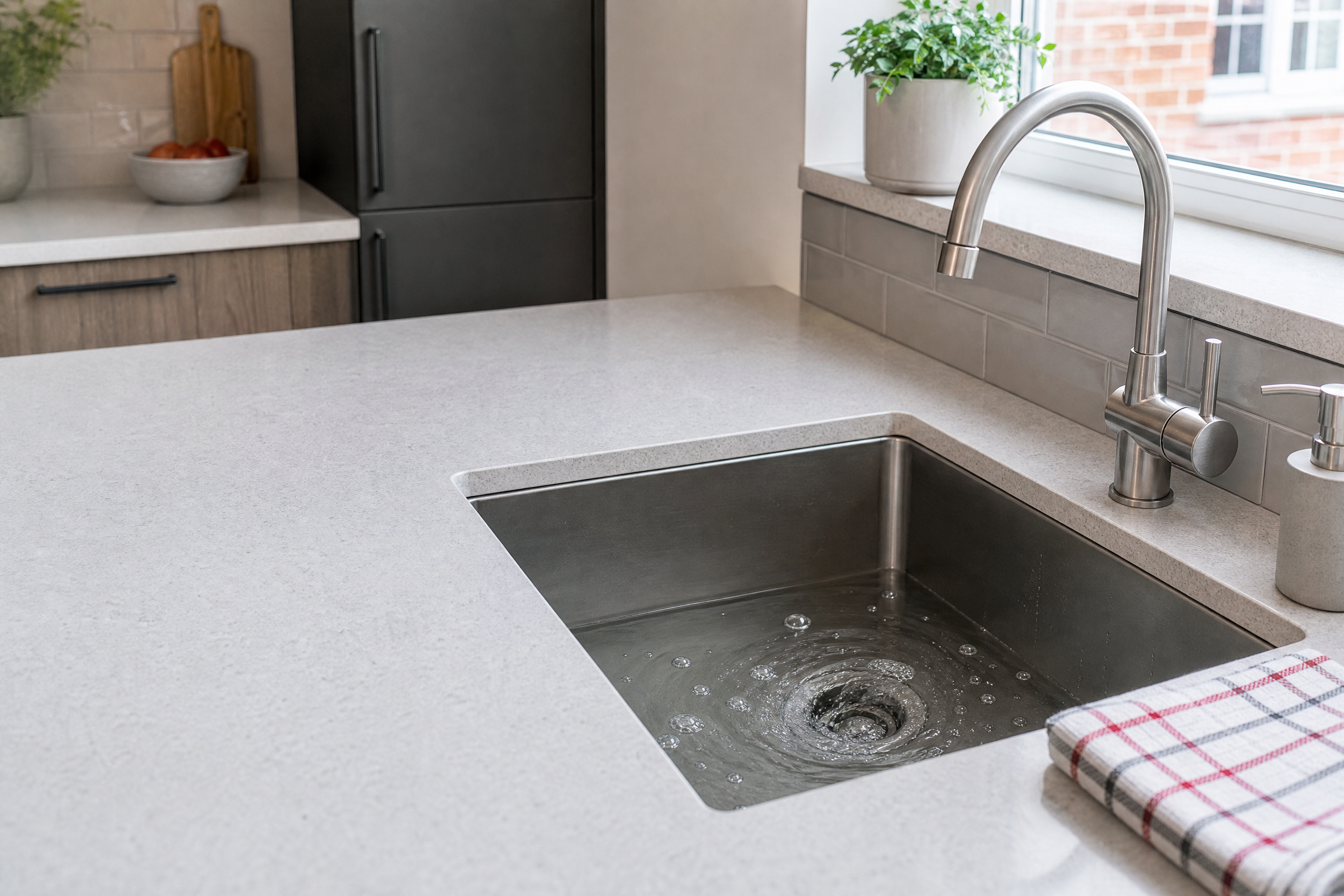
Is your kitchen sink gurgling when it drains? Learn the common causes, safe checks, winter considerations, and when to call Saving Plumbing in Scarborough.
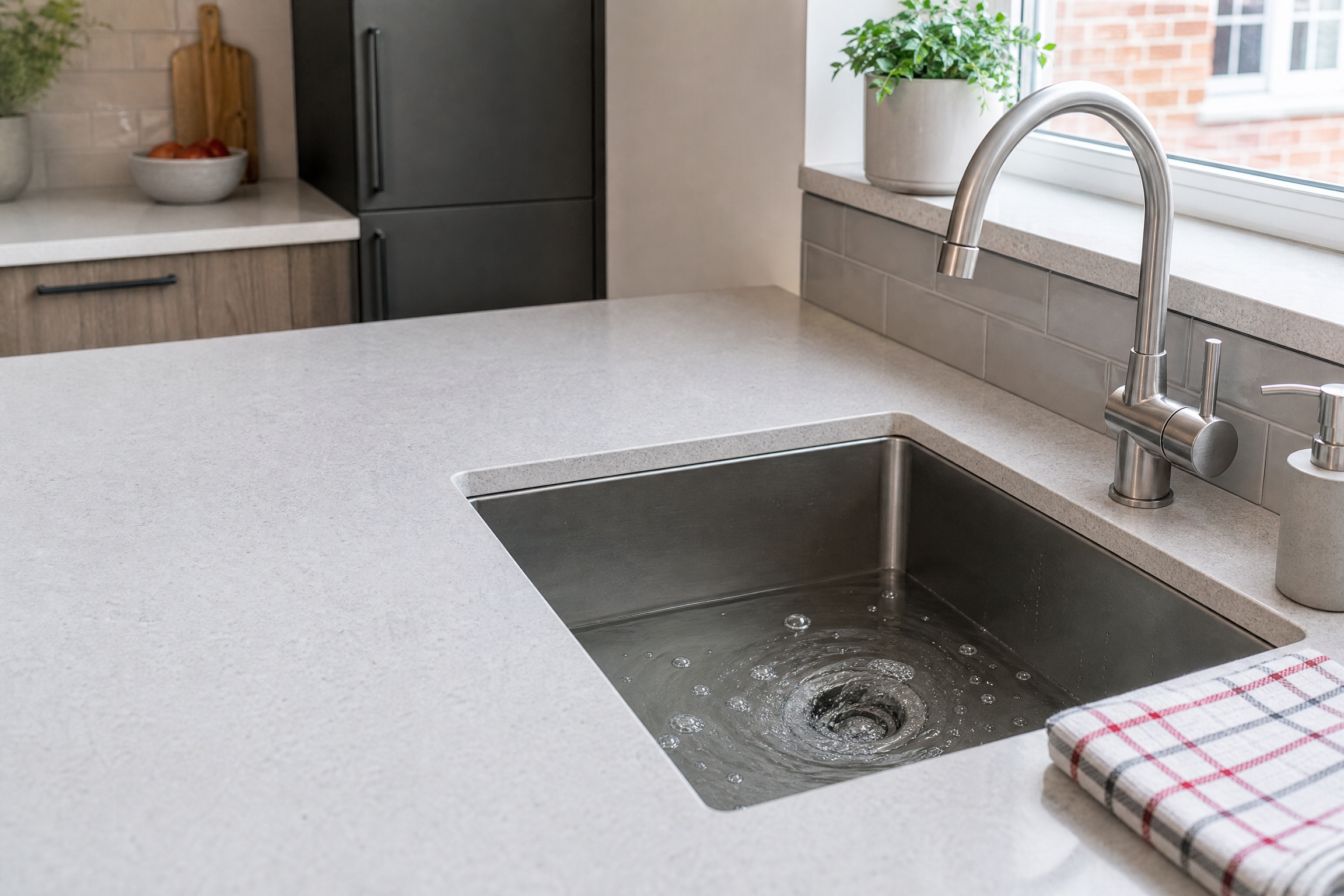
Image: A bubbling or glugging sink can be an early sign that water and air are not moving normally through the drain system.
TL;DR: Why is my kitchen sink gurgling?
A kitchen sink usually gurgles when air is being forced or pulled through the drain because water flow is restricted. The most common cause is a partial blockage from grease, food residue or other buildup. A blocked plumbing vent, a problem farther along the branch drain, or a main sewer-line restriction can also create the sound. If the gurgling is accompanied by slow drainage, foul odours, bubbling in another fixture or water backing up, stop using the affected fixtures and arrange a professional drain inspection.
For an isolated, mild symptom, you can remove visible debris, clean the stopper and try a proper sink plunger. Do not mix chemical drain products, and do not climb onto a wet or icy roof to inspect a vent. If the sound keeps returning, Saving Plumbing provides drain cleaning and snaking in scarborough and can determine whether the issue is local or part of a larger drainage problem.
What the gurgling sound means
A properly working drain needs both water flow and airflow. When water leaves the sink, the plumbing venting system helps balance pressure so wastewater can move through the pipe without pulling air through the sink’s P-trap. If a partial obstruction or blocked vent interrupts that balance, air pockets form and escape with a characteristic glug, bubble or gulp.
The timing of the noise is useful. A gurgle while the sink drains often points to a restriction near the sink or in the branch drain. A gurgle several seconds after the water disappears may indicate trapped air or a venting problem. A sink that gurgles when the dishwasher runs, the washing machine drains or a toilet flushes deserves closer attention because another fixture may be disturbing the same drain or vent connection.
Five common causes of a gurgling kitchen sink
1. A partial kitchen-drain blockage
This is the most common explanation. Kitchen drains regularly receive small amounts of food residue, cooking oil, sauces and soap. Grease can cool and cling to the inside of a pipe, while food particles collect against it. The opening may remain large enough for water to pass, but the narrowed section can trap air and produce a bubbling sound.
Typical clues include a slow drain, water that rises briefly before going down, or gurgling that gets louder after several days of use. A local restriction may be in the sink strainer, stopper, P-trap or the horizontal branch pipe inside the wall.
2. A blocked or poorly functioning plumbing vent
Drain vents allow air to enter the system and help wastewater move smoothly. Leaves, nesting material, ice or other debris can obstruct a roof vent. A vent can also be damaged, poorly configured or affected by an older renovation. When air cannot travel through the intended route, the system may pull air through the sink’s water seal instead, creating a gurgle.
Toronto and GTA homeowners should be particularly alert after a severe cold snap, heavy snowfall or windstorm. However, a roof vent is not a safe do-it-yourself inspection point when the roof is icy, steep or wet. A licensed plumber can investigate venting from a safer access point and confirm whether the issue is actually in the vent.
3. A restriction in the branch drain or main sewer line
When more than one fixture is involved, the problem may be farther from the kitchen. A branch-drain obstruction can affect the sink and dishwasher, laundry standpipe or nearby bathroom fixtures. A main sewer-line restriction may cause several drains to gurgle, especially when a toilet is flushed or a large volume of water is discharged.
Watch for a cluster of symptoms: multiple slow drains, bubbling in a toilet, water rising in a bathtub or basement floor drain, or sewage odour. These signs call for prompt professional help. Saving Plumbing offers drain repair and sewer camera inspection services when the location or condition of a blockage is not clear.
4. A damaged or deteriorating sewer pipe
Cracks, shifted joints, root intrusion and other pipe damage can disrupt the movement of water and air. Older homes, properties with mature trees and homes that have experienced soil movement may be more vulnerable. Gurgling alone does not prove that a pipe is damaged, but recurring noise combined with backups, odours or unexplained wet areas should not be ignored.
A camera inspection can help distinguish a removable buildup from a structural defect. That distinction matters because repeatedly snaking a damaged line may provide only temporary relief.
5. Incorrect trap, slope or venting after an installation
If the gurgling began after a kitchen renovation, sink replacement, dishwasher installation or under-sink plumbing change, the configuration may be contributing to the problem. An incorrectly positioned P-trap, excessive bends, an unsuitable slope or inadequate venting can interfere with drainage and create persistent air-pressure changes.
In this situation, replacing the sink strainer or pouring another cleaner down the drain will not address the cause. The connections should be assessed by a qualified plumber familiar with local plumbing requirements.
What can you safely check yourself?
If the gurgling is mild and limited to one sink, begin with low-risk checks. Remove and clean the strainer or stopper. Wipe away visible residue around the drain opening. If the sink has two basins, seal the second opening before plunging so pressure is directed toward the restriction. Use a sink plunger—not a toilet plunger—and make several controlled plunges with enough water to cover the cup.
You can also run warm water briefly to observe the drainage pattern. Avoid pouring boiling water into a sink connected to older plastic piping or a garbage disposal, where heat can damage components. More importantly, never combine drain chemicals, bleach, vinegar or other products. Chemical residues can injure anyone who later opens the trap, and a caustic product may not remove a deeper obstruction.
Do not remove the P-trap unless you are comfortable shutting off the sink, protecting the cabinet and resealing every connection. If a chemical drain product has already been used, tell the plumber before service begins.
A simple diagnosis guide for homeowners
| What you notice | Most likely area | Recommended next step |
| One sink gurgles and drains slowly | Sink trap or nearby branch drain | Clean the stopper and try a sink plunger; book drain cleaning if it persists |
| Gurgling starts when the dishwasher drains | Shared kitchen branch drain or air-admittance/venting issue | Stop repeated cycles and arrange an inspection |
| Several fixtures gurgle or drain slowly | Branch drain, vent or main sewer line | Call a licensed plumber promptly |
| Gurgling plus sewage odour or a backup | Blocked or compromised drainage system | Treat as urgent; limit water use and request service |
| Gurgling began after renovation | Trap, slope, connection or venting configuration | Have the installation checked rather than repeating DIY treatments |

Image: A camera inspection can help locate buildup, identify a deeper obstruction and separate a drain-cleaning issue from pipe damage.
When should you call a plumber?
Arrange service when the gurgling returns after a basic cleaning, becomes louder, or is paired with slow drainage. You should also call promptly if the sink reacts to another fixture, if more than one drain is involved, or if you smell sewer gas. A blockage can worsen as additional grease and debris collect behind the restricted section.
If water is backing up, avoid running the dishwasher, washing machine and other high-volume fixtures. Keep children and pets away from contaminated water, and call Saving Plumbing’s 24/7 emergency plumbing team when there is active overflow, a suspected sewer backup or a risk of water damage.
A professional assessment may include a drain auger, motorized snake, hydro-jetting where appropriate, venting checks or a sewer camera. The right method depends on the location, material and severity of the obstruction. Clearing a symptom without identifying why it formed can lead to repeated service calls.
How to prevent a gurgling sink
Use a sink strainer and empty food scraps into the bin or green bin rather than washing them down the drain. Let fats, oils and grease cool in a container and dispose of them separately. Run a reasonable amount of water while the sink is in use, and avoid treating the drain as a place for coffee grounds, fibrous vegetable scraps or other solids.
After a repair, ask what caused the restriction and whether the line needs further cleaning or inspection. Homes with recurring drainage problems may benefit from a planned maintenance conversation, especially when mature trees, older piping or previous backups are involved.
Book a professional drain inspection with Saving Plumbing
A gurgling kitchen sink is easy to dismiss, but it can be the first audible sign of a developing drain or venting problem. Saving Plumbing serves homeowners and businesses across Toronto, Scarborough and communities throughout the GTA.
For help with a recurring gurgle, slow kitchen drain or suspected sewer-line issue, contact Saving Plumbing or call (416) 271-6745. The team can assess the symptom, explain the repair options and help restore quiet, reliable drainage.
Frequently asked questions
Why does my kitchen sink gurgle when the dishwasher runs?
A kitchen sink may gurgle when the dishwasher drains because both fixtures use a shared branch drain or venting pathway. A partial blockage can restrict the dishwasher’s discharge and force air back through the sink. If the dishwasher leaves standing water, the sink drains slowly or the noise keeps returning, arrange a professional drain inspection.
Is a gurgling sink always a serious plumbing problem?
No. An isolated gurgle may come from minor buildup near the sink. However, persistent gurgling, slow drainage, multiple affected fixtures, sewage odour or water backing up can indicate a deeper blockage, venting problem or sewer-line issue that should be assessed by a licensed plumber.
Can I fix a gurgling kitchen sink with baking soda and vinegar?
Baking soda and vinegar may loosen light residue, but they are unlikely to clear a deep or recurring obstruction. A sink plunger and removal of visible debris are safer first checks. Never mix drain chemicals with vinegar, bleach or other products, and call a plumber if the symptom persists.
Why does my sink gurgle after the water has drained away?
A post-drain gurgle often means air is moving through the drain after water flow has stopped. Common causes include a partial blockage, trapped air or a blocked plumbing vent. The timing alone cannot identify the fault, so recurring noise should be considered alongside slow drainage and symptoms in other fixtures.
Does a gurgling kitchen sink mean the sewer line is blocked?
Not necessarily. A local sink clog is more likely when only one fixture is affected. A main sewer-line restriction becomes more concerning when several drains gurgle or drain slowly, a toilet bubbles, water backs up into a tub or floor drain, or sewage odour is present. Those signs warrant prompt professional service.
References
[1] Southern Living — How To Fix A Gurgling Kitchen Sink, According To Plumbing Experts
[2] Goldberg Plumbing — Why Does My Sink Gurgle?
[3] Direct Energy — Why Is My Sink Gurgling?
[4] Handyside Plumbing — Quick Fixes for a Gurgling Kitchen Sink
