A leaking pipe, failed toilet connection or burst water line can go from inconvenient to destructive in minutes. Knowing how to shut off the main water supply in your Toronto home gives you time to limit water damage while you arrange professional plumbing help near you.
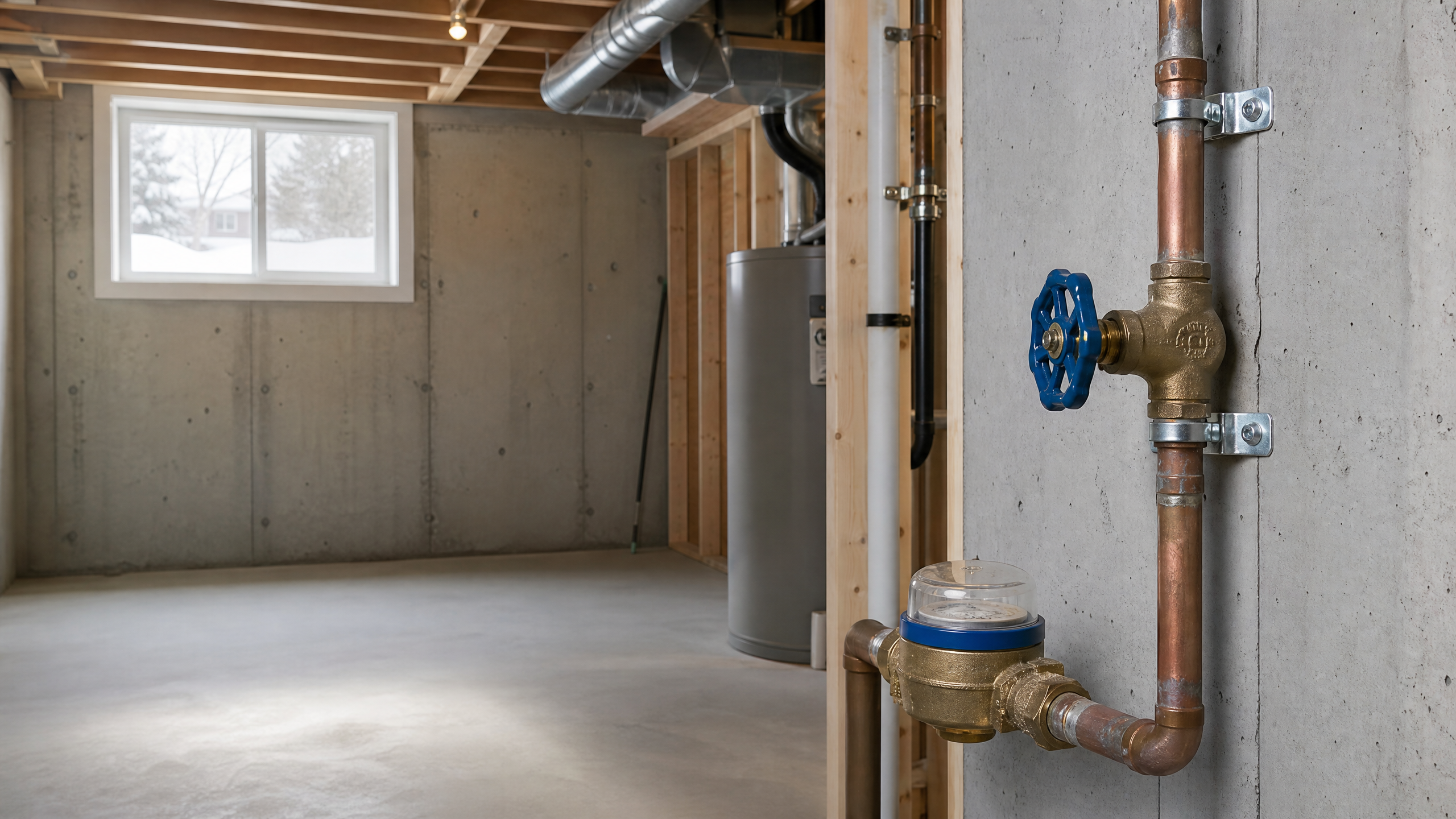
For a detached or semi-detached Toronto home, the main shut-off valve is commonly near the water meter where the service pipe enters the basement or lower level, often on the wall facing the street. Turn a round gate-valve handle clockwise, or turn a lever-style ball valve until the handle is perpendicular to the pipe. Open a nearby cold tap briefly to release pressure and confirm that the flow stops. In a condo or rental, use the suite shut-off if you can identify it safely and contact the superintendent, property manager or landlord if shared plumbing may be involved. Do not force a stuck valve, touch a City valve or enter standing water near electrical equipment. For an active leak, call Saving Plumbing at (416) 271-6745 for 24/7 emergency plumbing assistance.

The main shut-off is often installed close to the point where the water service enters a Toronto home. Exact locations vary by building age and renovations.
When should you shut off the water?
Shut off the affected fixture or the property’s main water supply when water is escaping faster than you can contain it, a flexible supply line has failed, a pipe has burst, a toilet is overflowing and the fixture valve does not work, or you need to stop water before an urgent repair. Saving Plumbing identifies burst pipes, active leaks, overflowing fixtures, major backups and water near electrical equipment as situations that may require prompt plumbing assistance.
If only one tap, toilet or appliance connection is leaking, start with its local shut-off valve. That preserves water service elsewhere in the property. If the local valve is missing, seized or ineffective, use the main shut-off instead.
Safety first: Never step into standing water near outlets, electrical panels, furnaces or plugged-in appliances. Move away and call 911 if there is an immediate risk to life. If sewage is present, keep children and pets away and avoid contact.
Where is the main water shut-off valve in a Toronto house?
In many Toronto houses, the incoming water service enters from the street side and passes through or near the water meter. Look in the basement, utility room or mechanical area, especially along the front foundation wall. The valve may be beside the meter, before or after the meter, or on a short section of copper, PEX or another service pipe.
Older homes and renovated basements do not always follow the same layout. Check these likely locations in order:
1.Beside the water meter: Look for a wheel handle or lever on the main pipe.
2.At the front basement wall: The service pipe may enter through the foundation near the street-facing side.
3.Near the furnace or water heater: Previous renovations may have rerouted or enclosed the service line.
4.In a utility closet or crawl space: Townhouses and homes without a conventional basement may place the valve in a service cupboard.
5.Near the point where the pipe enters the building: A labelled access panel may conceal the valve.
Do not confuse the main water shut-off with a small valve serving the water heater, outdoor hose bib, washing machine or a single bathroom. A main valve should control water to most or all fixtures in the property.
How to turn off different valve types
The two common valve designs are a gate valve and a ball valve. Operate slowly and stop if the valve is difficult to turn, visibly corroded or leaking around the stem.
| Valve type | What it looks like | Normal shut-off action |
| Gate valve | Round wheel handle, common in older homes | Turn clockwise, gently, until it stops. Do not use excessive force. |
| Ball valve | Straight lever handle | Turn the lever a quarter-turn until it is crosswise to the pipe. |
| Fixture stop | Small oval, round or straight handle under a sink or behind a toilet | Turn clockwise, or follow the valve’s designed direction, to isolate that fixture. |
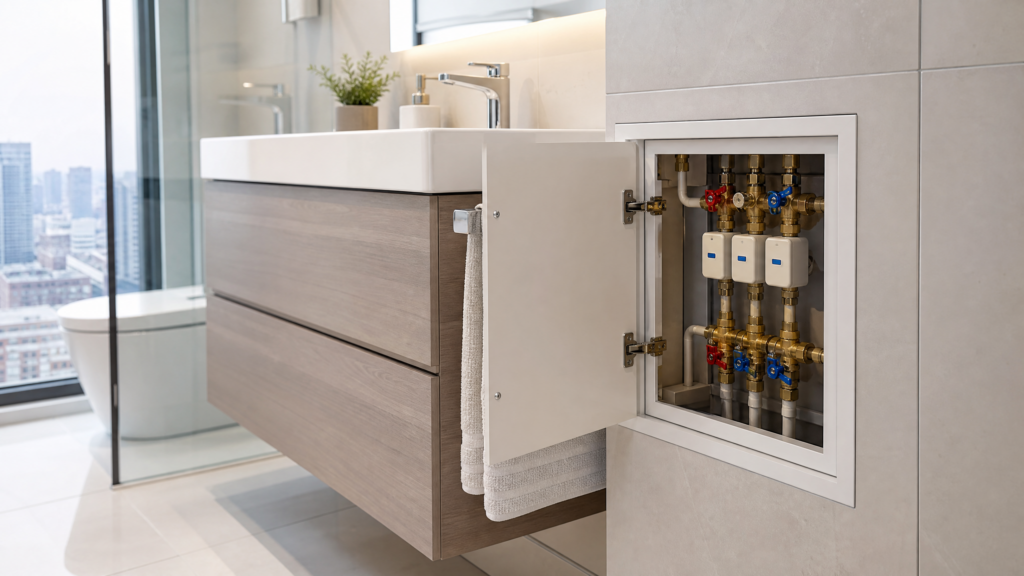
| Condo manifold or suite valve | One or more compact valves behind an access panel | Identify the suite valves and follow building instructions; do not operate a common-area valve without authorization. |
After closing the valve, open the nearest cold-water tap for a few seconds. A small amount of residual water is normal because water remains inside the pipes. If the flow continues strongly, the valve may not be the main valve, it may not be closing properly, or another supply is involved.
What to do in a Toronto condo, apartment or townhouse
Condominium plumbing is different from a detached home because a suite may have its own shut-off valves while the floor or building has separate common-area valves. A suite shut-off is often behind an access panel under a bathroom vanity, in a utility cupboard or near the water heater, but the location depends on the building design. Tridel also provides a condo-specific resource showing how residents can locate and operate suite shut-off valves.
Use this approach:
•If the leak is clearly inside your suite, close the local fixture valve or suite valve if you can do so safely.
• Notify the building superintendent or property manager immediately when water may be travelling through walls, floors or a shared riser.
• Tenants should contact their landlord or superintendent rather than attempting work on common plumbing.
• Do not enter a locked mechanical room or turn off water for an entire floor or building unless you are authorized.
• Keep towels, a bucket and the affected area accessible for the plumber or building staff.
This distinction matters in Toronto because responsibility can change depending on whether the problem is inside the private portion of the property or in a common element. Saving Plumbing serves houses, townhouses, condominiums, rental properties and managed buildings across Toronto and selected GTA communities.

Condo residents should identify their suite valve before an emergency and confirm the procedure with building management.
What is the difference between your valve and the City’s curb stop?
The private main shut-off controls water inside your property. The curb stop is a municipal shut-off near the property line that the City can use to stop service from entering the property. Toronto explains that the City-owned section generally runs from the street sewer or water infrastructure to the property line, while private responsibility begins on the property side of the relevant service connection.
Do not remove the water meter or operate a valve marked for City use. For planned work, a property owner can request a City water turn-off through 311; appointments and applicable fees are set by the City. A private plumbing emergency normally requires the property’s own shut-off and a licensed plumber, not a wait for a routine municipal appointment.
If a basement drain or sewer service line is blocked, the next step may be different. Toronto advises property owners and occupants to report blocked sewer service lines and basement flooding to 311 so Toronto Water can investigate whether the problem is on City infrastructure or the private side.
What to do after the water is shut off
Once the flow has stopped, take these steps:
1.Protect people first. Keep everyone away from contaminated water and electrical hazards.
2.Contain what is safe to contain. Use buckets, towels or a wet/dry vacuum only where there is no electrical risk.
3.Open a cold tap briefly. This can relieve pressure and confirm whether water is still entering the property.
4.Document the source. Take photographs and note which fixtures, rooms or floors are affected.
5.Notify the right people. Contact the landlord, superintendent, property manager or insurer when applicable.
6.Call a plumber. A shut-off limits incoming water; it does not repair the failed pipe, valve, fixture or appliance connection.
Do not restart an electric water heater after the system has been drained or partially emptied. The heating elements can be damaged if they are energized without being fully surrounded by water. If you are unsure what equipment is affected, leave it alone and ask a licensed plumber for guidance.
How to turn the water back on safely
Only restore the water after the leak has been repaired or the plumber has confirmed that it is safe. Open one cold tap, then turn the main valve slowly. A gradual restart allows air to leave the pipes without a sudden surge. Let the tap run until the water flows steadily, then close it and check the repaired area, ceilings, cabinets and nearby floors for new moisture.
If the valve begins leaking, will not open, or makes unusual noises, stop and call a plumber. An old gate valve can fail when it is forced, turning a controlled repair into a larger leak.
Common mistakes to avoid
A few rushed actions can create more damage than the original problem. Avoid these mistakes:
•Forcing a stuck main valve. Corrosion or a worn stem may require valve replacement.
•Turning the wrong valve. A fixture valve may not stop water elsewhere, while a common-area valve may affect other residents.
•Touching a City valve or removing the meter. Use 311 for municipal turn-on or turn-off requests.
•Mixing chemical drain cleaners. They will not stop a pressurized water leak and can create a hazard for the person diagnosing the plumbing.
•Ignoring a slow leak after the water is restored. Moisture behind drywall, under flooring or inside cabinets can continue causing damage.
•Waiting during an active burst. A controlled shut-off is helpful, but prompt diagnosis and repair are still needed.
When to call Saving Plumbing in Toronto and the GTA
Call Saving Plumbing when a main shut-off is stuck, a valve leaks after closing, a pipe has burst, a frozen line has split, water damage is spreading, or you cannot safely identify the source. Saving Plumbing provides emergency plumbing, leak detection, burst and frozen pipe repair, pipe repair and replacement, water heater service, drain work and plumbing inspections for residential and commercial properties in Toronto and selected communities across York, Durham and Peel regions.
Call 416-271-6745 for 24/7 emergency plumbing assistance, or request a free, no-obligation quote. Describe the property type, neighbourhood, source of the water and whether the main valve has been closed. That information helps the team understand the urgency before arrival.
Frequently asked questions
Where is the main water shut-off valve in a Toronto house?
It is commonly near the water meter where the service pipe enters the basement or lower level, often along the street-facing foundation wall. It may also be in a utility room, crawl space or mechanical closet, depending on the home’s age and renovations.
How do I shut off a main water valve with a round handle?
Turn the round gate-valve handle clockwise, slowly and gently, until it stops. Do not force a corroded or stuck valve. Open a nearby cold tap briefly to release pressure and confirm whether the water flow has stopped.
Where is the water shut-off valve in a Toronto condo?
A condo suite shut-off is often behind an access panel under a bathroom vanity, in a utility cupboard or near the water heater. Locations vary, so residents should confirm the valve with their superintendent or property manager before an emergency.
Should I call 311 or a plumber to shut off my water?
Use the private main shut-off and call a plumber for an active leak or private plumbing failure. Contact Toronto 311 for a planned City water turn-off or when a blocked sewer service line or basement flooding may involve City infrastructure.
What should I do if my main water shut-off valve is stuck?
Do not force it or strike it with a tool. Close the nearest working fixture valve if possible, keep away from electrical hazards, and call a licensed plumber to assess or replace the main shut-off valve.
References
[1] Official Information About Saving Plumbing
[2] How to Locate Your Water Shut Off — PPCR
[3] Water Shut Off Valves in your Condo Home — Tridel
