
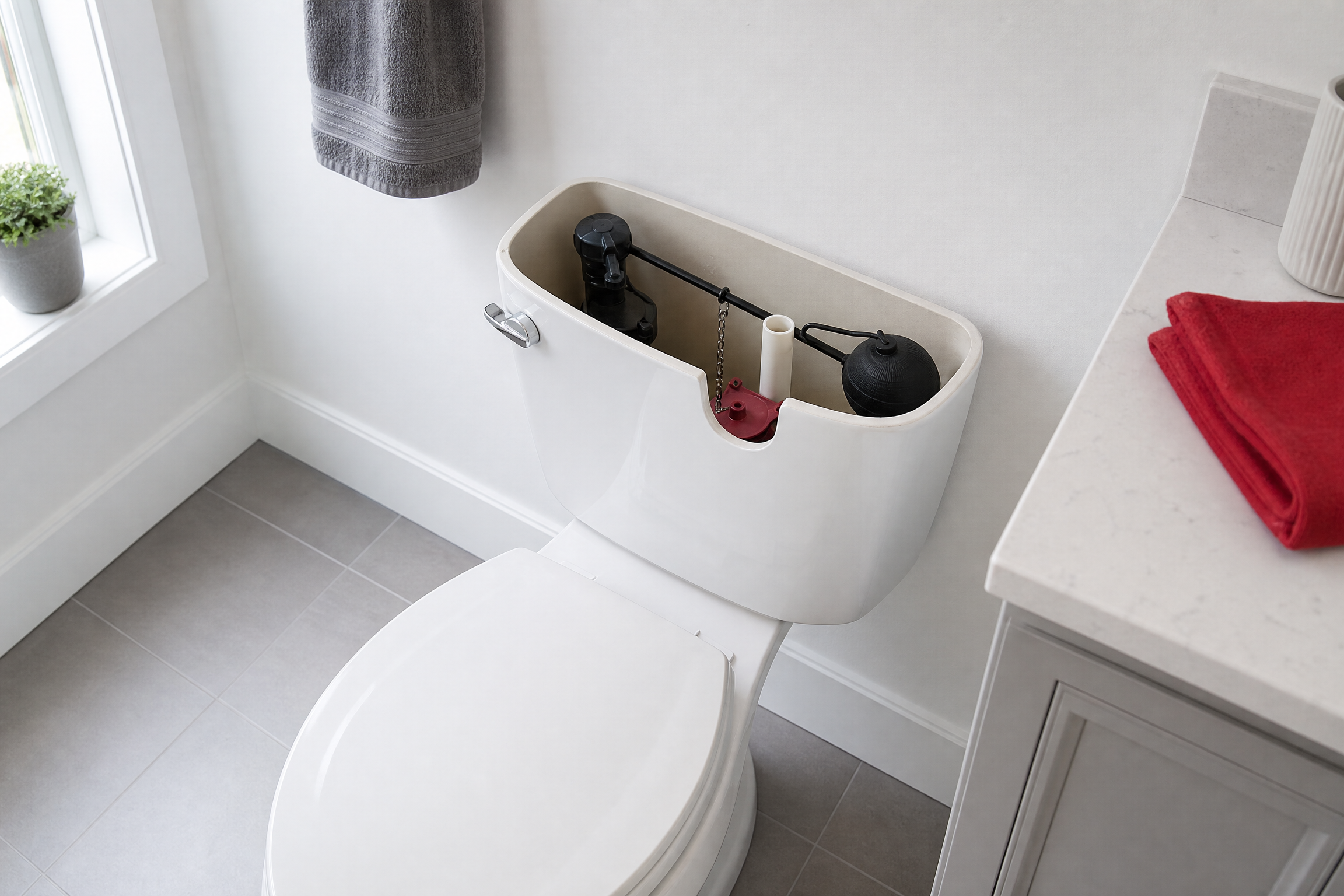
Why does my toilet keep running?
A toilet usually keeps running because water is escaping from the tank into the bowl, or because the fill valve is allowing water into the tank after it should have shut off. The most common causes are a worn flapper, incorrect float height, a failing fill valve, a tangled or overly tight chain, or water rising into the overflow tube. Remove the tank lid and watch what happens after a flush. If water is spilling onto the floor, the shut-off valve will not close, or a simple adjustment does not stop the sound, turn off the supply and call a licensed Toronto plumber.
A running toilet may seem like a minor annoyance, but it can waste water continuously and hide a leak that is not visible on the bathroom floor. This guide explains how to identify the likely fault, what you can safely check, and when professional toilet repair is the better option.
What the sound is telling you
The pattern of the noise often points to the problem. A constant hiss usually means the fill valve is not shutting off or the water level is too high. A brief refill every few minutes often indicates that water is slowly leaking past the flapper into the bowl. A toilet that runs immediately after flushing may have a chain, handle, or flapper that is preventing the flush valve from sealing.
| What you notice | Most likely area to inspect | What it means |
| Water flows into the bowl continuously | Flapper or flush valve | Tank water is escaping through the flush opening. |
| Hissing continues after the tank fills | Fill valve or float | The incoming water is not shutting off correctly. |
| Toilet refills for a few seconds at random | Flapper seal or flush valve seat | A slow internal leak is lowering the tank level. |
| Water reaches or enters the overflow tube | Float adjustment or fill valve | The tank is filling above its intended level. |
| Water appears on the floor | Supply connection, tank bolts, tank-to-bowl seal, or bowl | This is an external leak and needs prompt attention. |
The five most common causes of a running toilet

1. A worn or dirty flapper
The flapper is the rubber seal at the bottom of the tank. It lifts when you press the flush handle and should settle back over the flush valve opening. With age, mineral deposits, cleaning chemicals, and ordinary wear, the rubber can become stiff, warped, cracked, or unable to form a complete seal. Water then slips into the bowl, the tank level drops, and the fill valve starts again.
A flapper problem is especially likely when the toilet runs intermittently, makes a faint trickling sound, or refills even though nobody has used it. A few drops of food colouring in the tank can help confirm an internal leak: wait without flushing and check whether coloured water appears in the bowl. This diagnostic test is described by This Old House and Roto-Rooter in their running-toilet guides.[1] [2]
2. The chain is tangled, too tight, or too loose
The chain connects the flush handle to the flapper. If it is tangled, caught under the flapper, or adjusted too tightly, the flapper may remain slightly open. If it is excessively loose, the handle may not lift the flapper fully during a flush. The correct adjustment leaves enough slack for the flapper to sit flat while still responding properly to the handle.
Before replacing any parts, check that the handle moves freely and that the chain is not rubbing against the fill valve or trapped beneath the rubber seal. This small inspection can solve a new running problem after a handle or tank component has been moved.
3. The float is set too high
The float tells the fill valve when the tank has reached its proper level. Depending on the toilet, it may be a floating cup or an older ball attached to an arm. When the float is set too high, the water rises into the overflow tube and drains into the bowl. The fill valve continues trying to reach a level the toilet cannot hold, creating a constant hiss.
Look for the manufacturer’s water-level mark inside the tank. If there is no mark, do not assume that the tank should be filled to the rim. The correct level depends on the toilet’s design, so use the overflow tube and the manufacturer’s instructions as your guide. Home Depot, Summers, Aspect, and Roto-Rooter all identify float or water-level problems as a common cause of running toilets.[2] [3] [4] [5]
4. The fill valve is failing
The fill valve admits fresh water after a flush and shuts it off when the tank is full. Sediment, mineral buildup, worn internal seals, or age can prevent it from closing fully. You may hear hissing from the valve, see water continuing to enter the tank, or notice that the tank fills slowly and never reaches a stable level.
A simple float adjustment may help when the setting is wrong. However, if lifting the float does not stop the flow, the valve may require cleaning or replacement. Choosing the correct replacement is important because toilet tanks use different valve designs, connection sizes, and adjustment methods.
5. The flush valve or overflow tube is damaged
If the flapper is new and correctly positioned but water still leaks into the bowl, the flush valve seat may be rough, distorted, or coated with mineral deposits. A cracked overflow tube can also allow water to bypass the tank’s seal. These faults can require more extensive toilet tank repair than a basic flapper replacement.
Do not sand, force, or overtighten plastic components if you are unsure of the material or design. A cracked tank, damaged flush valve, or failed tank-to-bowl seal can turn a small internal leak into water on the floor.
A safe five-minute check for homeowners
Start by locating the shut-off valve on the wall or floor behind the toilet. Do not force a stiff valve. If the toilet is leaking onto the floor, close the valve only if it turns easily; otherwise, shut off the home’s main water supply and arrange urgent plumbing help.
If there is no external leak, remove the tank lid carefully and place it on a towel or stable surface. Flush once and watch the parts move. Check whether the flapper closes flat, whether the chain catches, whether water continues flowing through the fill valve, and whether the water rises into the overflow tube. Keep fingers, tools, and cleaning products away from moving parts while the tank is refilling.
For a suspected flapper leak, mark the water level with a pencil, close the supply valve, and wait. If the level falls, water is leaving the tank. The food-colouring test provides a second way to confirm that the water is entering the bowl rather than escaping externally. Never use drain cleaner or chemical toilet products in the tank; they can damage rubber seals and plastic components.
What can you fix yourself—and what needs a plumber?
Replacing a flapper or making a minor chain adjustment is often manageable for a careful homeowner who can identify the correct part and shut off the water safely. A float adjustment may also resolve a toilet that is simply overfilling. Take a photograph of the tank’s internal parts before removing anything, and keep the toilet model information if it is available.
| Situation | Sensible next step |
| The chain is tangled and the flapper is undamaged | Untangle it and confirm the flapper closes completely. |
| The water level is visibly too high | Adjust the float according to the toilet manufacturer’s guidance. |
| The flapper is brittle, cracked, or misshapen | Replace it with a compatible part; do not rely on handle-jiggling as a permanent fix. |
| The fill valve continues running after float adjustment | Arrange fill valve inspection or replacement. |
| Water is on the floor, the shut-off valve is seized, or the tank is cracked | Shut off water if safe and call a plumber promptly. |
| The toilet still runs after a flapper replacement | Have the flush valve, overflow tube, tank bolts, and seal checked. |
Call Saving Plumbing when the toilet is overflowing, the supply connection is leaking, the shut-off valve will not work, or the repair involves removing the tank or toilet. Professional diagnosis can prevent repeated part replacements and help identify a leak that is affecting the bathroom floor, finished basement, or ceiling below.
Why GTA homeowners should not ignore a running toilet
Toronto-area homes include a mix of older houses, renovated bathrooms, condominiums, and newer developments. The toilet parts and shut-off valves found in these properties can vary significantly. Mineral deposits and sediment may also affect seals and valves over time, although the exact cause should be confirmed at the fixture rather than assumed.
A toilet that refills only at night can still be leaking during the day. A silent leak may not create a puddle, but it can continue sending treated water down the drain. If the toilet is on an upper floor, an external leak can damage flooring, ceilings, trim, and cabinetry before it becomes obvious. Prompt inspection is usually less disruptive than waiting for a failed valve or seal to cause water damage.
Saving Plumbing provides toilet repair and plumbing services across Toronto and the GTA, including Scarborough, North York, Etobicoke, Mississauga, Vaughan, Markham, Pickering, Oshawa, Richmond Hill, and nearby communities. If you are unsure whether the problem is a flapper, fill valve, drain issue, or external leak, describe the sound and where you see water when you contact the team.
When is a running toilet an emergency?
A running toilet is urgent when water is escaping onto the floor, the toilet is overflowing, the shut-off valve cannot stop the flow, or water is appearing through a ceiling below. Turn off the fixture’s supply if the valve operates normally, keep people away from wet electrical areas, and request emergency plumbing assistance.
A quiet refill with no visible water is generally not a crisis, but it should not be postponed indefinitely. Arrange a repair if the sound continues after a basic inspection, the water bill has changed unexpectedly, or the toilet repeatedly needs the handle jiggled to stop running.
Frequently asked questions
1. Why does my toilet keep running after I flush?
A toilet that keeps running after a flush usually has a flapper that is not sealing, a chain that is too tight or tangled, a float set too high, or a fill valve that is not shutting off. Remove the tank lid and watch whether water is entering the bowl or continuing to enter the tank.
2. How do I know if my toilet flapper is leaking?
Add a few drops of food colouring to the toilet tank and wait about 20 to 30 minutes without flushing. If coloured water appears in the bowl, the flapper or flush valve is allowing water to pass from the tank. Replace the flapper if it is worn or fails to seal after cleaning.
3. Can a running toilet increase my water bill?
Yes. A toilet that continually sends water into the bowl is using water even when it has not been flushed. The amount depends on the size of the leak and how long it continues, so repairing the fault is the best way to stop unnecessary water use.
4. Should I turn off the water if my toilet will not stop running?
Turn off the toilet’s shut-off valve if it moves easily and there is no risk of damaging the valve or pipe. If water is already on the floor, the valve is seized, or the toilet is overflowing, shut off the home’s main water supply if necessary and call a plumber.
5. How much does it cost to repair a running toilet in Toronto?
The cost depends on whether the repair requires a simple flapper adjustment, a fill valve replacement, a flush valve repair, or work on an external leak. Saving Plumbing can assess the fixture and explain the recommended repair before work begins; request an estimate for an accurate price.
Stop the running and call Saving Plumbing
Do not settle for a toilet that hisses, refills, or runs randomly. Saving Plumbing’s licensed plumbers can diagnose toilet leaks, replace worn components, repair external connections, and provide emergency plumbing help throughout Toronto and the GTA. Call (416) 271-6745 or request a free quote from Saving Plumbing and explain what you hear, when it happens, and whether you see water on the floor.
References
[1]: This Old House, “How to Troubleshoot a Running Toilet”
[2]: Roto-Rooter, “What To Do When Your Toilet Keeps Running”
[3]: The Home Depot, “How To Fix a Running Toilet”
[4]: Summers Plumbing Heating & Cooling, “Why Does My Toilet Keep Running? Causes, Fixes & Tips”
[5]: Aspect, “Help! My Toilet Is Constantly Running Water”
