

A water heater that pops or rumbles during a heating cycle usually has sediment or mineral deposits collecting inside the tank. Water can become trapped beneath those deposits. As the burner or electric element heats the tank, bubbles force their way through the sediment and create the popping, crackling or low rumbling sound you hear.
If the noise is accompanied by a leak, a strong burning odour, a continuously discharging temperature-and-pressure relief valve, a gas smell or loss of hot water, stop troubleshooting and arrange professional Scarborough plumbing services.
The sound deserves more attention when it becomes louder, appears more often, or comes with poor hot-water recovery, discoloured water, a leak or another change in the heater’s operation.
What Is Actually Making the Popping Sound Inside the Water Heater?
Sediment collects at the bottom of a storage-tank water heater over time.
That material can include mineral deposits and particles carried by the water supply, along with material created by conditions inside the tank. Heating encourages some dissolved minerals to form deposits on hot surfaces.
The layer changes how heat moves into the water.
In a gas water heater, the burner heats the bottom of the tank. When sediment covers part of that surface, small pockets of water can become trapped beneath or within the deposits. The bubbles created during heating push through the layer and make a popping or rumbling sound.
An electric water heater can develop deposits around its submerged heating elements. A.O. Smith specifically identifies mineral buildup around electric elements as one source of water-heater noise.
This also explains why the sound often follows a pattern. You may hear very little while the heater is idle, followed by popping once the burner or element starts heating the next tank of water.
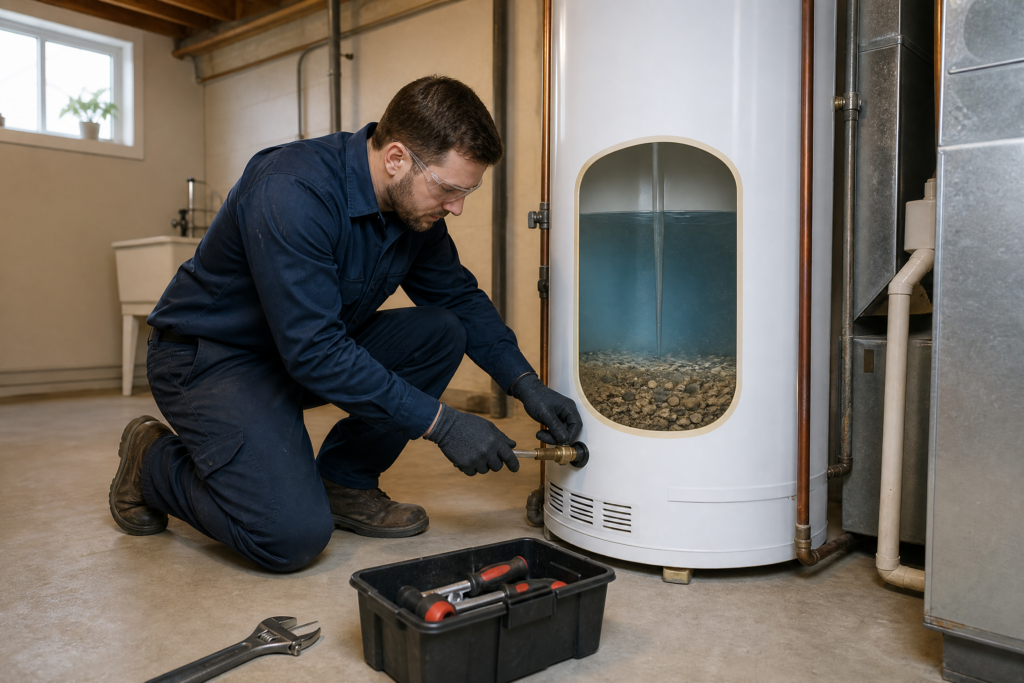
Mineral sediment can settle at the base of a storage-tank water heater and interfere with normal heat transfer.
What causes a water heater to pop?
The sound usually begins with the water supply rather than a broken part. Groundwater and municipal water contain dissolved minerals, including calcium and magnesium compounds. When water is heated repeatedly, some of those minerals can settle inside a tank and harden into scale. The harder the scale becomes, the more likely a gas burner or electric element will heat water trapped underneath it instead of transferring heat efficiently into the tank.
That trapped water can bubble and release through cracks in the sediment layer. The result is a popping or “kettling” sound that is often loudest while the burner or heating element is operating. A manufacturer and plumbing-industry guidance both identify sediment or scale as a leading explanation for popping and rumbling sounds.
Gas and electric water heaters do not sound exactly the same
The basic sediment mechanism can affect both types of tank, but the heat source changes the likely repair.
| Water-heater type | What may be happening | What a technician may inspect |
| Gas storage tank | A burner heats the tank bottom while sediment acts as an insulating layer. The burner, venting and combustion area also require attention. | Burner operation, venting, gas connections, temperature-and-pressure relief valve, sediment and tank condition |
| Electric storage tank | Scale can collect around submerged heating elements. Popping may be accompanied by reduced hot-water recovery or an element fault. | Heating elements, thermostats, wiring, relief valve, tank sediment and electrical isolation |
| Tankless unit | There is no storage tank bottom for sediment to cover, but scale can restrict the heat exchanger and cause clicking, rumbling or reduced performance. | Inlet filter, flow rate, heat exchanger scale, service valves and manufacturer-specific descaling requirements |
Saving Plumbing provides water heater repair, installation and hot-water-tank repair for Toronto and GTA homeowners, including service for both routine faults and urgent loss of hot water.
Is a popping hot-water tank dangerous?
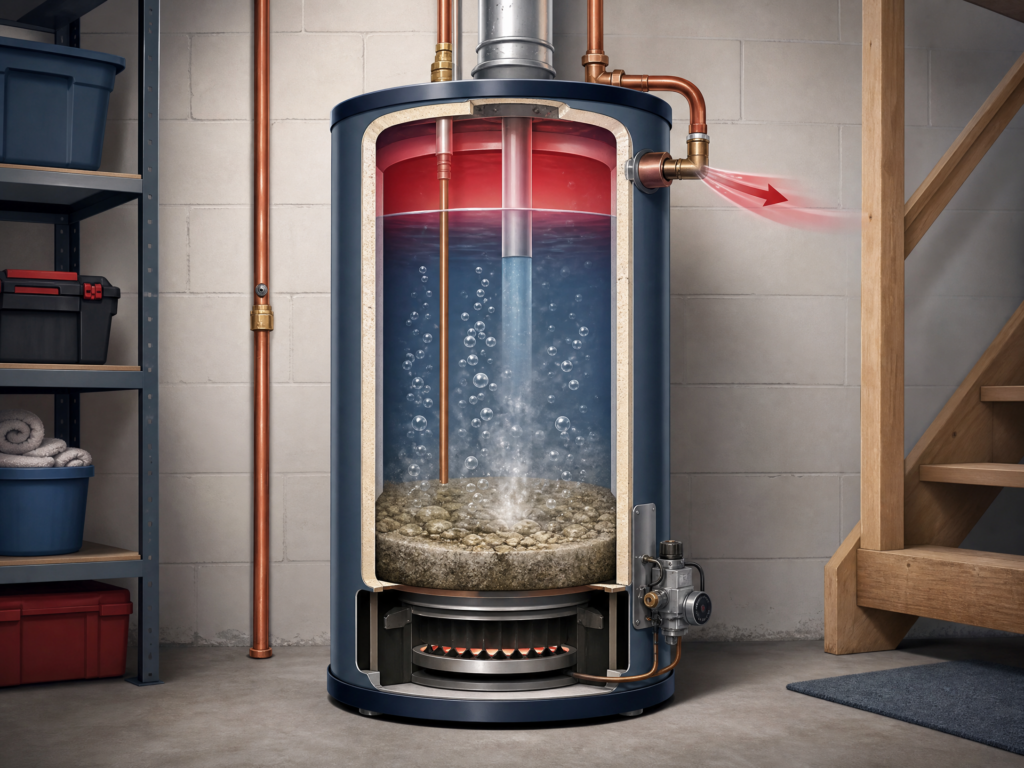
In many cases, a mild popping noise is a maintenance warning rather than an imminent hazard. It should not be ignored indefinitely, because a thick scale layer can reduce efficiency and place extra stress on the tank or heating components. A noisy tank also deserves more attention when it is older, has never been flushed, or has begun producing less hot water.
The sound becomes more urgent when it appears with another symptom. Use this quick triage guide:
| What you notice | What it may suggest | Recommended response |
| Occasional soft popping only during heating | Sediment, scale or normal expansion | Book routine inspection or flushing, especially if the noise is new or worsening |
| Loud rumbling, repeated banging or vibration | Heavy sediment, water hammer, loose components or pressure-related movement | Stop repeated testing and arrange a plumber’s diagnosis |
| Hissing near a gas connection, rotten-egg odour or unusual burner behaviour | Possible natural-gas leak or combustion concern | Leave immediately; do not operate switches or use a phone near the suspected leak; call Enbridge Gas or 911 from outside |
| Water around the tank, relief-valve discharge or a wet ceiling/floor | Leak, excessive pressure or failing component | Shut off the water supply if safe, isolate the heat source if you know how, and call for service |
| Popping plus brown water, no hot water or a tripped breaker | Advanced scale, tank corrosion, element or electrical fault | Arrange prompt water-heater repair rather than repeatedly resetting the unit |
A temperature-and-pressure relief valve is a safety component, not a drain for routine troubleshooting. Never cap its discharge pipe, remove it while the tank is hot, or attempt to defeat it. National Board safety guidance explains that the valve is intended to relieve excessive temperature or pressure and recommends qualified help when it will not reseal.
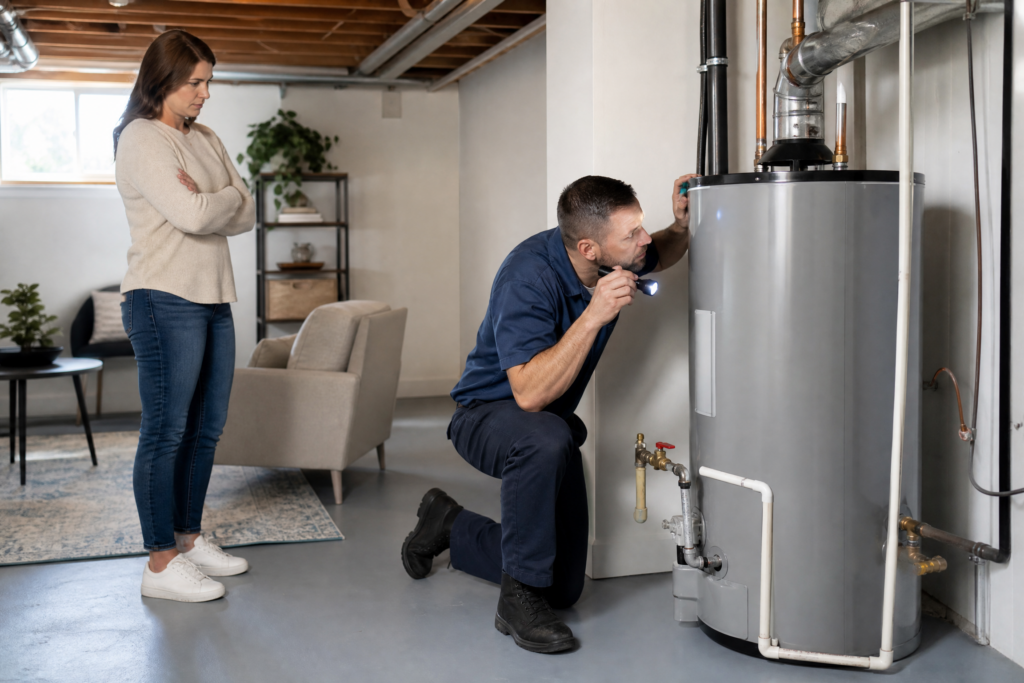
Professional diagnosis is the safest choice when noise comes with a leak, gas odour, electrical symptom or relief-valve discharge.
Does a Popping Water Heater Need Repair or Replacement?
Popping alone does not determine whether the heater needs replacement.
The decision depends on the condition of the tank and the fault that is found.
A heater with loose sediment, a sound tank body and normal hot-water performance may only need maintenance. A serviceable electric element, thermostat or other replaceable component may also be repairable.
Replacement becomes more relevant when the inspection finds a leaking tank body, serious corrosion, repeated major faults or performance that remains poor after appropriate service.
| Condition | What usually deserves consideration |
|---|---|
| Sediment noise with a sound tank | Maintenance or flushing |
| Failed serviceable component | Component repair |
| Noise returns soon after proper maintenance | Further diagnosis |
| Water escaping through the tank shell | Replacement |
| Serious corrosion around the tank body | Replacement assessment |
| Repeated failures with declining performance | Compare repair and replacement |
| Tankless scale or flow restriction | Manufacturer-compatible service or descaling |
Age provides context. It should be considered alongside condition, repair history and the actual failed component.
What can you safely check at home?
Before calling, you can document the symptom without opening the unit or disturbing gas, electrical or safety controls.
First, note when the sound occurs. Does it begin shortly after a shower, laundry cycle or several minutes of heating? Does it stop when the burner or element stops? A sound that tracks the heating cycle is more consistent with sediment or expansion. A bang immediately after a tap closes may instead come from water hammer in the piping, not the tank itself.
Next, look—without touching hot surfaces—for water stains, rust, mineral deposits, a wet floor, a leaking connection or water coming from the relief-valve discharge pipe. Check whether the household still has normal hot-water recovery. If a gas unit produces a gas smell, do not continue inspecting it indoors; follow Enbridge Gas emergency guidance instead.
Finally, record the heater’s fuel type, approximate age, manufacturer and model number. A short audio recording from a safe distance can help a plumber distinguish a heating-cycle pop from pipe noise. Do not remove access panels, test a hot relief valve, relight a gas appliance with a gas odour, or drain scalding water into a space that cannot safely discharge it.
Does flushing a water heater stop the popping?
Often, yes—when sediment is the cause and the tank is otherwise serviceable. A flush removes loose deposits and can improve heat transfer. It will not repair a leaking tank, replace a burned-out electric element, correct a gas-valve fault or reliably remove a thick layer of hardened scale through a partially blocked drain valve.
A flush also has risks. The water may be hot, the drain hose may discharge unpredictably, and an old drain valve can fail to reseal after it is opened. If the tank is older, has visible corrosion, has never been maintained, or has a history of leaks, professional inspection is the better starting point. A qualified technician can decide whether flushing, component repair, tank replacement or a different water-heating system makes sense.
Maintenance timing is not identical for every GTA home. Follow the manufacturer’s instructions and consider water quality, household demand, tank age and previous service history. Professional service may include checking the anode rod, relief valve, burner or elements, connections, venting and the condition of the tank—not just draining water until it looks clear.
How to prevent the noise from returning
The most useful prevention step is a maintenance schedule suited to the appliance and home. Keep a record of when the tank was inspected or flushed, and ask the plumber whether the next service should be annual or more frequent. Homes with recurring scale, older tanks or visible mineral deposits may need closer monitoring.
Do not store paint, solvents, cardboard or other combustible materials beside a gas water heater. Keep the manufacturer’s required clearances, combustion-air openings and venting unobstructed. Enbridge Gas stresses that natural-gas appliances should be inspected and maintained to reduce the risk of gas leaks and carbon-monoxide production.
If scale repeatedly returns, ask about water-quality treatment rather than assuming a softener or conditioner is appropriate for every home. The right option depends on the water source, plumbing materials, household preferences and the specific heater. A technician can also compare the economics of continued tank maintenance with a new conventional, power-vented or tankless installation.
When should you call Saving Plumbing?
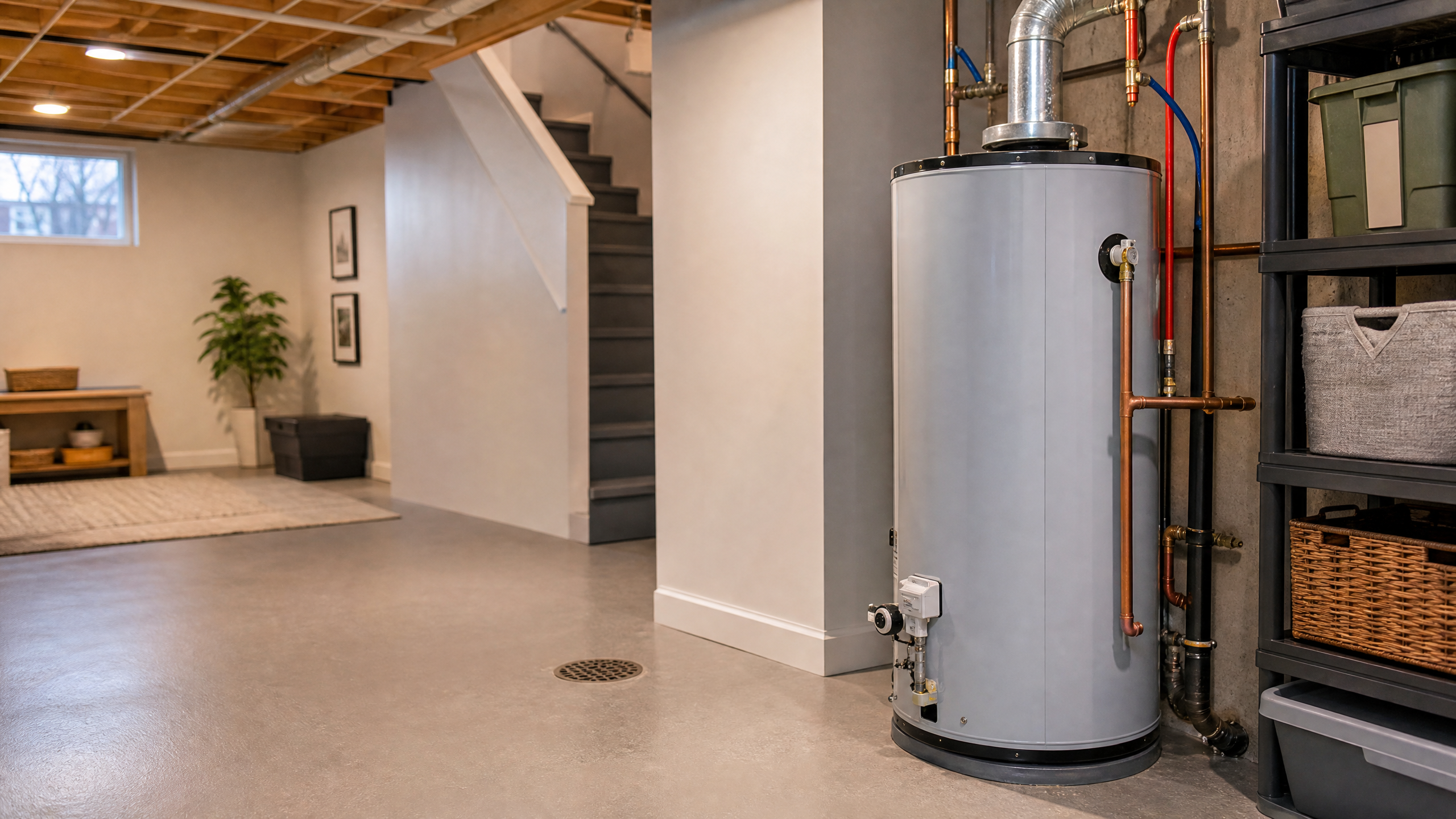
Contact Saving Plumbing when the popping is persistent, increasingly loud, accompanied by poor hot-water performance, or returning soon after maintenance. Prompt service is particularly important if you see water, smell gas, hear hissing at a gas connection, notice a tripped breaker, or find the temperature-and-pressure relief valve discharging.
Saving Plumbing offers plumbing services in Toronto, Scarborough, North York, Etobicoke, Mississauga, Vaughan, Markham, Pickering, Oshawa, Richmond Hill, Whitby, and surrounding GTA communities. Call (416) 271-6745 to discuss water-heater repair, tank service or replacement options and get the problem assessed before a maintenance warning becomes water damage or a complete loss of hot water.
Frequently asked questions
Can a Popping Water Heater Explode?
Popping caused by sediment does not by itself mean the water heater is about to explode.
Temperature and pressure are managed through the heater’s controls and safety systems, including its temperature-and-pressure relief valve. A relief valve that is repeatedly discharging, an unusually hot tank, gas odour, severe corrosion or a visibly damaged appliance needs prompt professional attention.
Can I Keep Using a Water Heater That Is Popping?
A mild sediment-related popping noise often allows time to arrange maintenance when the heater is otherwise operating normally.
Leaks, gas odour, electrical burning smells, relief-valve discharge or another significant change in operation require a faster response. Gas odour should be handled according to Enbridge Gas emergency guidance.
How Often Should a Water Heater Be Flushed in Toronto?
There is no single flushing interval that fits every Toronto water heater.
Use the maintenance schedule in the heater manufacturer’s instructions and account for the unit’s condition, household hot-water use and previous sediment accumulation.
Toronto’s municipal water supply has relatively low hardness, so a generic schedule designed for a very hard-water region may not describe every Toronto home accurately.
Why Is My New Water Heater Making a Popping or Crackling Noise?
Sediment is one possibility, but a new heater introduces other explanations.
A newly installed heater that develops persistent unusual noise should be checked against its manufacturer documentation before assuming it needs the same treatment as an older sediment-filled tank.
