
A reliable plumber in Toronto should be properly qualified, insured, experienced with your type of problem, and willing to explain the work before starting. You should also receive clear pricing, a written scope of work, and information about any warranty that applies.
Price matters, but the lowest number tells you very little on its own. One quote may cover only the visible repair. Another may include diagnosis, new fittings, cleanup, testing, and warranty coverage.
That difference becomes important when the problem involves a concealed leak, sewer blockage, burst pipe, water heater, or plumbing renovation.
This guide includes a checklist , questionnaire and explains how homeowners in Toronto and across Ontario can screen a plumber, compare estimates, recognize warning signs, and make a safer hiring decision.
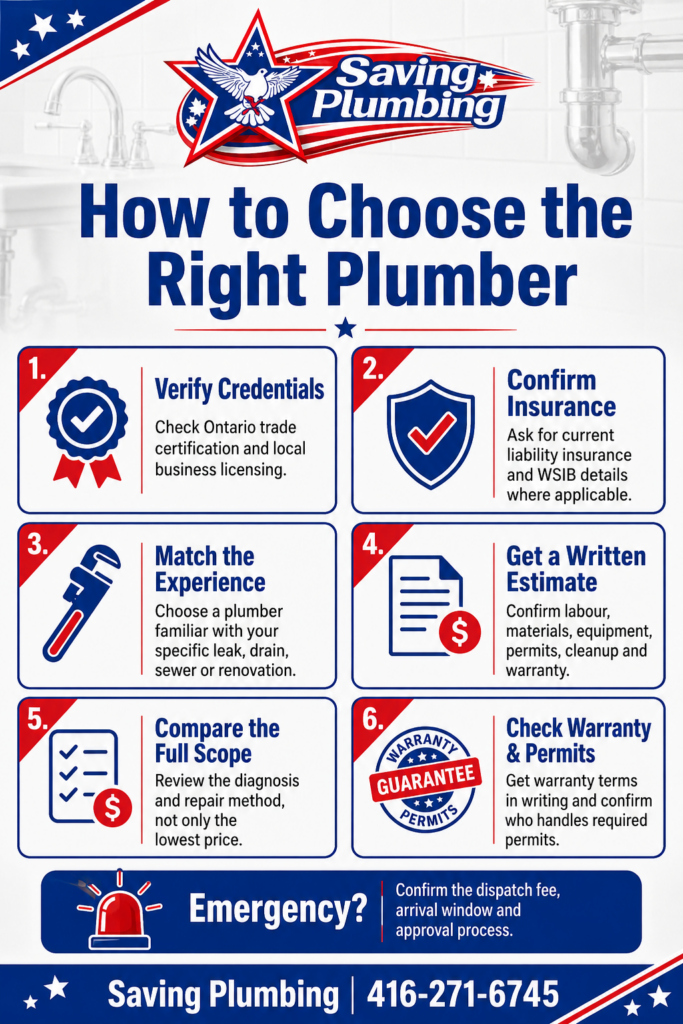
Quick Checklist for Choosing a Plumber
Before approving the work, confirm the following:
- The person completing the plumbing work has the required Ontario trade credentials.
- The plumbing business holds any municipal licence required where it operates.
- The company carries liability insurance.
- The plumber has experience with your specific problem.
- You receive a written estimate or clearly documented service price.
- The scope explains labour, materials, equipment, cleanup, and possible additional charges.
- The plumber will obtain or address permits when the work requires them.
- Warranty terms are provided in writing.
- The company has a verifiable address, phone number, and recent customer history.
- You know who to contact if the problem returns.
For an emergency, you may not have time to compare several companies. You can still confirm the call-out charge, hourly or flat-rate pricing, technician qualifications, expected arrival window, and what work requires your approval.
Need a plumber for a problem in your home?
Saving Plumbing handles residential plumbing repairs, drain problems, leaks, pipe damage, fixture work, water heaters, and urgent plumbing calls across Toronto and surrounding GTA service areas.
Call 416-271-6745 to describe the problem and check availability.
1. Verify the Plumber’s Ontario Trade Credentials
Plumbing is a compulsory trade in Ontario. A person performing plumbing work must generally hold a valid Certificate of Qualification, Provisional Certificate of Qualification, or Registered Training Agreement.
Homeowners can search the Skilled Trades Ontario Public Register using the person’s name or Skilled Trades Ontario identification number. The register helps confirm whether a plumber or registered apprentice is authorized to work in the trade.
Ask the company:
- Who will perform the work?
- Is that person a certified plumber or registered apprentice?
- Will a qualified journeyperson supervise the job if an apprentice attends?
- Can you provide the plumber’s Skilled Trades Ontario information?
A company name, uniform, online advertisement, or branded vehicle does not confirm the credentials of the person working on your plumbing system.
Trade Certification and Business Licensing Are Different
A plumber’s trade certification applies to the individual. A municipal plumbing contractor licence applies to the business.
Within Toronto, a business that contracts, repairs, or advertises plumbing installations must obtain a Plumbing Contractor licence from the City of Toronto. Homeowners can use Toronto’s Business Licence Lookup to search for published licence information.
Requirements can differ outside Toronto. If your property is in Markham, Vaughan, Pickering, Ajax, Brampton, Mississauga, or another GTA municipality, ask what local licensing and permit rules apply to the job.
2. Ask for Proof of Insurance
A plumbing company should be able to explain what insurance it carries and provide current proof when requested.
Commercial general liability insurance may respond when covered accidental damage occurs during the job. Depending on the company’s structure and workforce, WSIB requirements may also apply.
Ask for:
- The insurer’s name
- The policy number or certificate of insurance
- The coverage period
- The liability limit
- Confirmation that the policy covers plumbing operations
- WSIB clearance information when applicable
Check that the insured business name matches the company named on your quote or contract. A certificate belonging to another corporation, subcontractor, or expired policy does not verify coverage for the company you hired.
Insurance should never be treated as a substitute for qualified work. It is one part of a broader screening process.
3. Choose Experience That Matches the Plumbing Problem
Plumbing experience is rarely interchangeable across every type of job.
A technician who regularly replaces faucets may have limited experience diagnosing recurring sewer backups. A plumber who handles service calls may not be the right choice for a multi-room renovation involving rough-ins, venting, permits, and inspections.
Match the plumber’s background to the problem:
| Plumbing problem | Relevant experience to ask about |
|---|---|
| Repeated drain blockage | Drain cameras, blockage location, root intrusion and pipe condition |
| Hidden water leak | Leak isolation, pressure testing and non-destructive investigation |
| Sewer backup | Main drain diagnosis, backwater valves and sewer repair options |
| Burst or frozen pipe | Emergency isolation, damaged pipe replacement and water-risk assessment |
| Low water pressure | Supply piping, valves, pressure regulators and mineral buildup |
| Water heater problem | Tank and tankless diagnostics, venting and fuel-specific qualifications |
| Bathroom renovation | Rough-ins, fixture placement, drainage, venting and permit coordination |
| Basement plumbing | Below-grade drainage, sewage ejectors, sump pumps and backwater protection |
Ask the plumber to explain how the diagnosis will be made. A credible answer should identify the inspection process, possible causes, equipment required, and limits of what can be confirmed before walls, ceilings, or floors are opened.
Diagnosis Should Come Before a Major Repair Recommendation
Some plumbing symptoms have several possible causes.
A slow drain could result from a localized fixture blockage, a damaged trap, buildup farther along the branch, or a problem in the main building drain. Low pressure may come from a partly closed valve, a fixture restriction, corroded piping, a pressure-regulating valve, or the municipal supply.
Before approving extensive work, ask:
- What evidence supports the diagnosis?
- Was the affected area inspected or tested?
- Would a drain camera, pressure test, or other diagnostic step provide better confirmation?
- Is the proposed repair addressing the source or only the symptom?
- Are there less invasive options?
- What conditions could change the price after work begins?
A plumber should be able to distinguish what has been confirmed from what is still suspected.
4. Read Reviews for Evidence, Not Just Star Ratings
A strong average rating can help you narrow the list. The review details reveal far more.
Look for recent reviews that describe:
- The plumbing problem
- How the issue was diagnosed
- Whether the arrival window was respected
- How pricing was communicated
- Whether the work area was protected and cleaned
- Whether the repair remained effective
- How the company handled a callback or warranty request
Give more weight to patterns across several reviews than to one unusually positive or negative comment.
Check reviews on more than one platform when possible. Compare the company name, address, phone number, website, and service area across its Google Business Profile, website, directories, and invoices. Inconsistent business information deserves clarification.
Photos can also help. Useful project images show actual equipment, pipe conditions, repair stages, completed work, or the type of properties the company services. Generic stock photography provides little evidence of field experience.
Request a Written Estimate Before Work Begins
A written estimate should tell you what the plumber plans to do and what the price covers.
In Ontario, a home renovation or repair contract worth more than $50 must generally be in writing. When an estimate is included in the contract, Ontario’s consumer rules generally prevent the final price from exceeding the estimate by more than 10 percent unless you agree to new work or a new price. Homeowners can review these protections in Ontario’s guidance on home renovations and repairs and signing or cancelling a contract.
A useful estimate should identify:
- The business and customer
- The service address
- The diagnosed or reported problem
- The work being proposed
- Labour and material charges
- Diagnostic or equipment fees
- Permit costs, if applicable
- Cleanup and disposal
- Applicable taxes
- Payment schedule
- Warranty terms
- Conditions that could require a change order
- The estimated start and completion dates for larger projects
Emergency diagnosis can make an exact total difficult before inspection. The company should still explain the dispatch fee, minimum charge, rate structure, approval process, and how additional work will be priced.
Compare Plumbing Quotes Using the Same Scope
Two estimates can only be compared fairly when they cover the same work.
A lower quote may exclude diagnostic equipment, replacement materials, wall access, permit fees, cleanup, or testing. It may also assume the visible component is the only problem.
Create a simple comparison table before deciding:
| Quote detail | Company 1 | Company 2 | Company 3 |
|---|---|---|---|
| Diagnosis included | |||
| Proposed repair | |||
| Labour included | |||
| Parts and materials | |||
| Equipment fees | |||
| Permit responsibility | |||
| Wall or floor access | |||
| Cleanup and disposal | |||
| Testing after repair | |||
| Workmanship warranty | |||
| Total before tax |
Ask each plumber whether the proposed repair addresses the cause of the problem.
For example, clearing a sewer blockage may restore flow. It does not tell you whether the obstruction came from grease, tree roots, a collapsed pipe, or a displaced joint. A plumber may recommend a video camera inspection when the blockage recurs or the pipe’s condition remains uncertain.
The Lowest Plumbing Quote Can Leave Work Uncovered
A quote may appear cheaper because it covers a smaller scope.
Suppose one plumber quotes for replacing a leaking section of pipe. Another includes locating the leak, replacing damaged pipe and fittings, securing the new section, pressure testing the system, and cleaning the work area.
The second estimate costs more because it includes more work. Compare the repair method and deliverables before comparing the total.
Understand Flat-Rate and Hourly Plumbing Prices
Plumbing companies may use flat-rate pricing, hourly rates, or a combination of both.
Flat-Rate Pricing
A flat rate assigns a set price to a defined repair. It can provide better cost certainty when the plumber has inspected the problem and understands the scope.
Confirm what the flat rate includes:
- Labour
- Standard parts
- Specialized equipment
- Removal of old materials
- Testing
- Cleanup
- Travel or dispatch fees
- Warranty coverage
Ask what circumstances could change the price. Concealed damage, inaccessible piping, non-standard fittings, or a different diagnosis may require an updated scope.
Hourly Pricing
Hourly pricing may suit investigation, complex troubleshooting, or work where the full scope cannot be seen in advance.
Ask:
- When does billable time begin?
- Is there a minimum service charge?
- Does travel time count?
- Are multiple plumbers billed separately?
- How are parts marked up?
- Are diagnostic tools charged separately?
- Will the plumber request approval before exceeding a set amount?
Neither pricing method tells you whether a plumber is affordable on its own. The final value depends on the diagnosis, repair quality, materials, time required, and likelihood that the problem will return.
Review the Warranty Before Approving the Repair
A plumbing warranty should state what is covered, how long coverage lasts, and what you must do if the repair fails.
Ask whether the company provides separate coverage for:
- Workmanship
- Replacement parts
- Manufacturer-supplied fixtures
- Drain cleaning
- Sewer repairs
- Labour required for a warranty callback
Some fixtures and plumbing components carry a manufacturer’s warranty. That coverage may apply to the product while the plumber’s warranty applies to installation.
Read the exclusions as well. Coverage may be affected by misuse, freezing, chemical drain cleaners, unrelated pipe deterioration, tampering by another contractor, or a new blockage elsewhere in the system.
Keep the invoice, photographs, model numbers, warranty terms, and any inspection documents. These records make a future claim easier to assess.
Confirm Whether the Work Requires a Permit
Minor fixture repairs and routine maintenance do not always require a building permit. Installing or modifying plumbing systems, drains, water services, or major plumbing layouts may require municipal approval.
Permit requirements depend on the work and the municipality.
In Toronto, permit applications may require plumbing plans, a plumbing data sheet, and other project information. Permitted plumbing work is inspected at prescribed stages, which can include underground drainage, water service, rough-in piping, and the completed installation. Homeowners can review the City’s guidance for stand-alone plumbing and drain permits and required plumbing inspections.
Ask the plumber:
- Does this job require a permit?
- Who will apply for it?
- Is the permit fee included in the quote?
- Which inspections will be required?
- Who will arrange the inspections?
- Will I receive the permit number and final inspection record?
- Can the pipes be covered before the inspection?
Be cautious if someone proposes skipping a required permit to save time or money. Unpermitted work may create problems during a renovation, insurance claim, property sale, or future inspection.
If the answer remains unclear, contact the local building department before work begins.
Watch for Plumbing Contractor Warning Signs
One concern may have a reasonable explanation. Several concerns appearing together should slow the hiring decision.
Common warning signs include:
- The person performing the work cannot be found in the Skilled Trades Ontario Public Register when registration should apply.
- The company refuses to provide its legal business name.
- Insurance information is expired or belongs to another business.
- The plumber recommends major work without explaining the diagnosis.
- The estimate lacks a clear scope.
- A large cash payment is demanded before materials are ordered or work begins.
- The price changes without new work being documented.
- The plumber pressures you to approve immediately when no active emergency exists.
- Required permits are dismissed as unnecessary without checking the job.
- Warranty promises are verbal only.
- The company will not provide an invoice.
- Payment is requested through an unrelated person or business.
- The plumber discourages you from taking photographs or keeping replaced parts.
- Online listings contain conflicting company names, addresses, or phone numbers.
Cash payment alone does not prove that a contractor is unreliable. You should still receive an invoice showing the company, service address, work completed, amount paid, taxes, and warranty terms.
Be Careful With Unsolicited Plumbing Advice
A contractor who appears at your door may claim that your sewer, water service, or plumbing system requires immediate replacement. Ask for written findings and independent confirmation before authorizing expensive work.
If there is no active leak, sewage backup, loss of water, or immediate safety concern, you have time to review the evidence.
Screen an Emergency Plumber Quickly
A burst pipe or sewage backup does not give you much time. A short phone screening can still protect you from unclear pricing and unauthorized work.
Ask the dispatcher:
- Is the company available now?
- What is the expected arrival window?
- Is there an emergency dispatch or after-hours fee?
- Is there a minimum charge?
- Will the plumber explain the price before beginning the repair?
- Can the plumber make the area safe if a permanent repair cannot be completed immediately?
- What forms of payment are accepted?
- Will I receive an invoice and written warranty?
When the plumber arrives, identify the immediate objective. This may be stopping the water, isolating a damaged fixture, clearing a backup, or preventing further property damage. A larger repair can be assessed after the immediate risk is controlled.
What to Do While Waiting for an Emergency Plumber
Your actions depend on the problem.
- Shut off the affected fixture or main water supply if water is escaping.
- Avoid contact with sewage or contaminated water.
- Keep children and pets away from the area.
- Do not use fixtures connected to a backed-up drain.
- Move belongings away from spreading water when it is safe.
- Take photographs of visible damage.
- Contact the appropriate utility if the issue involves gas or electrical danger.
- Tell the plumber about any chemicals poured into a drain.
For urgent help, contact Saving Plumbing’s 24-hour emergency plumbers in Toronto at 416-271-6745.
Ask These Questions Before Hiring a Plumber
You do not need to ask every question for a small fixture repair. Use the questions that fit the size and risk of the job.
Qualifications and Business
- Who will complete the plumbing work?
- Is the plumber certified or registered in Ontario?
- Is your company licensed where required?
- Do you carry current liability insurance?
- Will subcontractors be involved?
Diagnosis and Repair
- What do you believe is causing the problem?
- What evidence supports that diagnosis?
- Is further testing recommended?
- What repair do you propose?
- Are there other reasonable options?
- Could concealed conditions change the scope?
Price and Contract
- Is the price flat-rate or hourly?
- What is included?
- What is excluded?
- Are dispatch, equipment, permit, and cleanup fees included?
- How will additional work be approved?
- When is payment due?
Completion and Protection
- Does the work require a permit?
- Who schedules the inspection?
- How will the repair be tested?
- Will the work area be cleaned?
- What warranty applies?
- What should I do if the problem returns?
A capable plumber should answer in clear language. Technical work can be complex. The explanation should still help you understand what is being repaired and why.
Questions Homeowners Ask About Hiring a Plumber
How do I know whether a plumber is licensed in Ontario?
Plumber is a compulsory trade in Ontario. You can search the Skilled Trades Ontario Public Register using the individual’s name or identification number. The register shows whether the person holds the credentials required to work legally in the trade, subject to limited statutory exemptions.
Toronto homeowners can separately check whether a plumbing contractor’s business licence is active through the City’s Business Licence Lookup.
Should I get three plumbing quotes?
Multiple quotes are helpful for renovations, sewer replacements, repiping, water-service work, and other planned projects. Three quotes are not always practical for a leaking pipe or sewage backup.
For urgent work, focus on qualifications, response time, dispatch fees, diagnostic process, and approval requirements.
Should a plumber provide a free estimate?
Estimate policies vary. Some companies provide free estimates for planned projects but charge a service or diagnostic fee for troubleshooting. Ask whether the fee applies, what it covers, and whether it is credited toward the repair.
Saving Plumbing states that free estimates are available for work more involved than a standard service call. Confirm eligibility when booking.
Can a plumber charge more than the estimate in Ontario?
Ontario guidance says that when a written estimate forms part of a consumer agreement, the final charge generally cannot exceed it by more than 10 percent unless the customer agrees to additional work or a new price. Read Ontario’s current guidance on home renovations and repairs before signing a substantial repair contract.
Unexpected conditions can change a plumbing project. Ask for a written change order that records the revised work and price before it proceeds.
How can I tell whether a plumbing quote is reasonable?
Compare the diagnosis, repair method, parts, labour, equipment, permits, testing, cleanup, and warranty. A total price without a defined scope gives you very little information.
Should I hire a general handyman for plumbing work?
Plumbing is a compulsory trade in Ontario. Work that falls within the plumber trade should be completed by a person legally authorized to perform it. Improper drainage, venting, water distribution, or fixture installation can cause leakage, contamination, sewer gas, and property damage.
What information should appear on the final invoice?
The invoice should identify the business, customer, service address, date, work completed, parts used, labour charges, taxes, total payment, and applicable warranty. Permit or inspection information should be included when relevant.
Final Plumber Hiring Checklist
Before the work starts, make sure you can answer these questions:
- Do I know who will perform the work?
- Have I verified the relevant credentials?
- Does the company carry insurance?
- Does the plumber understand this type of problem?
- Has the cause been investigated?
- Do I have a written scope and price?
- Do I understand possible additional costs?
- Have permit responsibilities been confirmed?
- Do I know what warranty applies?
- Will I receive an invoice and completion records?
Choosing a plumber becomes easier when the decision is based on evidence. Credentials establish authorization. Diagnosis connects the symptom to its likely cause. A written estimate defines the work. Testing confirms whether the repair restored the system.
Get Help From a Licensed GTA Plumber
At Saving Plumbing, we help homeowners understand what is happening before the work moves forward. Our team handles residential plumbing repairs, clogged drains, leaking and burst pipes, sewer problems, fixture installations, sump pumps, water heaters, and plumbing emergencies across Toronto and the GTA.
Explore our residential plumbing services in Toronto or call 416-271-6745 to discuss your plumbing problem and request service.
