
TL;DR: How often should a Toronto homeowner inspect the sewer line?
For a typical GTA home with no known sewer problems, a sewer camera inspection every three to five years is a sensible maintenance starting point. Older homes with original clay or cast-iron pipes, mature trees near the sewer route, a history of backups, or previous repairs may need inspection every one to three years. You should not wait for a calendar reminder if you have repeated clogs, several slow fixtures, gurgling toilets, sewage odours, wet patches in the yard, or a backup at the lowest drain. A sewer camera inspection is also worth arranging before buying an older house or beginning a major renovation.
There is no single interval that suits every property. The right schedule depends on the sewer line’s material, age, condition, location, surrounding trees, usage, and repair history.
Why sewer camera inspections matter in Toronto and the GTA
Your building’s sewer lateral is buried, so a serious defect can develop out of sight. A camera inspection gives a plumber a live view inside the line instead of relying only on symptoms, a drain snake, or a guess about where the blockage may be. The inspection can reveal root intrusion, cracks, separated joints, corrosion, heavy scale, foreign objects, collapsed sections, and low spots where water and solids collect.
This matters particularly in established GTA neighbourhoods.Toronto, downtown toronto, Scarborough, North York, Etobicoke, Mississauga, Vaughan, Markham, Pickering, Oshawa, Richmond Hill, Whitby and Durham-area properties may have aging pipe materials, mature trees, or past renovations that are not obvious from inside the home. Saving Plumbing’s existing guidance already identifies tree-root intrusion as one possible cause of a main sewer blockage, but this article focuses specifically on when to inspect and how to choose a practical inspection schedule, rather than repeating a general clog diagnosis.
A practical sewer inspection schedule for GTA homes
The intervals below are planning guidelines, not a substitute for a plumber’s assessment and not a universal building-code requirement. If a technician has already documented a defect, follow the repair or monitoring schedule recommended for that specific line.
| Home or sewer-line situation | Practical inspection timing | Why the timing may be appropriate |
| Newer home with PVC or ABS and no warning signs | Every 5 years, or when a concern appears | Modern plastic pipe is generally less vulnerable to joint intrusion, but installation defects, settlement, or construction debris can still occur. |
| Typical established home with no known history | Every 3–5 years | A baseline inspection creates a record of the line’s condition and can identify gradual deterioration before an emergency. |
| Older home with original clay or cast-iron sewer piping | Every 2–3 years | Older materials may be more vulnerable to root entry, joint movement, corrosion, cracking, and scale. |
| Mature trees close to the sewer route | Every 1–2 years if roots have been found; otherwise assess the line’s condition first | Roots follow moisture and can return after cleaning if the pipe has an opening or damaged joint. |
| Previous backup, root cutting, spot repair, or recurring clog | Inspect promptly, then follow the plumber’s monitoring plan | A temporary clearing does not show whether the pipe is structurally sound. |
| Buying an older GTA home | Before the deal becomes unconditional, where the transaction allows | A standard home inspection may not show the condition of the buried sewer lateral. A separate sewer scope reduces the risk of inheriting an expensive hidden defect. |
| Planning an addition, underpinning, deck, driveway, or major landscaping | Before work begins | Knowing the line’s route and condition helps avoid damaging an underground pipe and can inform construction planning. |
Competitor coverage commonly clusters around a one-to-five-year range, with shorter intervals for older pipes, nearby trees, and problem properties. A review of five relevant pages produced an approximate average of 1,850 words when page text and headings were counted. This article is intentionally structured at a similar depth while narrowing the advice to Toronto and GTA homeowners, pre-purchase decisions, and practical next steps.
Do you need a sewer camera inspection if there are no symptoms?
Sometimes. Preventive inspection is most useful when the property has a higher-risk profile or when the sewer’s history is unknown. Consider arranging a baseline inspection if:
•The house is older and the sewer material is unknown.
•Large trees grow between the house and the street or near the suspected sewer route.
•You have recently moved in and did not receive sewer inspection footage.
•The line has been snaked, root-cut, or repaired more than once.
•You are buying a home and want information beyond a visual plumbing check.
•You are planning construction that may cross or load the sewer route.
•You want a documented condition report for future maintenance planning.
A clean inspection does not mean the pipe can never fail. It does, however, establish a useful baseline. Save the video, location notes, and report so a future technician can compare changes instead of starting from scratch.
When should you inspect the sewer line immediately?
A symptom-triggered inspection should take priority over a routine interval. Arrange professional help promptly if you notice any of the following:
Several fixtures become slow at the same time
A single slow bathroom sink may have a local trap or branch-drain issue. When the kitchen sink, basement shower, toilets, and laundry drain begin behaving poorly together, the restriction may be farther downstream in the main sewer line.
Toilets gurgle when another fixture drains
Gurgling can indicate trapped air or restricted flow. It is not proof of a sewer-line defect on its own, but it is a useful reason to investigate when combined with slow drainage or backups.
Wastewater rises at the lowest drain
A basement floor drain, shower, or laundry standpipe is often lower than other fixtures. If wastewater backs up there, stop using water where possible and contact a plumber. Sewage exposure can damage finishes and create a sanitation concern.
The same clog keeps returning
Repeated snaking may restore flow temporarily while leaving roots, a broken joint, a belly, or a collapsed section in place. A camera inspection can help distinguish a recurring structural problem from a routine surface blockage.
You smell sewage indoors or along the yard
Persistent sewer odours may come from several causes, including a dry trap, venting issue, damaged pipe, or main-line problem. If the odour occurs in more than one location or is accompanied by drainage trouble, a camera inspection can help narrow the cause.
The ground above the sewer route stays wet or unusually green
A wet patch, depression, sinkhole, or unusually vigorous strip of grass can have many explanations. If it follows the likely sewer path and appears with drainage symptoms, ask a professional to investigate rather than digging blindly.
What happens during a sewer camera inspection?
A typical inspection is designed to be minimally disruptive, although access varies by property. A technician generally:
1.Finds an access point. This may be an exterior cleanout, basement cleanout, or another suitable opening. In some homes, access may require removing a fixture, which should be discussed before work begins.
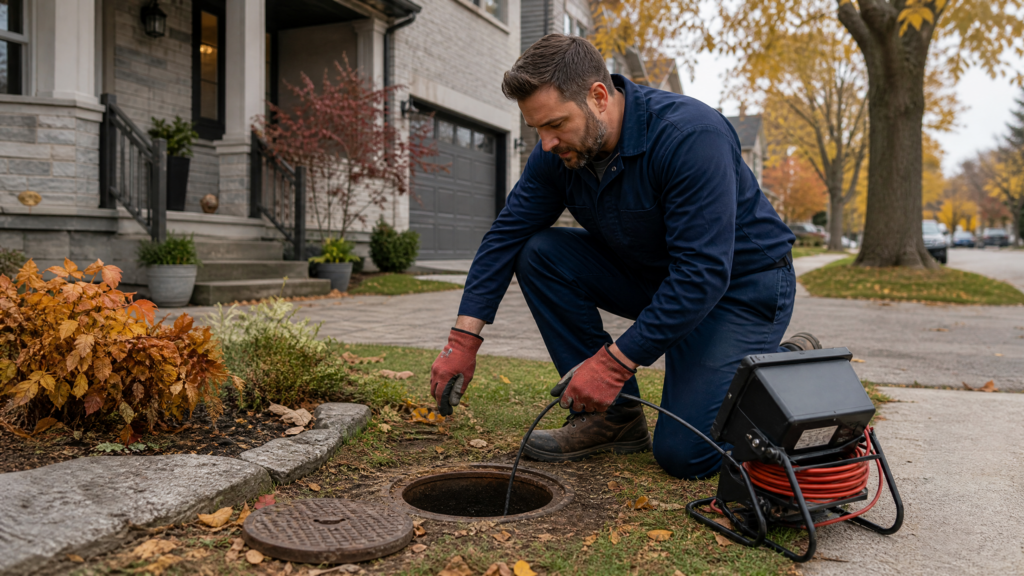
2.Feeds a waterproof camera through the pipe. The live view allows the technician to assess the line’s interior as the camera travels.
3.Checks the pipe and records notable findings. The inspection may identify roots, cracks, offsets, corrosion, buildup, foreign objects, standing water, or a collapse.
4.Locates problem areas where equipment allows. A transmitter, often called a sonde, may help mark the surface location and approximate depth of a defect.
5.Explains the next step. Depending on the findings, the recommendation may be monitoring, drain cleaning, root removal, repair, replacement, or another inspection.

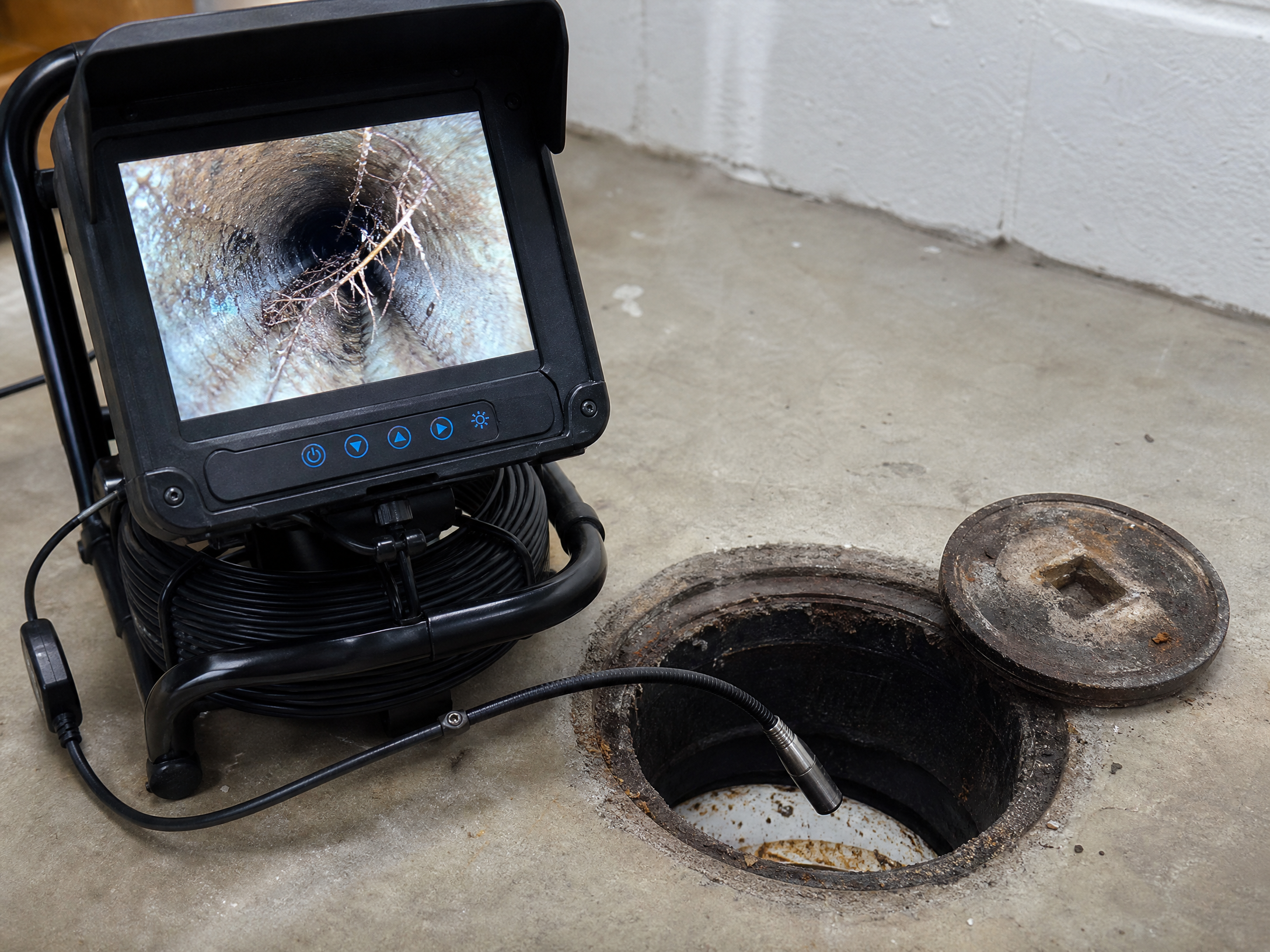
Suggested caption: Recorded camera footage can show whether a recurring blockage is caused by roots, debris, a damaged joint, or a structural defect.
What a sewer camera can—and cannot—tell you
A camera inspection is valuable because it replaces guesswork with visual evidence, but it has limits. It can show the interior condition of the accessible pipe and often identify the type and location of a visible problem. It may also help a plumber determine whether cleaning should come before a second inspection.
It does not automatically certify the entire property’s plumbing system, guarantee that every defect will be visible, or replace a full home inspection. Heavy water, debris, an impassable obstruction, poor access, or a camera that cannot reach the full line may limit the view. Ask whether the inspection includes recorded footage, still images, a written summary, approximate location details, and a clear explanation of any recommended work.
What should you ask before booking?
Before scheduling, ask these practical questions:
| Question | Why it matters |
| Which portion of the sewer line will be inspected? | A camera may cover the house-to-street lateral, a branch, or only the accessible section. |
| Where will you access the line? | Access affects preparation, time, and whether a fixture must be removed. |
| Will I receive the video or a written report? | Documentation helps with future maintenance, quotes, and real-estate decisions. |
| Can you locate the defect from the surface? | Location information can reduce unnecessary excavation if repair is needed. |
| Is cleaning included or recommended first? | Roots, grease, or sediment can obscure the pipe wall and may require a second camera pass. |
| What happens if the camera cannot pass? | A blocked or collapsed section may require a different diagnostic or repair step. |
How GTA homeowners can reduce sewer-line risk
Good habits cannot correct a cracked or collapsed pipe, but they can reduce avoidable blockages and help you spot trouble early. Keep wipes, paper towels, hygiene products, dental floss, fats, oils, and grease out of the sewer system. Use drain screens where appropriate, do not rely on harsh chemical drain cleaners for recurring problems, and keep notes about backups or previous root cutting.
If you are landscaping or building near the suspected sewer route, confirm the line location before excavation. Where roots have already entered a damaged line, trimming them may provide temporary relief but may not remove the underlying entry point. A camera inspection after cleaning can provide a clearer basis for deciding whether monitoring or permanent drain repair is appropriate.
When to call Saving Plumbing
Saving Plumbing provides video camera inspection, drain repair, sewer tree-root removal, drain cleaning and snaking, hydro-jetting, emergency plumbing services across Toronto and the GTA. If your home has recurring backups, multiple slow fixtures, sewage odours, suspected root intrusion, or an upcoming purchase or renovation, a professional inspection can help you understand the problem before it becomes a larger repair.
For prompt guidance, contact Saving Plumbing at (416) 271-6745 for 24/7 service or request an estimate through the company’s contact form. Share the symptoms, the age of the home if known, any previous drain work, and whether you need an inspection for maintenance, repair planning, or a real-estate transaction.
FAQs
1. How often should a sewer line be inspected in Toronto?
A typical GTA home with no known problems can start with a sewer camera inspection every three to five years. Older clay or cast-iron lines, nearby mature trees, previous repairs, or recurring backups may justify inspection every one to three years.
2. Should I get a sewer scope before buying a Toronto house?
Yes, especially if the home is older, the sewer material is unknown, mature trees are nearby, or the purchase inspection does not include the buried sewer lateral. Arrange it before the transaction becomes unconditional whenever the agreement and timing allow.
3. What are the signs that a sewer line needs a camera inspection?
Common warning signs include multiple slow drains, repeated clogs, gurgling toilets, sewage odours, wastewater backing up at a basement drain, wet or sunken ground along the sewer route, and problems that return after snaking.
4. Can a sewer camera inspection find tree roots?
Yes. A sewer camera can often show root intrusion inside the pipe, including roots entering through cracks or separated joints. The technician may also locate the affected section so the appropriate cleaning, root-removal, or repair option can be considered.
5. Is a sewer camera inspection invasive?
Usually, no. The camera is normally inserted through an existing cleanout or other access point, so the inspection itself generally avoids digging up the yard. Access limitations or a severe obstruction can change the process, so confirm the access plan before booking.
References
[1] Saving Plumbing — Toronto plumbing and drain services
[2] Saving Plumbing — Main Sewer Line Clog vs Localized Drain Clog: Difference
[3] NuFlow Technologies — How Often Should I Inspect My Sewer Line?
[4] Forbest Canada — How Often Should Sewer Lines Be Inspected?
[6] Elevate Inspection Group — Sewer Camera Inspection Process: A Complete Guide
[7] Twin Peaks Property Inspections — Sewer Camera Inspections & Utility Locates
