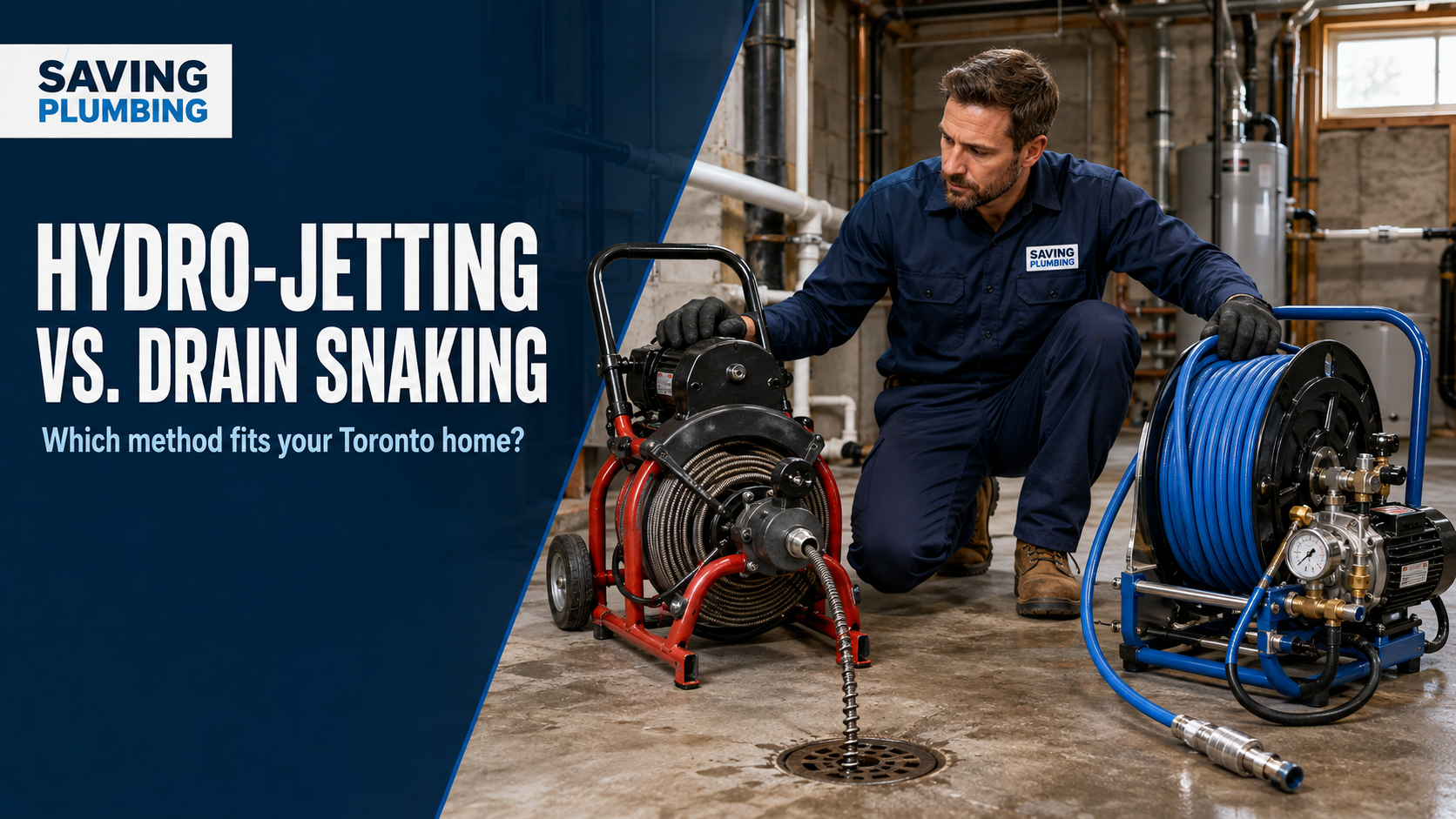
Drain snaking is usually the practical first choice for a one-time blockage affecting one sink, tub, shower or toilet. A cable reaches the obstruction and breaks it apart or retrieves it. Hydro-jetting is better suited to recurring restrictions caused by grease, sludge, soap residue or mineral deposits coating the inside of an otherwise serviceable pipe. The condition of the line matters as much as the clog. A badly cracked, offset, collapsed or heavily deteriorated pipe needs repair rather than stronger cleaning. When several fixtures are slow, a blockage returns after snaking, or the history of the sewer line is unclear, a camera inspection can show whether cleaning is appropriate and which method fits the problem. For a Toronto homeowner, the decision comes down to four facts: where the restriction is, what caused it, whether it has happened before, and whether the pipe can safely be cleaned.

Start with the pattern, not the equipment
A clump of hair near a shower trap, grease lining a kitchen branch and roots entering an underground sewer lateral can all cause slow drainage. The symptom sounds similar, but the work is not.
One slow fixture usually points toward a localized trap or branch-line problem. Several fixtures slowing together, a basement drain backing up when water is used upstairs, or a toilet gurgling when the washing machine drains suggests a restriction farther along the system. That distinction should be made before choosing a cable machine or water jetter.
Toronto housing adds another variable. A property may contain plastic drainage pipe, cast iron, clay sewer sections or a mixture installed during different renovations. Age alone does not settle the choice. Accessible condition, previous repairs, pipe alignment and the cause of the blockage are more useful than a simple old-versus-new rule.
What drain snaking actually does
Drain snaking, also called cabling or augering, uses a flexible cable fitted with a head selected for the pipe and obstruction. The plumber advances the cable until it reaches the blockage, then cuts through, breaks apart or retrieves the material.
This focused approach works well when the obstruction is discrete. Hair, soap residue, excess paper and some foreign objects can often be removed without washing the entire line. A toilet auger is designed for the toilet trap; larger powered cable machines are used for branch drains and sewer lines. The tool must match the application.
Professional drain snaking in Toronto is often the sensible first step when:
Only one fixture is affected.
The clog began recently and has no history of returning.
The likely cause is hair, paper, a soft obstruction or a retrievable object.
The line needs to be opened with limited water use.
The pipe condition is uncertain and the plumber wants to begin with targeted clearing.
Snaking has limits. A cable may restore flow while leaving grease, sludge, scale or fine root material on the pipe wall. That is not a failed service when the original task was to remove a local blockage. It becomes important when residue is the reason the same line keeps narrowing.
What hydro-jetting changes
Hydro-jetting sends controlled pressurized water through a hose and nozzle selected for the pipe size and the material being removed. Forward jets can help the nozzle work through the line, while rear-facing jets clean and carry loosened material back toward the access point.
The cleaning action reaches more of the pipe’s interior surface than a conventional cable. It is useful when grease, soap residue, sludge or mineral deposits coat a length of otherwise sound drainpipe. RIDGID’s manufacturer information for professional water jetters describes their use on sludge, soap and grease blockages and explains that the hose cleans the line as it is withdrawn.
Saving Plumbing’s Toronto hydro-jetting service uses drain power-flushing equipment with pressure adjusted to the job. The equipment rating does not tell a homeowner what pressure should be used in a particular pipe. Nozzle, flow, pipe diameter, material, access and condition all affect the setup.
Hydro-jetting deserves consideration when:
A kitchen or laundry line repeatedly slows because buildup remains on the walls.
The same drain clogs again after a cable has restored temporary flow.
Several fixtures show symptoms from a shared branch or main line.
Inspection identifies scale, sludge, grease or limited root intrusion in a serviceable pipe.
A commercial or high-use drain needs more complete cleaning than a single opening through debris.
Hydro-jetting is still a cleaning method. It cannot correct a collapsed section, separated joint, severe offset, belly or broken sewer lateral. Removing roots also does not close the defect that allowed them into the line.
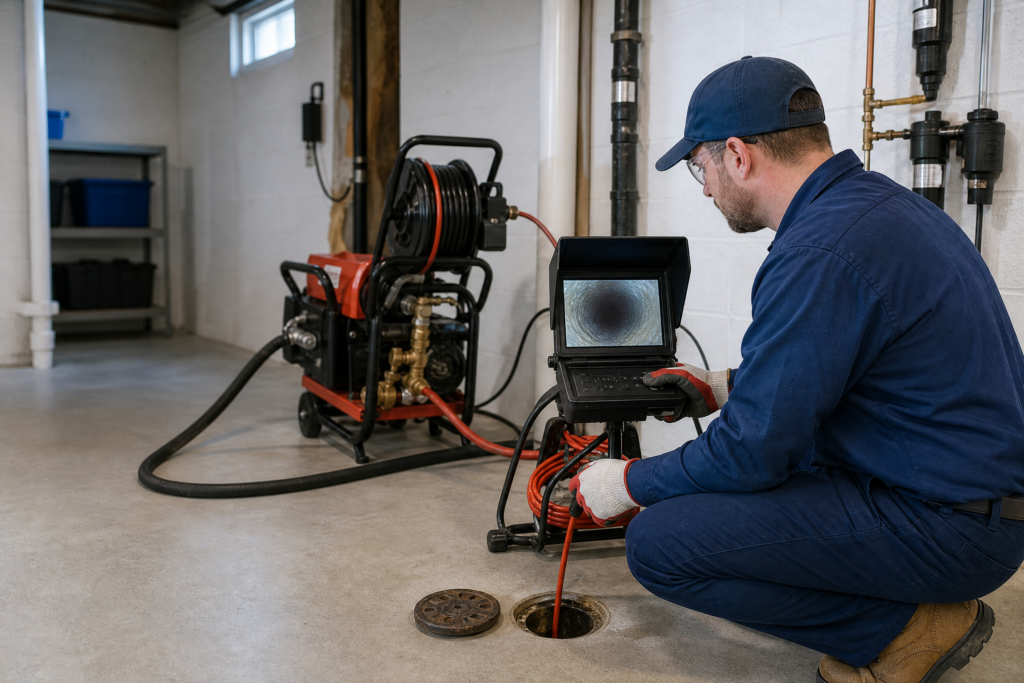
A drain camera inspection used to assess the line before selecting a cleaning method.
Hydro-jetting vs. drain snaking at a glance
| Question | Drain snaking | Hydro-jetting |
| Main job | Break or retrieve a defined obstruction | Clean buildup from a longer section of pipe wall |
| Typical fit | A first-time, localized clog | Recurring restriction or widespread residue |
| Common targets | Hair, paper, soft debris and some objects | Grease, sludge, soap residue and mineral buildup |
| Water use | Limited | Substantial and controlled |
| Pipe assessment | Still requires suitable cable and technique | Condition is especially important before high-pressure cleaning |
| Cannot solve | Cracks, collapse, offset or a belly | Cracks, collapse, offset or a belly |
When a camera inspection changes the decision
Symptoms can suggest the location of a restriction, but they cannot show the pipe wall. A drain camera inspection in Toronto may reveal residue, roots, standing water, a displaced joint, an offset or a collapsed section.
A camera is most useful when the line is open enough for the equipment to travel and the lens can see. A fully blocked or grease-coated line may need preliminary clearing before useful footage is possible. For that reason, inspection does not always happen in one fixed order. The plumber may open the line first, inspect it, clean it and then verify the result.
Camera findings can lead to three very different recommendations:
Use a snake because the obstruction is localized and the rest of the line is reasonably clear.
Hydro-jet the line because buildup coats a serviceable pipe beyond the initial blockage.
Stop repeated cleaning and plan a repair because the pipe has a structural defect.
This is the article’s most important limitation: a drain flowing after service confirms that flow was restored. It does not, by itself, confirm that the pipe is structurally sound.
Which method fits common Toronto drain problems?
A single shower that drains slowly
Hair and soap close to the trap usually favour targeted snaking or removal through accessible fixture components. Hydro-jetting would add equipment without addressing a more complex problem unless the branch has a documented history of buildup.
A kitchen sink that clogs every few months
The trap may be clear while grease and food residue narrow the branch farther downstream. A cable can reopen a path. If the problem returns, hydro-jetting may provide a more complete clean after the pipe and access are assessed.
Several fixtures slowing at once
The restriction may be in a shared branch, building drain or sewer lateral. The lowest fixture often shows the first backup. Investigation should locate the affected section before either method is selected.
Roots found inside the sewer line
Cable cutters and jetting equipment may remove root material, depending on the extent and pipe condition. Roots normally enter through a defect or joint. Cleaning restores space inside the line; it does not seal that entry point. Recurring root intrusion can justify repair or a longer-term management plan.
An old line with uncertain condition
Old does not automatically mean unusable, and newer does not guarantee sound installation. The plumber should consider material, visible deterioration, alignment, repair history and camera findings. If the pipe is fractured or collapsing, cleaning pressure is no longer the main decision.
What to do before the plumber arrives
Note which fixtures are affected and what happens when water is used elsewhere. Mention recent drain service, previous camera findings and how quickly the problem returned. Those details can save time because they help distinguish a new local clog from a recurring main-line problem.
Avoid adding more chemical drain cleaner. Toronto lists household cleaning products, including drain cleaners, as household hazardous waste and directs residents not to pour hazardous products into drains. Chemical left in a trap or pipe can also expose anyone who later opens the line. The City’s drain-disposal guidance explains how common products contribute to blockages and where hazardous waste belongs.
If wastewater is backing up, stop using the affected fixtures. Keep children and pets away from contaminated water. An active sewage backup, overflowing lower-level drain or rapidly spreading water may require 24-hour emergency plumbing assistance rather than a routine drain-cleaning appointment.
Questions worth asking before approving the work
Where is the blockage: fixture trap, branch drain, building drain or sewer lateral?
What evidence points to grease, roots, scale, an object or a structural defect?
Is the immediate goal to open the line or clean buildup from the pipe wall?
Can the camera reach the affected section before cleaning?
What pipe material and condition are visible?
What happens if cleaning reveals a crack, offset or collapse?
Will the line be flow-tested or inspected after the work?
A clear recommendation should connect the observed problem to the chosen equipment. More power is not a diagnosis.
Arrange the right drain service
Use snaking when the evidence points to one defined obstruction. Consider hydro-jetting when repeated trouble comes from material coating a serviceable line. When the symptoms or pipe condition leave doubt, inspect before committing to extensive cleaning.
Saving Plumbing provides drain snaking, hydro-jetting, camera inspection and emergency plumbing and drain service across Toronto and supported GTA communities. Call (416) 271-6745 and describe which fixtures are affected, whether wastewater is backing up and whether the line has been cleaned before.
Frequently asked questions
Is hydro-jetting better than snaking?
It is more thorough when grease, sludge, soap residue or mineral buildup coats a serviceable pipe. Snaking is often the better fit for a one-time, localized obstruction. The cause and pipe condition decide which method is better for the job.
Can hydro-jetting damage old pipes?
Any cleaning method can be unsuitable when a pipe is badly deteriorated or when the equipment is used incorrectly. Older plumbing may still be cleanable, but material, condition, alignment and access should be assessed before pressure and nozzle selection.
Does hydro-jetting remove tree roots?
It can remove some root material and flush debris from a suitable sewer line. It does not repair the opening that allowed roots to enter. Extensive or recurring intrusion may require mechanical cutting, repair or replacement.
Is a camera inspection always required before hydro-jetting?
Not every small drain-cleaning job follows the same sequence. Inspection is particularly useful when a problem recurs, the sewer material is uncertain or structural damage is suspected. A fully blocked line may need preliminary clearing before the camera can pass.
Which method costs more?
Hydro-jetting usually costs more because it requires specialized equipment, setup, water control and often inspection. Snaking is usually less involved for a simple clog. Access, pipe size, blockage location and required follow-up work affect the actual price.
How long does hydro-jetting take?
There is no reliable universal duration. Access to a suitable cleanout, pipe length, severity of buildup, water supply and inspection needs all affect the appointment. The plumber can estimate timing after assessing the line.
