
Quick Answer
A battery backup sump pump keeps removing water from the sump pit when the primary pump loses electrical power. Many systems also protect against primary-pump failure by using a separate pump, float switch and battery-powered control unit.
A backup system has limits. Its pumping capacity and operating time depend on the pump, battery, incoming water volume, discharge height and condition of the discharge line. A blocked or frozen discharge pipe can prevent both pumps from moving water outside.
Toronto homeowners completing eligible work may receive up to 80% of the invoiced battery-backup cost, to a maximum of $300, through the City’s Basement Flooding Protection Subsidy Program. Eligibility conditions apply, and the City does not guarantee payment.
Why a Primary Sump Pump May Need Backup Power
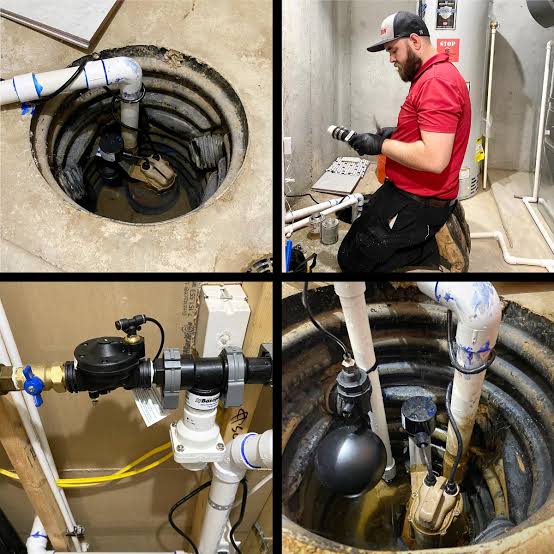
A standard sump pump depends on household electricity. If the power fails, the pump stops even if the sump pit continues receiving water from the foundation drainage system.
This creates a practical vulnerability. Heavy rain can raise groundwater around the foundation while electrical service is disrupted by the same storm. The pit continues filling, but the primary pump has no power to discharge the water.
Power loss is only one possible failure. A primary pump may also stop because of:
- A failed float switch
- A seized motor
- A jammed impeller
- A tripped breaker
- A damaged power cord
- A blocked intake
- A pump overwhelmed by incoming water
A properly configured battery backup adds another layer of protection while the primary system is unavailable.
How Does a Battery Backup Sump Pump Work?
A common backup system places a second pump in or beside the sump pit. This pump connects to a deep-cycle battery through a controller and charger.
The primary electric pump handles normal groundwater. The backup pump has its own float switch positioned higher in the pit. If the water rises beyond the normal operating level, the higher float activates the battery-powered pump.
That higher water level may indicate that:
- The power is out.
- The primary pump has failed.
- The primary float is stuck.
- Water is entering faster than the primary pump can remove it.
Many controllers sound an alarm when the backup activates. Some systems can also provide status notifications through an app or connected monitoring device.
Battery Backup Pump Versus Battery Power for the Main Pump
The phrase “sump pump battery backup” can describe two different arrangements.
| System | How it works | Main limitation |
|---|---|---|
| Secondary DC backup pump | A separate battery-powered pump activates when water rises above the primary pump’s normal level. | Usually has a lower pumping capacity than the primary pump. |
| Battery and inverter system | A battery and inverter supply alternating-current power to the primary pump during an outage. | It may not protect against mechanical failure of the primary pump unless the system includes another pump. |
A separate backup pump protects against more than an outage because it has its own motor and float. An inverter can allow the main pump to operate at its normal capacity, but the same primary pump remains the single mechanical point of failure.
The right arrangement depends on the primary pump, expected water volume, available pit space and the type of failure the homeowner wants to cover.
Do Toronto Homes Need a Battery Backup Sump Pump?
Not every basement has the same exposure. A battery backup deserves serious consideration when the home depends on the sump pump to keep groundwater below the basement floor.
The case becomes stronger when:
- The primary pump operates frequently during rain.
- The sump pit fills quickly after the pump stops.
- The home has experienced basement flooding.
- The neighbourhood experiences power outages during storms.
- The basement is finished or stores valuable property.
- The property has a high water table.
- The weeping tile drains into the sump pit.
- The homeowner travels frequently.
- The property is unattended for extended periods.
- The main pump is the basement’s only active groundwater-control measure.
A backup system becomes less useful when water reaches the basement through a different route. Surface water entering a window well, sewage backing up through a floor drain or water passing through a foundation crack requires a different assessment.
A Battery Backup Does Not Replace a Working Primary Pump
The backup is an auxiliary system. It should not become the normal pump for an extended period because the primary unit is unreliable.
A primary pump that cycles constantly, makes unusual noises or fails to empty the pit needs inspection. Installing a battery beside a failing pump leaves the main defect unresolved.
Saving Plumbing provides sump-pump repair and installation in Toronto for primary pumps, backup systems, float switches, check valves and discharge problems.
What a Battery Backup Can and Cannot Protect Against
| Condition | Can the backup help? | Why |
|---|---|---|
| Household power outage | Yes | The backup pump draws power from its battery. |
| Primary pump motor failure | Usually | A separate backup pump has its own motor. |
| Primary float-switch failure | Usually | A separate backup uses its own float. |
| Primary pump cannot keep up | Sometimes | The backup may add pumping capacity, subject to the discharge configuration. |
| Frozen or blocked discharge line | Usually no | Neither pump can discharge properly through an obstructed outlet. |
| Water entering through a foundation wall | Only indirectly | The system helps only if that water reaches the sump pit. |
| Municipal sewer backup | No | A sump pump handles groundwater, while a backwater valve addresses reverse sewer flow. |
| Battery is depleted or deteriorated | No | The system needs a charged, serviceable battery. |
A Sump Pump and Backwater Valve Solve Different Problems
A sump pump removes water collected by the foundation drainage system. A backwater valve closes the sanitary drain when wastewater attempts to flow from the municipal sewer toward the home.
One device cannot substitute for the other.
A basement may need both when it faces groundwater entry and sewer-backup risk. The correct flood-protection plan depends on how the property’s weeping tiles, drains, sump pit and sewer lateral are connected.
How Long Will a Battery Backup Sump Pump Run?
There is no dependable universal runtime.
Battery duration changes with:
- Battery type, capacity and age
- Pump power demand
- How frequently the pump cycles
- Gallons or litres moved during each cycle
- Vertical lift from the pit to the discharge point
- Pipe length, diameter and fittings
- Temperature around the battery
- Whether the battery was fully charged before the outage
A system may last much longer when the pump runs occasionally than when groundwater enters the pit continuously. Manufacturer runtime claims should be read with the test conditions attached.
Capacity is best discussed in terms of expected pumping cycles under the home’s actual conditions. An installation should account for how quickly the pit fills when the primary pump is turned off.
How Much Pumping Capacity Does the Backup Need?
The backup must move water faster than it enters the pit during the conditions it is expected to handle.
Pump ratings are affected by total dynamic head. A pump moves less water when it must lift water farther or push it through a restrictive discharge line.
A meaningful assessment considers:
- How quickly the sump pit fills
- The vertical rise to the discharge outlet
- Discharge-pipe length and diameter
- The number of elbows and check valves
- The primary pump’s actual performance
- Whether both pumps may operate together
Selecting a backup from its advertised maximum flow alone can produce an undersized system. Maximum ratings are commonly measured under conditions that may not match the installation.
Can Both Pumps Use the Same Discharge Pipe?
Some systems connect the primary and backup pumps to a shared discharge line. Others use separate discharge routes.
A shared line saves space but creates a common point of restriction. Its check valves and pipe diameter must accommodate the intended flow. A blockage or frozen exterior section can affect both pumps.
A separate discharge route provides greater independence, though the property must have a suitable and compliant location for the second outlet.
The City of Toronto says sump-pump discharge should empty onto a permeable surface, such as a lawn, garden or gravel area, at least two metres from the foundation wall.
What Type of Battery Does a Backup Sump Pump Use?
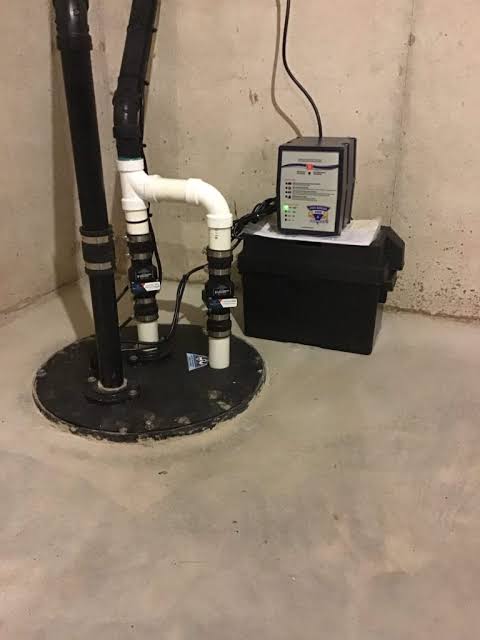
Many backup pumps use a deep-cycle lead-acid battery. Depending on the controller, this may be a flooded, absorbed glass mat or other manufacturer-approved battery. Some newer systems use lithium-based batteries.
The battery must be compatible with the pump and charging controller. Automotive starting batteries are designed for short bursts of high current and are generally unsuitable when the system specifies a deep-cycle battery.
Compare batteries by:
- Compatibility with the controller
- Rated capacity
- Expected service life
- Maintenance requirements
- Ventilation requirements
- Temperature limits
- Replacement availability
- Manufacturer warranty
The battery should sit above the basement floor on a stable, dry surface. It should remain accessible for inspection without being exposed to water from the pit.
What Features Matter in a Backup System?
An Independent Float Switch
A separate float allows the backup pump to respond when the primary float or motor does not.
An Audible Alarm
The alarm tells occupants that water has risen above the normal operating level. A silent backup may run for hours without anyone realizing the primary system has failed.
Battery and Charger Monitoring
The controller should report charging faults, poor connections and low battery conditions. A green power light alone does not confirm that the battery can perform under load.
Remote Notifications
Connected monitoring can be useful for rental properties, frequent travellers and homeowners who spend long periods away. Alerts still depend on the communication network and device configuration.
A Compatible Pumping Capacity
The pump needs enough capacity for the pit’s incoming water rate and the installation’s discharge head.
Accessible Components
Floats, check valves, battery terminals and the controller should remain reachable for testing and replacement.
Toronto’s 2026 Battery Backup Sump Pump Subsidy
The City of Toronto’s Basement Flooding Protection Subsidy Program now includes additional support for sump-pump battery backup power.
For eligible work completed on or after November 12, 2025, the City states:
- A sump-pump and alarm installation may receive up to 80% of the invoiced cost, to a maximum of $2,250.
- A battery backup may receive an additional subsidy of up to 80% of its invoiced cost, to a maximum of $300.
- The contractor must itemize the sump pump and battery-backup costs separately.
The $300 is a maximum subsidy. It is not a flat payment. For example, 80% of a $250 eligible battery-backup cost would be $200.
Who May Qualify?
The City’s published conditions include the following:
- The applicant must be the registered owner of a single-family, duplex, triplex or fourplex property in Toronto.
- The property must not have exceeded the lifetime maximum for that category.
- Downspouts must be disconnected from the City sewer unless an exemption applies.
- Front-yard paved areas must comply with applicable zoning requirements.
- The contractor and subcontractors must hold valid City of Toronto business licences when the work is completed.
- The owner must not owe outstanding taxes or debts to the City when the application is processed.
- The application must be submitted within the applicable deadline.
For eligible work completed on or after November 12, 2025, the current application deadline is two years after installation.
Subsidies are subject to program conditions, available funding and City approval. Receiving a quote or completing an installation does not guarantee reimbursement.
Documents Needed for the Application
The City requires supporting information that includes:
- The original electronic contractor invoice
- The contractor’s name and address
- The installation property address
- The completion date
- An itemized breakdown of eligible components, labour, materials and taxes
- Confirmation that the invoice was paid in full
- Photos of the sump pump
- Photos of the exterior discharge pipe
Homeowners should confirm current conditions directly through the City before authorizing work.
Can You Add Battery Backup to an Existing Sump Pump?
Often, yes. A retrofit may be possible when the existing pit has enough room, the discharge arrangement can accept another pump and the primary system remains serviceable.
The assessment should check:
- Sump-pit dimensions
- Primary-pump condition
- Float clearance
- Check-valve placement
- Discharge capacity
- Electrical supply and charger location
- Battery placement
- Alarm and monitoring options
A small pit can cause the floats to interfere with each other. Poor placement can also make the backup activate too early, run unnecessarily or fail to start before the pit overflows.
How Is a Battery Backup Sump Pump Tested?
A useful test confirms more than whether the alarm makes a sound.
- Inspect the pit, pumps, floats, check valves and discharge line.
- Confirm that the battery charger shows normal operation.
- Check battery terminals and cables for looseness or corrosion.
- Disconnect normal power according to the manufacturer’s procedure.
- Add water to the pit or raise the backup float safely.
- Confirm that the backup pump starts and discharges water outside.
- Listen for the alarm and verify any remote notification.
- Restore power and confirm that charging resumes.
Never reach into a sump pit while a pump may start. Follow the manufacturer’s safety and testing instructions for the installed equipment.
Battery Backup Sump Pump Maintenance
A backup system that sits unused still ages. Battery capacity declines, terminals corrode, floats stick and discharge lines become obstructed.
Maintenance should include:
- Testing the backup before the spring thaw and major storm season
- Following the battery manufacturer’s inspection schedule
- Replacing the battery when testing or manufacturer guidance indicates
- Cleaning accessible debris from the sump pit
- Checking that both floats move freely
- Inspecting check valves and pipe connections
- Confirming that the exterior discharge remains open
- Testing alarms and notifications
- Keeping the battery and controller dry
Replacement timing varies by battery chemistry, temperature, discharge history and charging conditions. A calendar age alone does not confirm usable capacity.
Warning Signs the Backup System Needs Service
- The controller reports a battery or charging fault.
- The alarm sounds without a clear water-level cause.
- The backup pump runs slowly or makes unusual noise.
- The battery case is swollen, cracked or leaking.
- Terminals show heavy corrosion.
- The backup does not start during a power-loss test.
- The pump runs but the pit level does not fall.
- The system cycles repeatedly during dry weather.
- The exterior discharge has little or no flow.
A swollen, hot, leaking or strongly odorous battery should not be handled casually. Disconnecting or replacing it should follow the product’s safety instructions.
How Much Does Battery Backup Sump Pump Installation Cost in Toronto?
There is no reliable flat price for every home. Published Toronto contractor estimates vary widely because the phrase “battery backup” may refer to a battery alone, a complete secondary pump system or a more involved installation.
The installed price can depend on:
- Whether the home needs a pump, battery or complete system
- Battery capacity and chemistry
- Sump-pit size
- Discharge-line changes
- Check valves and fittings
- Alarm and monitoring features
- Accessibility
- Whether the primary pump also needs replacement
A quote should identify the pump, battery, controller, charger, alarm, plumbing changes, labour and taxes separately. This also helps with Toronto’s subsidy application.
When a Battery Backup Is Not Enough
A backup pump adds resilience, but it cannot correct every basement-water problem.
A broader assessment is justified when:
- The pit fills faster than either pump can empty it.
- The discharge freezes or blocks repeatedly.
- Water enters through walls or windows instead of the pit.
- Sewage backs up through floor drains.
- The weeping tile is damaged or disconnected.
- The sump pit is undersized.
- The property grading directs water toward the foundation.
- The primary and backup pumps share a recurring electrical or discharge problem.
Toronto’s program now includes a one-time home plumbing assessment subsidy of up to 80% of the invoiced cost, to a maximum of $500, for eligible properties. An assessment can help identify which internal plumbing conditions contribute to basement-flooding risk.
Frequently Asked Questions
Will a battery backup run my existing sump pump?
Some inverter systems power the existing pump. Many battery-backup systems use a separate DC pump. Confirm which arrangement is being quoted because the two systems protect against different failures.
Will a backup sump pump work if the discharge pipe is frozen?
Usually not. The backup still needs an open route to move water outside. A blocked or frozen shared discharge line can disable both pumps.
Can I install only a battery beside my current sump pump?
A battery needs compatible controls, charging equipment and either a suitable DC pump or an inverter designed for the primary pump. Connecting a battery directly to a normal household pump will not create a working backup system.
Does Toronto offer a battery backup sump pump rebate?
Yes. Eligible Toronto homeowners may receive up to 80% of the invoiced battery-backup cost, to a maximum of $300. The program has ownership, contractor, property and documentation conditions.
Can the battery subsidy be used for a retrofit?
The City describes support for installing a battery backup and requires the cost to be itemized. Confirm the proposed retrofit and current eligibility directly with the City before work begins.
Does a backup sump pump prevent sewer backups?
No. A sump pump removes groundwater collected in the sump pit. A backwater valve is designed to reduce reverse flow from a surcharged sewer.
How often should I test the backup?
Follow the manufacturer’s schedule and test before periods when groundwater or storm activity is expected. The test should confirm that the pump starts, moves water through the exterior discharge and triggers its alarm.
Will the City pay the full $300?
The subsidy covers up to 80% of the eligible invoiced cost, with a maximum payment of $300. The amount depends on the eligible cost and City approval.
Battery Backup Sump Pump Installation in Toronto
A useful backup system must fit the pit, keep its floats clear, move enough water under the property’s actual discharge conditions and remain testable after installation.
Saving Plumbing provides sump-pump and battery-backup installation in Toronto. Call 416-271-6745 to arrange an assessment of the primary pump, pit, discharge line and backup requirements.
