
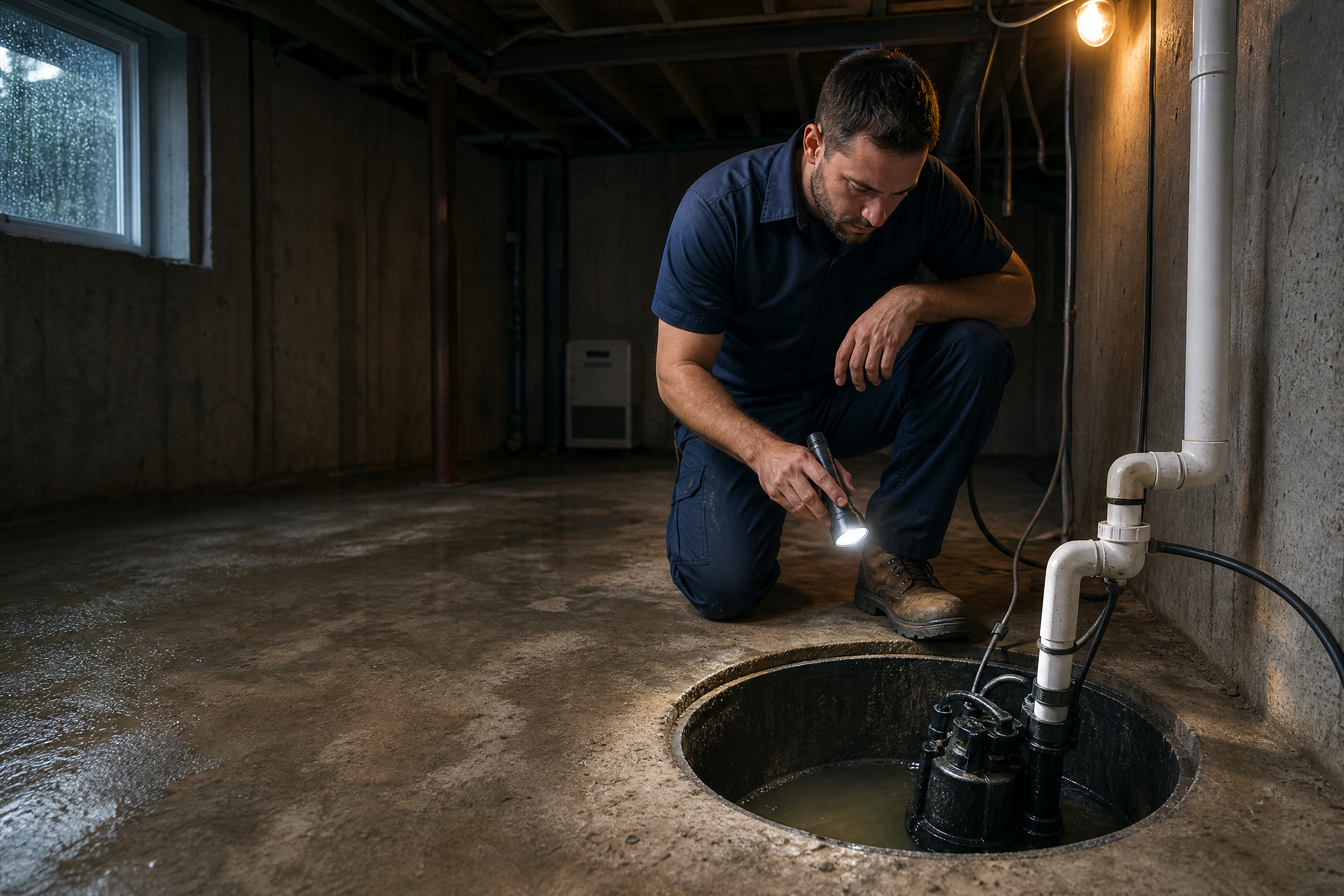
A sump pump that runs constantly usually points to one of two situations. Water is entering the pit as fast as the pump can remove it, or a problem with the float, check valve, discharge line or pump is preventing a normal shutoff.
Start with the water level. If the pit remains high while the motor runs, the pump may be overwhelmed, worn or unable to move water through a blocked or frozen discharge line. If the pit is nearly empty and the motor keeps running, a stuck float switch or control fault is more likely. A pump that stops and restarts every few seconds is short cycling, which often involves water returning through the discharge pipe, poor float positioning or a pit that is too small for the inflow.
Frequent operation can be normal during heavy rain or rapid snowmelt. Continuous operation with no drop in the water level is not. If water is rising, the motor smells hot, little water is leaving outside, or the basement is beginning to flood, call a plumber promptly. Do not reach into a powered sump pit or enter standing water near electrical equipment.
First, Look at What the Water Is Doing
The sound of the motor tells only part of the story. The water level and discharge flow provide better clues.
| What you observe | What it may mean | Sensible next step |
|---|---|---|
| The pump runs more often during heavy rain, lowers the water and shuts off | High but manageable inflow | Monitor the system and confirm the exterior discharge remains clear |
| The pump runs continuously and the pit stays high | Restricted discharge, weak pump or inflow beyond the pump’s capacity | Arrange prompt service because the flooding risk is increasing |
| The motor runs while the pit is nearly empty | Stuck float or control problem | Avoid touching the powered equipment and arrange an inspection |
| The pump stops and restarts every few seconds | Failed check valve, returning water or poor float setup | Have the cycle and discharge assembly checked |
| The motor hums but the water does not move | Jammed impeller, blocked intake, seized pump or discharge obstruction | Stop relying on the pump and call for service |
| The pump is silent while the water rises | Loss of power, failed switch or failed motor | Treat it as urgent, especially during rain or snowmelt |
If the pump lowers the water and takes a reasonable break between cycles, it may simply be handling a wet-weather event. A system that cannot lower the level has lost the race against the incoming water, even if the motor still sounds active.
Six Reasons a Sump Pump Will Not Shut Off
The float switch is trapped or stuck
The float switch reacts to the water level. As the water rises, it starts the pump. Once the level falls, the switch should return to its off position.
A float can catch against the pit wall, discharge pipe or power cord. Debris may also restrict its movement. The result depends on where it sticks. A float held high can keep the motor running after the pit has emptied. A float trapped low can prevent the pump from starting while water rises.
Observe the float from a dry position. Do not put your hand into a powered pit. If the float touches another component, sits at an odd angle or fails to follow the water level, a plumber can determine whether it needs repositioning or replacement.
The discharge line is blocked or frozen
The discharge pipe carries water from the pump to the exterior. A kink, crushed section, closed valve, ice blockage or buildup inside the line can restrict that path. The pump may continue working without moving enough water to lower the pit.
Look at the exterior outlet while the pump is operating. A strong, visible discharge confirms that at least some water is leaving. A weak trickle or no flow, combined with a running motor and high pit, points toward a restriction or failing pump.
Toronto winters create an additional concern. Water left in a poorly sloped exterior section can freeze and block the line. Check only what is visible and safely accessible. Do not use an open flame, boiling water or a sharp tool on the pipe. The repair may require thawing or replacing a section, correcting its slope, or changing the discharge arrangement so water does not remain trapped.
Water falls back into the pit after each cycle

A check valve is installed in the discharge assembly to limit water from draining back toward the pump after it shuts off. If the valve is missing, stuck, damaged or installed incorrectly, water in the vertical pipe can return to the pit.
The pump removes that water again, stops and repeats the process. From upstairs, it may sound like constant operation. At the pit, the pattern is usually a series of short, closely spaced cycles.
You may hear water rush back immediately after the motor stops. A plumber can inspect the valve orientation, condition and connection rather than replacing the pump without confirming the cause.
Discharged water is returning toward the foundation
The pump can work correctly while the property sends the same water back to it.
This happens when the outlet releases water too close to the foundation, the ground slopes toward the house, or the discharge ends on an impermeable surface that directs flow back. The foundation drainage system collects the returning water and carries it into the sump pit again.
The City of Toronto advises that a sump-pump outlet should empty onto a permeable surface, such as lawn, garden or gravel, at least two metres from the foundation wall. Water must also remain on the property and should not create a hazard for a neighbouring lot or public walkway. The City’s basement-flooding subsidy guidance explains the current installation and program requirements.
Water is entering faster than the pump can remove it
Heavy rainfall, rapid thaw, saturated soil or a high groundwater condition can create steady inflow. The pump may be functioning and still run continuously because the pit refills as quickly as it empties.
Capacity depends on more than the horsepower printed on the box. The pump must move water through the vertical lift and the full discharge route. Long runs, extra elbows, pipe restrictions and elevation reduce the amount of water the system can move in practice.
An assessment should consider the inflow, pit size, pump performance, discharge route and condition of the foundation drainage system. Installing a larger pump without looking at the rest of the system may create a new problem while leaving poor grading or returning discharge water untouched.
Toronto homeowners planning a broader flood-protection upgrade can also review the current basement flooding protection subsidy and backwater-valve guide before work begins.
The pump is worn, obstructed or poorly matched to the job
A pump loses useful capacity when its intake is blocked, the impeller is damaged or the motor is wearing out. It may sound busy while moving much less water than it once did.
Listen for a change from its usual operation. Grinding, rattling, heavy vibration, repeated humming or a weaker exterior discharge deserves attention. A plumber can compare the water level and actual flow, inspect accessible components and determine whether repair or replacement is more practical.
An undersized pump can show similar symptoms during wet weather. An oversized pump can empty a small pit too quickly and short cycle. Proper selection accounts for both the incoming volume and the discharge conditions.
Constant Running and Short Cycling Are Different Problems
Homeowners often use “running constantly” to describe any pump that seems unusually active. The distinction affects the diagnosis.
Continuous running means the motor stays on. Watch the pit. A high water level suggests poor removal or excessive inflow. A low water level suggests the switch is not telling the pump to stop.
Short cycling means the motor starts, stops and restarts within a brief period. Water returning through a failed check valve, a cramped float, an undersized pit or a large pump moving a small volume too quickly can produce this pattern.
Both conditions add wear. Short cycling creates repeated starts. Continuous operation can overheat a pump that is not designed for the conditions it is facing. The immediate concern is whether the system can still keep the water below the basement floor.
Safe Checks You Can Make Without Touching the Pump
A few observations will help when you call for service. Keep the inspection visual and stay on dry flooring.
- Look at the pit water level. Note whether it is falling, holding steady or rising.
- Listen to the motor. Describe humming, grinding, rattling or repeated starting.
- Check the exterior discharge point from a safe location. Note whether water is flowing and where it lands.
- Look for a visible kink, separated fitting, snow cover or ice at the outlet.
- Observe whether the float appears caught against the liner, pipe or cord.
- Check the basement for damp flooring, seepage near the walls or water approaching stored items and equipment.
- Note recent weather and any power interruption.
Do not remove the pump, open electrical controls, disconnect wiring or put your hand into a live pit. Avoid repeatedly resetting a breaker. A trip can indicate a pump, cord, outlet or circuit fault that needs proper electrical assessment.
If floodwater has reached outlets, a furnace, baseboard heaters or the electrical panel, do not enter the basement. The Electrical Safety Authority’s flood-safety guidance advises contacting the local electric utility to have power disconnected before entering an electrically affected area.
Should You Unplug a Sump Pump That Will Not Stop?
Unplugging the pump may silence the motor, but it also removes the home’s active protection while water may still be entering the pit.
Do not unplug it simply because it has been running for a long time. First establish whether the water is rising and whether the pump is still discharging. If the pit is filling rapidly, disconnecting the only working pump can cause a flood.
Keep clear and call for urgent advice when the pit is empty but the motor continues to run, the pump smells hot, smoke is present, the cord or outlet looks damaged, or the breaker repeatedly trips. Anyone responding needs to consider the incoming water and electrical condition together.
Never reach across standing water to unplug equipment. If water is near electrical components, follow utility and electrical-safety instructions rather than entering the area.
When the Problem Becomes an Emergency
Call for urgent service when:
- The pit continues to rise while the pump runs.
- Little or no water leaves the discharge outlet.
- The pump stops during heavy rain or rapid thaw.
- The motor smells burnt, smokes or makes severe grinding noises.
- Water has begun spreading across the basement floor.
- The home has no working backup and the water level is close to overflowing.
- Floodwater is approaching the furnace, water heater or electrical equipment.
- The water may contain sewage.
Saving Plumbing provides 24-hour emergency plumbing service in Toronto and can assess whether the immediate fault involves the pump, switch, check valve, discharge line or incoming water volume. Call (416) 271-6745 and describe the pit level, motor sound and exterior discharge.
What a Plumber Will Check
The first goal is to determine whether the pump can still keep up with the water entering the pit. From there, the inspection can move through the system in order:
- Float movement and switch operation
- Intake and impeller condition
- Pump output
- Check-valve operation
- Discharge-pipe blockage, leakage and routing
- Pit size and pump fit
- Visible foundation-drain inflow
- Electrical symptoms that require a licensed electrical contractor
The repair may be a float adjustment, check-valve replacement or discharge correction. A weak or damaged pump may need replacement. Persistent high inflow may justify a broader look at drainage around the property.
For diagnosis, repair or replacement, Saving Plumbing’s sump pump service in Toronto covers residential and commercial properties. Homeowners outside Toronto can check the company’s supported GTA service areas before requesting an appointment.
Preventing the Same Problem During the Next Storm
A dry-weather test cannot recreate every storm condition, but it can reveal a stuck float, weak discharge or failed backup before the pit is under pressure.
Before the wet season:
- Keep the pit cover and surrounding area accessible.
- Observe a complete start, discharge and shutoff cycle.
- Confirm that the exterior outlet is open and directing water away from the foundation.
- Listen for new vibration or mechanical noise.
- Inspect visible joints for leakage.
- Test water alarms according to their instructions.
- Follow the pump manufacturer’s maintenance directions.
- Review backup power if outages have occurred during past storms.
The City recommends regular maintenance and backup power consideration for sump pumps. Toronto’s current subsidy program may help eligible owners with installation or replacement of a sump pump, an alarm and battery backup. Eligibility, maximum amounts, licensed-contractor requirements and application dates can change, so confirm the current program before authorizing work.
Frequently Asked Questions
Is it normal for a sump pump to run constantly after heavy rain?
It may run for long periods while groundwater remains high, but the water level should fall or remain controlled. If the pit continues rising, the discharge is weak or the pump never pauses after the rain subsides, arrange an inspection.
Why does my sump pump run when there is no rain?
Groundwater can remain elevated after the weather clears. Snowmelt, a high water table, returning discharge water, a plumbing leak entering the pit or a stuck float can also keep the pump active. The pit level and exterior flow help separate ongoing inflow from a control problem.
Why does the pump run when the sump pit is empty?
A float switch may be trapped in the on position, or the control may have failed. Do not reach into the powered pit. Have the switch and pump inspected before the motor is damaged.
Why does my sump pump turn on every few seconds?
This is short cycling. Common causes include water draining back through a failed check valve, poor float placement, a pit that holds very little usable water or a pump that removes the water too quickly for the setup.
How long can a sump pump run continuously?
There is no single safe time that applies to every pump. Equipment design, water temperature, installation and operating conditions differ. Focus on whether the pump is lowering the water, discharging normally and running without heat, odour or unusual noise. Hours of operation with no improvement requires service.
Can a frozen discharge line damage the pump?
Yes. If water cannot leave through the discharge line, the pump may run without lowering the pit. Continued operation can strain the equipment while the water level rises. Do not use flame or improvised heating methods on the line.
Does a constantly running sump pump need replacement?
Not automatically. The cause may be a stuck float, failed check valve, blocked line or returning discharge water. Replacement makes sense when the pump itself is worn, damaged, unable to provide the required output or poorly matched to the installation.
Should every Toronto home have a battery backup sump pump?
The decision depends on the property’s flood history, pit inflow, basement use, outage risk and tolerance for water damage. A finished basement or a home where the primary pump runs heavily during storms has more to lose during a power failure. A plumber can size the backup around the actual system rather than treating one model as suitable for every home.
Get the Pump Checked Before the Water Reaches the Floor
A constantly running sump pump is still giving you time to act. The water level shows how much time you may have.
If the pit is staying high, the exterior discharge is weak or the motor will not stop after the water falls, call Saving Plumbing at (416) 271-6745. Explain what the pump is doing, whether water is leaving outside and how quickly the pit is filling. That information helps determine whether you need scheduled repair or immediate assistance.
