


Bathroom sink gurgling or smelling like sewer gas? Learn what causes it, including blocked plumbing vents, and when to call a Toronto plumber.
Why Is Your Bathroom Sink Gurgling and Smelling Like Sewer Gas?
A bathroom sink that makes gurgling noises and smells like sewage may have a blocked drain, a problem with its P-trap, or poor ventilation inside the plumbing system. These symptoms often occur together because wastewater and air are not moving through the pipes as they should.
One cause that’s easy to overlook is a blocked plumbing vent. When the vent cannot move air properly, pressure changes inside the drainage system can disturb the water seal in the sink’s P-trap. That may cause bubbling sounds and allow sewer odours into the bathroom.
Recently, Saving Plumbing Scarborough investigated this exact combination of problems at a Downtown Toronto home. The cause turned out to be something the homeowner probably never expected to find inside their plumbing.
A Toronto Bathroom Sink That Gurgled Because of a Dead Squirrel
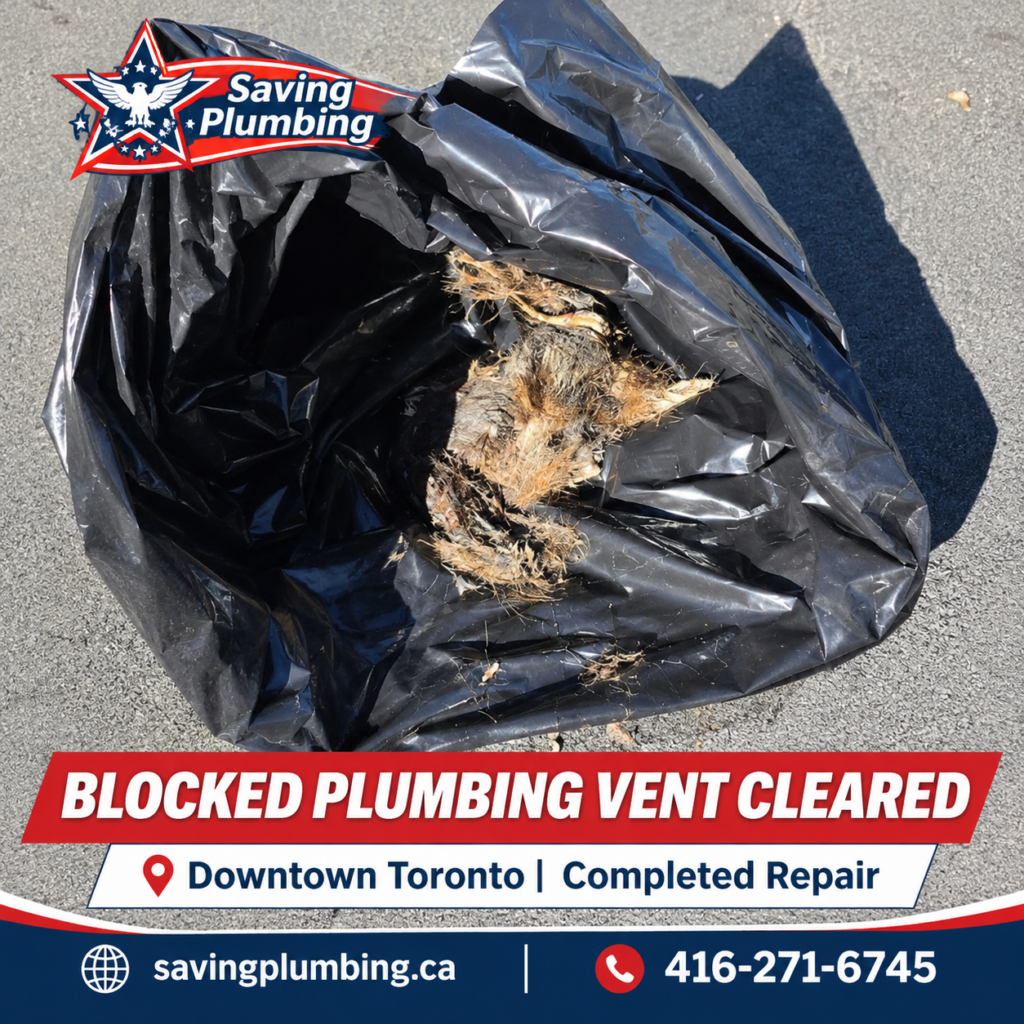
The homeowner contacted Saving Plumbing after noticing two problems in their third-floor bathroom: an unpleasant sewer smell and unusual gurgling noises coming from the sink.
At first, the symptoms could have suggested a blockage in the bathroom sink drain. However, the inspection revealed a different issue.
A dead squirrel had become lodged inside the home’s roof plumbing vent, restricting airflow through the drainage system.
The roof vent is connected to the home’s drain-waste-vent system. It allows air to move as wastewater drains and helps protect the water seals inside plumbing traps. When that airflow becomes restricted, the effects can sometimes be heard or smelled at a fixture elsewhere in the house.
In this case, the Saving Plumbing team removed the obstruction, cleared the vent pipe and tested the plumbing system. Once proper ventilation was restored, the bathroom sink stopped gurgling and the sewer odour disappeared.
It was a good example of why a noisy sink shouldn’t automatically be treated as a clogged drain. Cleaning the sink’s drainpipe would not have removed the obstruction found inside the roof vent.
The original photographs and Google Business Profile update from this Downtown Toronto repair included here.
Why Does a Bathroom Sink Make Gurgling Noises?
A gurgling bathroom sink usually means air is moving through the drain in a way that produces bubbles or disturbs water sitting inside the trap.
Normally, wastewater flows down the drain while the plumbing vent system helps balance air pressure. Beneath the bathroom sink, the P-trap holds water that acts as a barrier between the bathroom and gases inside the drainage system.
If a drain becomes partially blocked or the venting system cannot move air properly, pressure changes can cause bubbling, gurgling or other unusual sounds.
Sometimes the noise happens while the sink is draining. In other homes, the bathroom sink may gurgle when someone flushes a nearby toilet, empties a bathtub or uses another plumbing fixture.
Those differences matter.
For example, a sink that drains slowly and gurgles may have a restriction in its own drainpipe. A sink that gurgles when other fixtures are used could point towards a shared drain or venting problem.
The sound tells you something is affecting drainage or airflow, but it does not identify the exact cause on its own.
Why Does Sewer Gas Smell Come From the Bathroom Sink?
A sewer smell around a bathroom sink can develop when gases from the drainage system find a path into the room. One common reason is that the water seal inside the P-trap has become too low or has disappeared.
The curved section of pipe beneath the sink is designed to retain water after the tap is turned off. That standing water helps keep sewer gases on the drainage side of the plumbing.
Several problems can interfere with this protection.
A dry or depleted P-trap
If a bathroom sink has not been used for a long time, water inside its trap can gradually evaporate. This sometimes happens in guest bathrooms, basement bathrooms or other fixtures that receive little use.
Running water into the sink may restore the seal if evaporation is the only problem. However, a smell that repeatedly returns deserves further investigation.
A blocked plumbing vent
A restricted vent can cause pressure imbalances that disturb or siphon water from plumbing traps.
Leaves, nesting material and other debris can obstruct roof vents. In the Downtown Toronto repair described earlier, the obstruction was a dead squirrel.
The City of Toronto identifies blocked roof vent stacks and improperly vented plumbing among the potential causes of sewer odours inside buildings.
A damaged or improperly connected drain
Loose fittings, cracked drainpipes or defects around plumbing connections may also allow odours to escape.
An inspection may be necessary to determine whether the problem involves the trap, a drain connection or another part of the drainage system.
Buildup inside the bathroom sink drain
Not every bad smell is sewer gas.
Hair, soap residue, toothpaste and other organic material can accumulate around the sink stopper or inside the drain opening. As that material decomposes, it can create an unpleasant smell that homeowners mistake for a sewer problem.
If the odour is limited to the sink opening and there are no unusual drainage sounds, checking for buildup around the stopper is a reasonable starting point.
How Can You Tell Whether It’s a Blocked Drain or Plumbing Vent?
The way the sink behaves can help narrow down the possibilities, although the symptoms alone cannot confirm a diagnosis.
| What you’re noticing | What it could indicate |
|---|---|
| Sink drains slowly and gurgles | Partial blockage in the trap or branch drain |
| Sink gurgles when the toilet flushes | Shared drainage restriction or venting problem |
| Sewer smell from a rarely used sink | Dry or depleted P-trap |
| Gurgling with recurring sewer odours | Possible vent restriction, trap seal problem or drain defect |
| Several fixtures drain slowly or gurgle | Shared branch drain or main sewer problem |
| Sewage backs up into a shower or floor drain | Potential downstream sewer blockage requiring prompt attention |
One useful distinction is whether the sink is actually draining slowly.
During the Downtown Toronto job, the combination of a third-floor bathroom sink, sewer odours and gurgling led to an investigation that identified the roof vent obstruction.
That does not mean every bathroom sink with similar symptoms has a blocked vent. A plumber may need to inspect both the drainage and venting systems, particularly when the problem keeps returning.
A roof vent can be difficult and unsafe to access. Homeowners should not climb onto a roof or attempt to push objects into a ventpipe to clear a suspected obstruction.
What Should You Check If Your Bathroom Sink Gurgles and Smells Bad?
Before assuming you have a serious sewer problem, there are a few things worth checking. The important part is to notice when the noise happens, where the smell comes from, and whether other fixtures are affected.
Start by running water into the sink.
If the bathroom hasn’t been used for several weeks, the P-trap may have lost some of its water through evaporation. Running the tap for 30 to 60 seconds can replenish the water seal.
If the odour disappears and stays away, an unused trap may have been the issue.
Next, remove the sink stopper if it can be taken out easily. Hair, toothpaste residue and soap buildup often collect around this area. Cleaning away visible debris may help if the smell is coming from the drain opening rather than the sewer system.
You can also pay attention to these details:
- Does the sink drain slowly, or does the water flow normally?
- Do you hear gurgling when the toilet flushes?
- Does the smell become stronger after someone showers or uses another fixture?
- Are other bathrooms experiencing similar problems?
- Does the odour return shortly after running water?
These observations can be useful when describing the problem to a plumber.
Avoid repeatedly pouring chemical drain cleaners into a sink when the cause is unknown. They will not remove an obstruction inside a roof vent, and some products can create additional hazards during plumbing repairs.
If sewage is backing up, several fixtures are affected, or the odour is strong and persistent, arrange a professional inspection rather than continuing to experiment with home remedies.
How Do Plumbers Find a Blocked Plumbing Vent?
A plumbing vent blockage isn’t always visible from the bathroom. The problem may be several floors above the fixture, as it was during Saving Plumbing’s Downtown Toronto repair.
A plumber will usually begin by asking when the problem started and which fixtures are affected.
The next step is to determine whether the symptoms are coming from the sink’s drain, a shared drainage pipe, the venting system or a combination of problems.
Depending on the property and what the initial inspection reveals, the plumber may:
- Inspect the sink’s P-trap, drain fittings and accessible pipe connections.
- Test drainage at the affected fixture and nearby plumbing fixtures.
- Check for signs that trap seals are being disturbed.
- Examine accessible vent piping and the roof vent opening when safe.
- Use appropriate inspection equipment to locate a suspected obstruction.
A drain camera or other diagnostic equipment may be useful in certain situations, but not every gurgling sink requires a camera inspection.
In the Toronto case, the restriction was traced to the roof vent stack. Once the dead squirrel was removed and the vent cleared, the plumber tested the system and confirmed that the gurgling and sewer smell had stopped.
That final testing matters. Removing an obstruction is only part of the job. The plumber also needs to confirm that the original symptoms have been resolved.
Can a Blocked Plumbing Vent Cause a Toilet or Shower to Gurgle Too?
Yes. A venting problem can sometimes affect more than one fixture, particularly when several plumbing fixtures share drainage or vent connections.
For example, flushing a toilet can move a relatively large volume of wastewater through the drainage system. If airflow is restricted, the resulting pressure changes may disturb water in a nearby sink or shower trap.
Homeowners might notice a bathroom sink bubbling when the toilet flushes or a shower drain making noises when the bathtub empties.
However, multiple fixtures gurgling can also indicate a blocked shared drain or sewer line. Venting should not be assumed to be the cause without an inspection.
If wastewater is rising into a bathtub, shower or basement floor drain, stop using the affected fixtures and contact a plumber promptly. A sewage backup is different from a simple sink gurgle and may require urgent attention.
Is a Gurgling Sink With a Sewer Smell an Emergency?
Not every gurgling drain requires emergency plumbing service. A single noise from an otherwise functioning sink may be caused by a minor restriction.
A persistent sewer odour is different. It deserves attention because it may indicate a failed trap seal, a defective drain connection or a problem with the plumbing venting system.
The urgency depends on what else is happening.
If the sink drains normally but occasionally makes noise, monitor when it occurs and arrange an inspection if it continues.
If the bathroom smells strongly of sewage, other fixtures are affected or the problem keeps returning, it is better to have the plumbing checked rather than simply covering the smell with air fresheners.
If wastewater is backing up inside the home, avoid using connected fixtures until the cause has been assessed.
For an unusually strong unexplained gas-like odour, leave the affected area and seek appropriate emergency assistance. Do not assume every unusual smell is sewer gas.
How Can You Prevent Plumbing Vent Blockages and Sewer Odours?
Not every vent blockage is preventable. Wildlife, nesting material and outdoor debris can sometimes enter exposed roof vent openings.
There are still a few useful maintenance habits that can reduce common drain and odour problems.
Keep seldom-used fixtures from drying out. Run water periodically in guest bathrooms, basement sinks and other fixtures that sit unused for long periods.
Keep hair and debris out of bathroom drains. Cleaning sink stoppers and removing visible buildup helps prevent local drain restrictions.
Pay attention to recurring symptoms. A sink that repeatedly gurgles or loses its trap seal may have a problem that ordinary drain cleaning won’t solve.
Don’t overlook roof vent concerns. If debris or wildlife activity is suspected around a plumbing vent, have a qualified professional assess it safely. Screens or caps should not be added without confirming that they are suitable for the vent and applicable plumbing requirements.
For older Toronto houses and properties with several bathrooms, it is particularly helpful to tell the plumber whether the symptoms occur at one fixture or throughout the home. That information can make troubleshooting more focused.

Frequently Asked Questions About Gurgling Bathroom Sinks
Why does my bathroom sink gurgle when I flush the toilet?
The toilet and sink may share parts of the same drainage or venting system. When the toilet flushes, changes in airflow or pressure can produce gurgling sounds at the sink. A shared drain blockage or venting restriction are both possible causes.
Can sewer gas come through a bathroom sink?
Yes. If the P-trap loses its water seal or the drainage system has a defective connection, gases may enter the bathroom. A properly functioning P-trap helps prevent this by retaining water inside the curved pipe beneath the sink.
Will drain cleaner fix a gurgling bathroom sink?
Only in some cases, and chemical drain cleaners are not a reliable way to diagnose the problem. They will not resolve a blocked roof vent, defective vent connection or depleted trap seal. Identifying the cause is more useful than repeatedly treating the symptom.
Can animals block plumbing vents?
Yes. Small animals, nesting material and other debris can obstruct exposed roof vents. In one Downtown Toronto plumbing job, Saving Plumbing discovered a dead squirrel inside the vent stack. Removing it restored ventilation and resolved the homeowner’s sink gurgling and sewer odour.
Why does my bathroom sink smell like sewage even though it drains normally?
A sink can drain at a normal speed while still having a dry P-trap, a venting problem or a defective drainage connection. Buildup around the stopper can also create odours that resemble sewage. Drainage speed alone does not rule out a plumbing problem.
When a Bathroom Sink Problem Needs More Than Drain Cleaning
A gurgling sink may seem like a small annoyance, especially when the water still drains. But when unusual noises are accompanied by sewer smells, the problem deserves a closer look.
The Downtown Toronto repair is a good reminder that the cause isn’t always where the symptoms appear. What sounded like a bathroom sink blockage turned out to be a dead squirrel obstructing the plumbing vent several floors above.
If your bathroom sink keeps gurgling, smells like sewage or reacts when other fixtures are used, a proper plumbing inspection can help identify whether the problem involves the drain, P-trap or venting system.
Saving Plumbing provides residential drain inspections and plumbing repairs in Toronto, Scarborough and surrounding GTA communities, including Markham, Pickering and Richmond Hill.
For persistent drain noises, recurring sewer odours or suspected vent problems, contact Saving Plumbing to have the plumbing assessed before the issue becomes more disruptive.
References
