

If your Toronto-area home has a basement that has flooded, becomes damp after heavy rain or snowmelt, sits on a high-water-table or poorly drained lot, or contains a finished living space you cannot afford to lose, a sump pump may be a sensible part of your flood-protection plan. It is not a cure for every source of basement water: the right solution may also involve grading, downspouts, foundation drainage, waterproofing, or a backwater valve. A professional assessment can identify the water pathway and size the system properly.
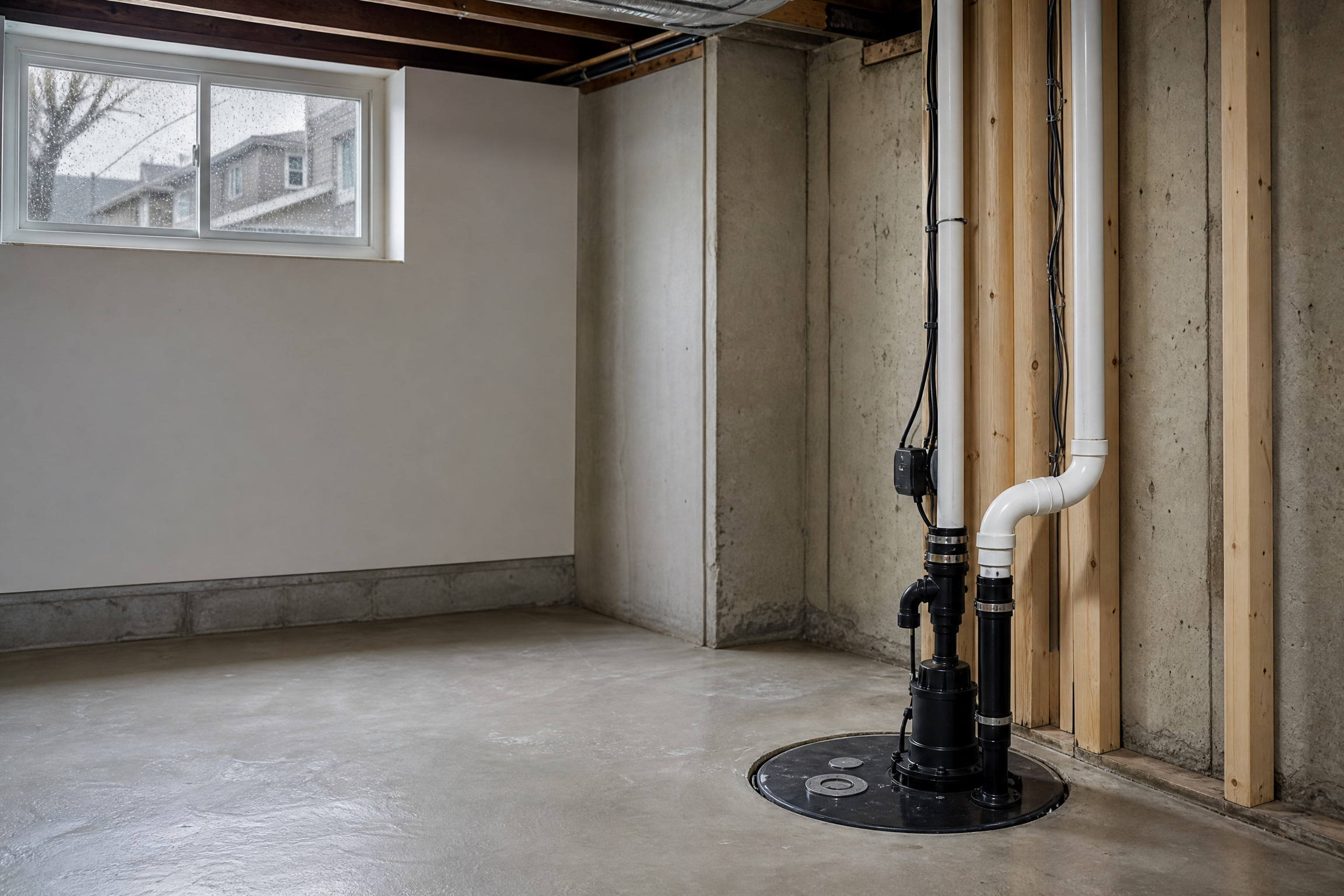
An enclosed sump basin and properly routed discharge line are important parts of a maintainable basement drainage system.
Toronto homeowners are right to ask this question before a wet basement becomes a renovation project. Heavy rainfall, rapid snowmelt and overloaded sewer systems can expose weaknesses in a home’s drainage. The City of Toronto’s Basement Flooding Protection Subsidy Program recognises several types of protective work, including a plumbing assessment and installation of a sump pump, alarm and battery backup power for eligible properties.
However, not every basement needs the same equipment. A sump pump manages water collected in a sump pit; it does not automatically stop water entering through a foundation crack, a failed weeping-tile system, a window well or a sanitary sewer connection. The most useful first step is to determine where the water is coming from and what your property needs to protect.
What does a sump pump do?
A sump pump sits in a basin, commonly called a sump pit, at or near the lowest point of a basement. Foundation drainage, such as a weeping-tile system, can direct groundwater into the basin. When the water reaches a set level, a float or sensor activates the pump. The pump then sends water through a discharge pipe to an approved location away from the foundation.
The system normally includes more than the pump itself:
•A sump basin and sealed or fitted cover.
•A pump selected for the required capacity and discharge height.
•A discharge pipe and a check valve to prevent pumped water from flowing back into the pit.
•An alarm or high-water notification system.
•Suitable electrical protection and, where appropriate, backup power.
A sump pump is therefore a water-management device, not a general waterproofing product. A reliable installation depends on the pit, pump, discharge route, power supply and surrounding drainage working together.
Six signs your Toronto home may need one
1. The basement has flooded or taken on water before
Previous flooding is one of the clearest indicators of future risk. Even if the cause was unusual, such as an extreme storm or a temporary power failure, the event shows that water can reach the basement under certain conditions. Keep photographs, dates and notes about where the water appeared; this information helps a plumber distinguish groundwater from a sewer backup or surface-water problem.
2. Dampness appears after rain or spring snowmelt
Look for recurring damp patches, puddles at the floor-to-wall joint, water marks, peeling paint or a musty smell after wet weather. A basement can have a moisture problem without a dramatic flood. Persistent dampness can affect flooring, stored belongings, framing and indoor comfort, especially in a finished basement.
3. Water pools beside the foundation
Pooling near the foundation, soil that remains saturated, or downspouts that discharge too close to the house can increase the load on foundation drainage. Correcting the exterior source may be part of the solution, but a sump pump can still be useful where groundwater is being collected below grade.
4. The home is low-lying, near a ravine, or has drainage concerns
Neighbourhood conditions vary across Toronto, Scarborough, North York, Etobicoke, Mississauga, Vaughan, Markham, Pickering, Oshawa, Whitby and other GTA communities. A low point in the lot, a high water table, compacted soil or a history of nearby basement flooding can increase the value of a planned drainage assessment. Neighbour reports are useful clues, but they are not a substitute for checking your own foundation and drainage layout.
5. You are finishing or storing valuable items in the basement
Carpet, drywall, furniture, electronics, a home office and family storage all increase the cost of a flood. Before finishing a basement, ask whether the existing drainage system has a working sump basin, a serviceable pump, a suitable discharge route and a plan for a power outage. Prevention is usually less disruptive than opening a finished wall or replacing damaged flooring.
6. Your existing pump is old, noisy or unreliable
A pump that grinds, rattles, vibrates excessively, runs continuously or fails to start deserves prompt attention. A dry pit, a stuck float, debris in the basin, a blocked discharge line or a failed check valve can also prevent a system from doing its job. Saving Plumbing already covers constantly running and backup sump-pump concerns in separate guides; this article focuses on the broader question of whether the property’s protection plan is appropriate.
Sump pump, backwater valve or waterproofing: which one do you need?
These measures address different water pathways. Choosing the wrong one can leave a homeowner with an expensive device that does not solve the actual problem.
| Protection measure | Primarily manages | What it does not solve by itself |
| Sump pump | Groundwater or foundation drainage collected in a sump pit | Water entering through an unsealed crack, a window well, surface grading, or a sanitary sewer backup |
| Backwater valve | Wastewater flow trying to move back from the sewer toward the home | Groundwater rising around the foundation or rainwater entering through the structure |
| Foundation waterproofing | Water moving through or around foundation walls and joints | A failed pump, a power outage, or sewer flow unless those systems are addressed separately |
| Grading and downspout improvements | Rainwater and snowmelt collecting near the foundation | Groundwater that is already entering through the foundation drainage system |
| Alarm and backup power | Loss of warning or pump operation during an outage | A damaged pump, blocked discharge line, or incorrectly sized system |
The City of Toronto lists sump pumps and backwater valves as separate categories of eligible basement-flooding protection work under its current subsidy programme, subject to programme conditions and property eligibility. That distinction is useful: a sump pump and a backwater valve are not interchangeable.
What should be checked before installation?
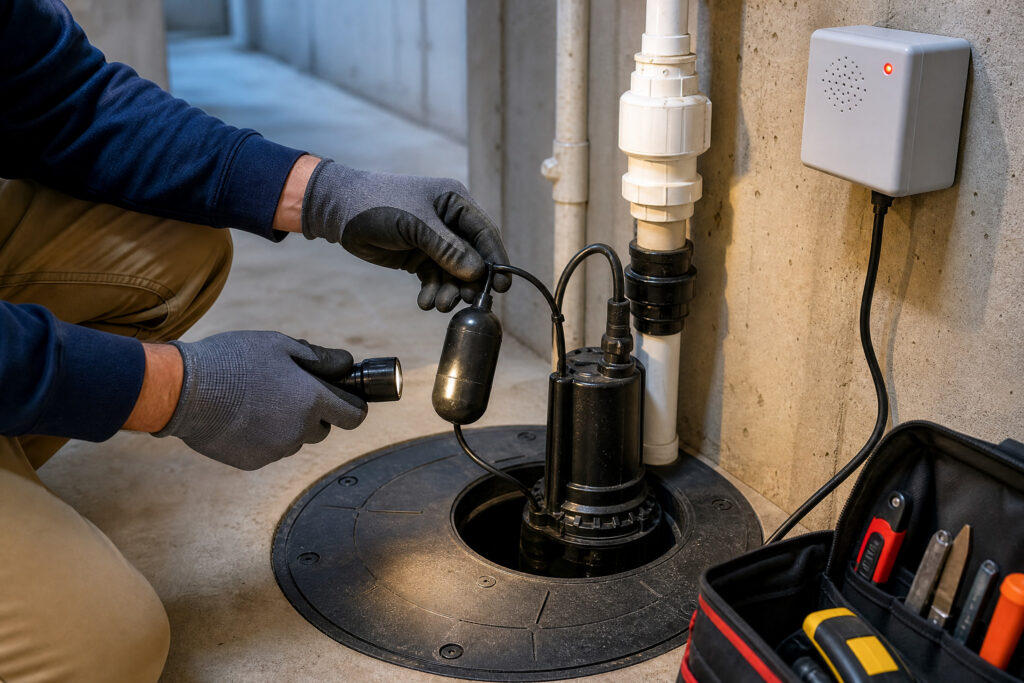
A reputable plumbing assessment should start with evidence, not a pump model. Ask the plumber to review:
1.The source of water. Is the concern groundwater, a sewer backup, roof runoff, surface drainage, a plumbing leak or more than one source?
2.The existing pit and drainage. Is there a sump basin? Is it large enough, accessible and connected to the relevant foundation drainage?
3.The pump capacity. Can the pump move the expected volume of water through the actual vertical lift and horizontal discharge distance?
4.The discharge route. Does water leave the foundation area and remain clear during freezing weather? Is the route appropriate for the property and local requirements?
5.The check valve and alarm. Are they installed where they can be inspected and replaced? Will an alarm provide useful warning before water reaches the basement floor?
6.Power and backup. What happens if a storm interrupts electricity? A battery backup or another backup strategy may be appropriate, particularly when the basement is finished or the home has a history of flooding.
7.Access and maintenance. Can the cover be removed, the float tested and the pump serviced without dismantling finished walls or stored items?
Flood Ready’s GTA homeowner guide similarly recommends separating the water source, the consequence, the protective measure and the maintenance plan before work begins. That is a practical way to compare quotes: the best proposal explains the problem it is solving and the limits of the equipment.
Toronto’s basement-flooding subsidy: what homeowners should know
As of May 1, 2026, the City of Toronto says its expanded Basement Flooding Protection Subsidy Program offers up to $6,650 per property for eligible work completed on or after November 12, 2025. Listed eligible work includes a home plumbing assessment; up to two backwater valves and alarms; sump-pump installation with an alarm and battery backup power; and certain storm-sewer or external weeping-tile disconnections.
This is not an automatic discount on every installation. Review the City’s current eligibility rules, application process and subsidy history before authorising work. The official page also advises homeowners to consider contractor selection carefully. Saving Plumbing can help GTA homeowners understand which plumbing service may be appropriate, but the City remains the authoritative source for programme conditions.
How to keep a sump pump ready for a Toronto storm
A sump pump should be tested before the season when you are most likely to need it, not for the first time during a storm. A homeowner can make a visual check for debris, an unplugged power cord, an obstructed discharge line or an obviously stuck float. A qualified plumber should investigate unusual noise, repeated alarms, poor discharge, electrical concerns or a pump that fails a test.
Keep the pit accessible and avoid storing boxes directly around the cover. Confirm that the alarm can be heard or received where you will notice it. If the system has a battery backup, follow the manufacturer’s instructions for testing and battery replacement. Never handle wet electrical equipment or enter standing water near electrical components; move to safety and call for appropriate emergency help when there is an immediate hazard.
A professional check should include the float, discharge connection, check valve, alarm and overall access—not only whether the motor turns on.
When should you call a plumber?
Book an assessment if you are planning a basement renovation, have experienced flooding, see recurring dampness, cannot identify the source of water, or are unsure whether an existing sump system is connected and working correctly. Request emergency help when water is rising quickly, sewage is backing up, a pipe has burst, or electrical equipment may be wet. If you can do so safely, shut off the relevant water supply and keep people away from contaminated or electrically hazardous water while help is on the way.
Saving Plumbing provides sump pump installation and repair, drain and sewer services, emergency plumbing and related GTA plumbing support. The service team works with homeowners across Toronto, Etobicoke, North York, Mississauga, Vaughan, Pickering, Scarborough, Oshawa, Markham, Whitby, Richmond Hill and surrounding communities.
Final answer: do you need a sump pump?
You may not need a sump pump simply because you own a basement. You should take the question seriously if your home has a flooding history, recurring wet-weather dampness, poor exterior drainage, below-grade living space, older drainage connections or a vulnerable existing system. The correct answer depends on the water pathway and the protection you want—not on a one-size-fits-all product recommendation.
For a property-specific assessment or help with sump pump installation in Toronto and the GTA, contact Saving Plumbing at (416) 271-6745 or email info@savingplumbing.ca. licensed and insured plumbers can help identify the issue, explain the repair or installation scope, and recommend the next practical step.
Frequently asked questions
1. Is a sump pump required in every Toronto home?
No. A sump pump is not automatically required in every Toronto home, but it may be strongly advisable where a basement has flooded, groundwater collects, drainage is poor, or the basement contains valuable finished space. A professional assessment can determine whether a sump pump, waterproofing, grading work, a backwater valve or a combination is appropriate.
2. What is the difference between a sump pump and a backwater valve?
A sump pump removes groundwater collected in a sump pit and discharges it away from the foundation. A backwater valve helps prevent wastewater from flowing backward through the sanitary sewer connection. They manage different water pathways and one cannot replace the other.
3. Can a sump pump stop all basement flooding?
No. A sump pump can manage water collected through the foundation drainage system, but it cannot by itself correct every leak, sewer backup, window-well problem, grading issue or foundation defect. The water source must be identified before selecting the protection measure.
4. Does a sump pump work during a power outage?
A standard electric sump pump may stop when the power fails. A battery backup, generator or another professionally designed backup strategy can help maintain protection during a storm, when flooding risk and outages may occur together. The backup system also needs regular testing and maintenance.
5. How often should a sump pump be inspected?
A sump pump should receive a visual check and functional test at least annually, as well as before periods of expected heavy rain or rapid snowmelt. Have a plumber inspect persistent alarms, unusual sounds, a stuck float, a blocked discharge line or a pump that does not start reliably.
References
[1] City of Toronto, “Basement Flooding Protection Subsidy Program”
[2] Flood Ready, “Homeowner Guide to Sump Pump Installation”
[3] Ashworth Drainage, “Does My Ontario Home Need a Sump Pump? Signs Every Homeowner Should Know”
[4] The City Wide Group, “Everything to Know About Sump Pumps”
